Understanding lunar phases is about much more than watching the moon wax and wane in the night sky. Once you know how to track, predict, and work with the moon’s monthly cycle, you can plan gardening, fishing, photography, spiritual rituals, sleep routines, and even productivity around it. This guide walks through the science of moon phases, how to follow them with confidence, and practical ways to harness their energy in everyday life.
What Are Lunar Phases?
Lunar phases are the changing appearances of the moon as seen from Earth over a roughly 29.5-day cycle, called a lunar month or synodic month. These changes happen because:
- The moon orbits Earth.
- The Earth–moon system orbits the sun.
- We only see the portion of the moon that is sunlit and facing us.
The moon itself doesn’t glow; it reflects sunlight. As the relative positions of the sun, Earth, and moon shift, the illuminated portion we can see changes, creating the familiar phases.
The 8 Main Phases of the Moon (In Order)
While the moon moves continuously, we usually divide its cycle into eight main lunar phases:
-
New Moon
- The moon is between Earth and the sun.
- The side facing us is dark, so the moon is nearly or completely invisible.
- Symbolically associated with new beginnings, intentions, and planting seeds (literal and metaphorical).
-
Waxing Crescent
- A slim crescent of light appears after the new moon.
- “Waxing” means growing.
- A phase for early action, planning, and gentle momentum.
-
First Quarter
- Half the moon’s visible face is lit (right half in the Northern Hemisphere).
- Called “quarter” because the moon is a quarter of the way through its cycle.
- Linked with decisions, challenges, and taking concrete steps.
-
Waxing Gibbous
- More than half is illuminated, but not yet full.
- A time of refinement, editing, adjustment, and preparation.
-
Full Moon
- Earth is between the sun and moon; the whole face is lit.
- Often appears larger and brighter (especially during a “supermoon”).
- Associated with culmination, harvest, heightened emotion, and visibility.
-
Waning Gibbous
- Illumination begins to decrease.
- “Waning” means shrinking.
- Linked with gratitude, sharing, and processing results.
-
Last Quarter (Third Quarter)
- Again, half the moon is lit (left half in the Northern Hemisphere).
- A time for evaluation, release, and course correction.
-
Waning Crescent
- A thin sliver of light before the cycle ends.
- Associated with rest, closure, and surrender before the new moon resets the cycle.
These eight lunar phases move in a predictable pattern, making them easy to follow once you know what to look for.
The Science Behind Lunar Phases
To truly understand lunar phases, it helps to visualize the geometry:
- The moon orbits Earth about every 27.3 days (sidereal month).
- A full set of phases takes about 29.5 days (synodic month) because Earth moves along its orbit around the sun too.
- We always see the same side of the moon because it’s tidally locked to Earth, rotating once per orbit.
Why Don’t We Get Eclipses Every Month?
During a new moon and full moon, the sun, Earth, and moon line up roughly. But eclipses require almost perfect alignment:
- The moon’s orbit is tilted about 5° relative to Earth’s orbit around the sun.
- Usually, the moon passes slightly above or below the direct Earth–sun line, so we just see normal phases.
- Only when the moon crosses the “nodes” (where its orbit intersects Earth’s orbital plane) during a new or full moon do we get solar or lunar eclipses (source: NASA).
How to Track Lunar Phases Easily
Tracking lunar phases doesn’t require a telescope. You can follow the moon with simple tools and a bit of observation.
1. Use Moon Phase Apps and Websites
Modern tools make it effortless:
- Moon phase apps (search “moon phase” or “lunar calendar” in your app store)
- Astronomy websites with lunar calendars
- Planetarium apps that simulate the sky for your location and date
Look for features like:
- Current lunar phase and percentage illuminated
- Upcoming new and full moon dates
- Moonrise and moonset times
- Notifications for key phases
2. Keep a Simple Moon Journal
For a more mindful connection with the lunar cycle:
- Note the date, lunar phase, and how the moon looks.
- Record your mood, energy level, sleep quality, or productivity.
- Over 2–3 months, you may see patterns (e.g., more restless sleep near full moons).
3. Learn to Read the Sky
You can often estimate the phase just by looking:
- If the lit side is growing and visible in the afternoon/evening, it’s waxing.
- If it’s shrinking and you see it in the late night/early morning, it’s waning.
- A half-lit moon high in the sky at sunset is near the first quarter.
- A bright, round moon rising near sunset is full.
Northern vs Southern Hemisphere note:
- In the Northern Hemisphere, the waxing moon lights up on the right, waning on the left.
- In the Southern Hemisphere, this is reversed.
Predicting Lunar Phases: Planning Your Calendar
Because the cycle is regular, you can predict lunar phases far in advance and use that information to plan.
The Basic Timing
- Full cycle: about 29.5 days
- Time between major phases: roughly one week
Approximate spacing:
- New Moon → First Quarter: ~7 days
- First Quarter → Full Moon: ~7 days
- Full Moon → Last Quarter: ~7 days
- Last Quarter → New Moon: ~7 days
Once you know the date of a new or full moon, you can estimate the nearby quarter moons.
Using Lunar Calendars
Printed or digital lunar calendars will usually show:
- Symbols for each lunar phase on calendar dates
- Exact times (in UTC or local time) for new and full moons
- Sometimes additional details like eclipses, supermoons, and micro-moons
These calendars are especially useful if you’re scheduling activities like:
- Night photography
- Stargazing trips
- Rituals or ceremonies
- Gardening and planting
Practical Ways to Harness Lunar Phases
People have timed activities by the moon for centuries—sailing, agriculture, religious festivals, and more. Here’s how you can align modern life with the lunar cycle in practical, grounded ways.
1. Planning and Productivity
Use the phases like a repeating monthly rhythm:
-
New Moon:
- Reflect, set intentions, outline goals for the next 2–4 weeks.
- Start planning new projects but keep commitments flexible.
-
Waxing Phases (Crescent → Gibbous):
- Take action, build momentum, start tasks and outreach.
- Schedule meetings, launches, and first steps.
-
Full Moon:
- Review progress, share results, present work.
- Avoid cramming brand-new complex tasks if you’re sensitive to overstimulation.
-
Waning Phases (Gibbous → Crescent):
- Edit, declutter, complete, and close open loops.
- Great for endings: handing in work, wrapping projects, streamlining schedules.
2. Sleep and Self-Care
Some people report lighter, more fragmented sleep near the full moon, possibly due to increased nighttime brightness or subtle behavioral rhythms. To support yourself:
-
During full moon weeks:
- Use blackout curtains or eye masks.
- Avoid stimulating screens close to bedtime.
- Allow a bit more wind-down time.
-
During waning phases:
- Prioritize rest and recovery.
- Schedule more introspective activities (reading, journaling, meditation).
3. Gardening by the Moon
Traditional “moon gardening” suggests that plant fluids and soil moisture respond to lunar cycles somewhat like tides. While scientific evidence is mixed, many gardeners find it a useful planning framework:
-
New Moon to First Quarter (Waxing):
- Favor sowing and transplanting leafy annuals and plants that grow above ground.
-
First Quarter to Full Moon:
- Good for fruiting and flowering crops.
-
Full Moon to Last Quarter (Waning):
- Recommended for root crops (carrots, potatoes) and pruning.
-
Last Quarter to New Moon:
- Best for weeding, soil preparation, and maintenance.
Even if the lunar influence is subtle, using lunar phases as a planning tool keeps your gardening on a consistent rhythm.
4. Photography and Outdoor Activities
Lunar phases dramatically change night lighting:
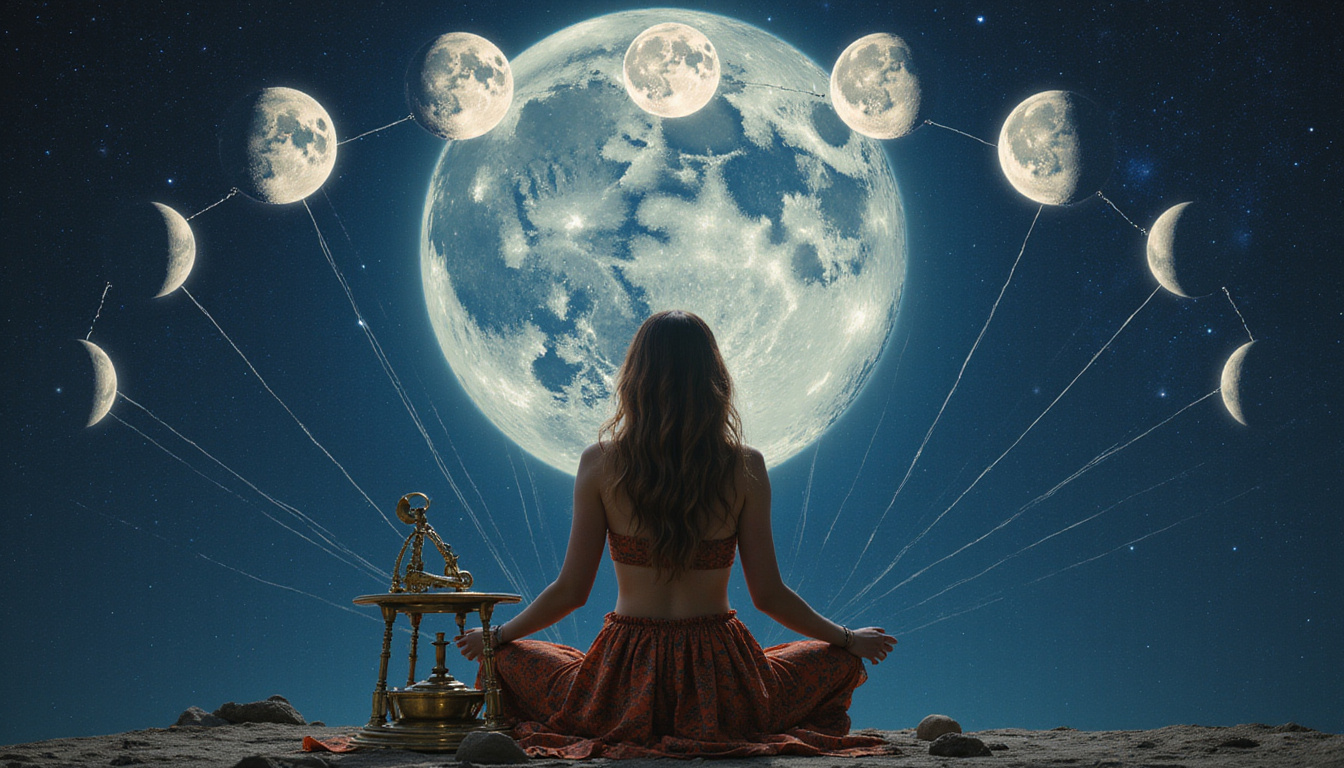
-
New Moon:
- Dark skies ideal for astrophotography, stargazing, and seeing the Milky Way.
-
Crescent Moons:
- Atmospheric photos with delicate light, great for landscape compositions.
-
Full Moon:
- Bright natural lighting for night hiking or cityscapes.
- Long-exposure photography can capture moonlit landscapes almost like daylight.
Plan your trips and shoots using a moon phase app plus local weather forecasts.
Emotional and Symbolic Meanings of Lunar Phases
Many spiritual and cultural traditions see lunar phases as metaphors for life’s cycles. Even if you’re not spiritual, these symbolic meanings can be a helpful framework for reflection.
- New Moon: Starting over, setting intentions, fresh chapters.
- Waxing Crescent: Building confidence, beginning action.
- First Quarter: Facing obstacles, committing, making decisions.
- Waxing Gibbous: Refining skills, adjusting course.
- Full Moon: Climax, realization, visibility, and emotional intensity.
- Waning Gibbous: Gratitude, sharing, integration.
- Last Quarter: Releasing what doesn’t serve you, simplifying.
- Waning Crescent: Rest, surrender, incubation before the next beginning.
You might, for example, schedule monthly reflection sessions around the new moon and full moon to check in on your goals and emotional state.
Quick Reference: Working with Lunar Phases
Here’s a compact checklist for harnessing the lunar cycle:
-
New Moon
- Set 1–3 realistic intentions.
- Start planning new projects.
- Journal about what you want to invite in.
-
Waxing Phases
- Take consistent action.
- Network, pitch, and launch.
- Build habits and track progress.
-
Full Moon
- Review outcomes and insights.
- Express gratitude and celebrate wins.
- Practice emotional regulation if you feel overstimulated.
-
Waning Phases
- Declutter spaces and schedules.
- Finish lingering tasks and obligations.
- Let go of goals or commitments that no longer fit.
Using this simple cycle over several months can make your planning feel more natural and rhythmic.
FAQ About Lunar Phases
1. How many lunar phases are there in a month?
A full lunar cycle includes eight main phases: new moon, waxing crescent, first quarter, waxing gibbous, full moon, waning gibbous, last quarter, and waning crescent. All of these occur within about 29.5 days, so you typically experience one full set of moon phases each month.
2. Why do we see different moon phases from Earth?
We see different moon phases because the relative positions of the sun, Earth, and moon change as the moon orbits Earth. The portion of the moon’s sunlit side that faces us varies, creating the visible sequence of phases from new to full and back.
3. Do lunar phases affect human behavior or moods?
Research is mixed. Some studies suggest small correlations between full moons and sleep patterns, while others find no strong effect. Many people feel more energized or emotional around the full moon, which may be due to brightness, cultural expectations, or individual sensitivity. The most practical approach is to track your own patterns alongside the lunar phases and see what holds true for you personally.
Align Your Life with the Moon’s Rhythm
The moon’s cycle is one of the most reliable natural rhythms available to us—steady, predictable, and beautifully visible every clear night. By learning the lunar phases, tracking them with simple tools, and experimenting with timing your goals, rest, and activities to the moon’s rhythm, you tap into a subtle but powerful structure for your month.
Start today: note the current phase, decide one intention to carry to the next full moon, and add upcoming lunar dates to your calendar. Over a few cycles, you’ll build your own personalized practice of tracking, predicting, and harnessing moon cycles—and the night sky will never feel random again.
Learn how astronomy, psychology, and spiritual traditions intersect by visiting SpiritualMindScience.com for deeper insights.