The Moon has guided calendars, myths, and farming practices for thousands of years—but today science is catching up with what many cultures always suspected: moon phases can subtly influence sleep, mood, and even plant growth. While the Moon doesn’t control our lives, its changing light and gravitational pull do create measurable rhythms on Earth that some people feel more than others.
Below, you’ll find a clear, evidence-informed breakdown of how the lunar cycle works and what research says about its effects on your nights, your emotions, and your garden.
What Are Moon Phases? A Simple Breakdown
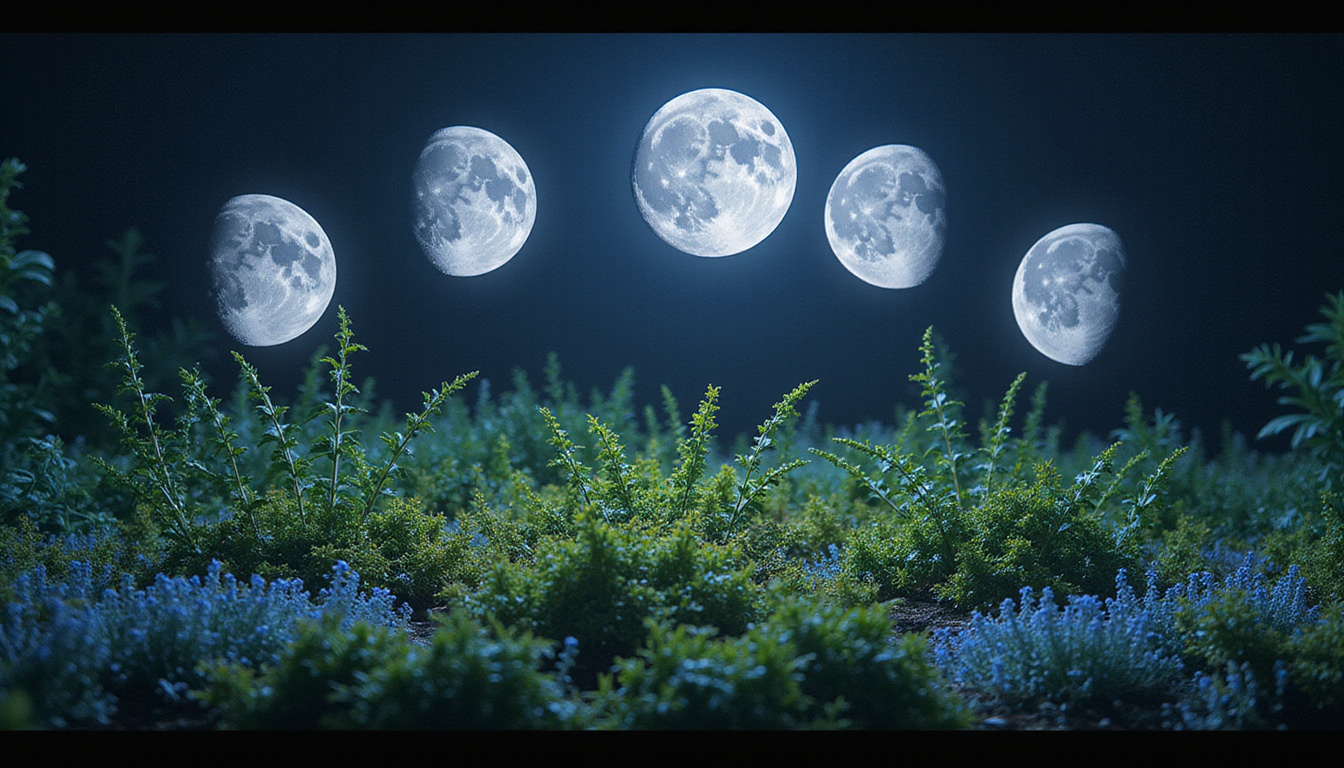
The Moon doesn’t produce its own light; we see it because it reflects the Sun. As the Moon orbits Earth, we see different portions of its sunlit side—these are the moon phases.
A full lunar cycle takes about 29.5 days and includes:
-
New Moon
- Moon is between Earth and Sun
- Dark to our eyes; not visible (or barely) in the night sky
-
Waxing Crescent
- A small sliver of light grows on the right side (in the Northern Hemisphere)
-
First Quarter
- Half the Moon is lit
- High in the sky at sunset, sets around midnight
-
Waxing Gibbous
- More than half lit, growing toward full
-
Full Moon
- Earth is between Sun and Moon
- Fully illuminated, rises at sunset, sets at sunrise
-
Waning Gibbous
- More than half lit, shrinking after full
-
Last (Third) Quarter
- Half lit again, opposite side from First Quarter
-
Waning Crescent
- A thinning sliver before the cycle restarts at New Moon
This cycle creates a natural monthly rhythm of changing light at night, which is central to many of the effects people report.
How Moon Phases Affect Sleep
One of the most researched topics around moon phases is sleep. Many people swear they sleep badly around the full moon—and several studies suggest they may be onto something.
What the Research Shows
Some notable findings:
-
A 2013 study in Current Biology found that around the full moon, participants:
- Took longer to fall asleep
- Slept about 20 minutes less
- Had reduced deep (slow-wave) sleep
- Showed lower melatonin levels (source: Current Biology)
-
Other studies have had mixed or weaker results. Some confirm slightly shorter sleep and later sleep onset around the full moon; others find minimal or no effects.
So, there’s no universal, dramatic disruption—but there may be subtle, measurable sleep changes tied to the lunar cycle for at least some people.
Why Would the Full Moon Affect Sleep?
Researchers point to a few plausible reasons:
-
Increased night-time light
Before artificial lighting, full moons dramatically brightened the night. Our circadian rhythms (sleep–wake cycles) are sensitive to light, especially in the hours before bedtime. Even today, in darker environments or for sensitive individuals, full moonlight might delay melatonin release and sleep onset. -
Social and behavioral factors
Brighter nights may historically have meant more evening activity—socializing, working, or traveling—potentially shifting sleep timing, a pattern that could persist in habits or cultural beliefs. -
Internal biological sensitivity
Some researchers speculate that humans, like many animals, might retain a subtle internal sensitivity to moon phases beyond light alone, but this remains unproven and controversial.
How to Sleep Better Around the Full Moon
If you notice you sleep worse around full moons, a few strategies can help:
- Use blackout curtains or a sleep mask to block extra light
- Avoid screens for 60–90 minutes before bed
- Keep a consistent sleep–wake schedule throughout the month
- Try a short wind-down ritual: reading, stretching, or breathing exercises
- Limit caffeine and heavy meals late in the evening
You don’t need to track every lunar cycle, but if a pattern shows up in your sleep diary, these steps can reduce its impact.
Do Moon Phases Really Affect Mood?
The idea that the full moon causes people to act “crazy” is deeply rooted in language (think “lunatic,” from luna, Latin for Moon). Science doesn’t support dramatic personality changes—but there may be small mood and behavior shifts tied to moon phases.
What Studies Say About Mood and Behavior
-
No strong link to crime or psychiatric admissions
Large reviews generally find little to no consistent increase in crime, emergency room visits, or psychiatric hospitalizations during the full moon compared to other phases. -
Subtle effects on emotional rhythm
Some small studies suggest that people may report feeling slightly more restless, energized, or emotionally sensitive near the full moon, but results are inconsistent and often weak. -
Placebo and expectation
If you expect the full moon to affect you, you may notice negative moods more, reinforcing the belief. This “expectation effect” can be surprisingly powerful.
Possible Mechanisms
Even without dramatic mood swings, a few mechanisms could explain mild changes for some people:
-
Sleep disturbance
If full moons subtly disrupt sleep for you, it’s natural to feel more irritable, anxious, or low-energy the following day. -
Light and social rhythms
Historically, brightly lit nights might have increased nighttime socializing and activity, nudging energy and mood patterns. -
Biological rhythms
The human body has many interacting clocks (circadian, hormonal, reproductive). It’s possible the ~29.5-day lunar cycle resonates weakly with some of these in certain individuals, though clear evidence is limited.
Tuning Into Your Own Lunar Mood Cycle
Instead of assuming the Moon controls your mood, think of it as a possible subtle influence. You can track it like this:
- Note your energy, stress, and mood daily for a couple of months
- Overlay your notes with the lunar phases (many apps and calendars show them)
- Look for patterns: Do you feel more wired around full moon? Slower or more introspective near new moon?
If a pattern appears, you can plan gently around it—scheduling more calming activities near your more sensitive days and avoiding overcommitment when you expect low energy.
Moon Phases and Plants: Is Lunar Gardening Real?
Gardeners and farmers have long used moon phases to guide planting, pruning, and harvesting. This practice, often called lunar gardening, assumes the Moon’s gravitational pull and light cycle influence moisture, sap flow, and growth.
Traditional Lunar Gardening Rules
Common guidelines include:
-
New Moon to First Quarter (Waxing phase)
- Plant above-ground crops with external seeds (e.g., lettuce, spinach, grains)
- Idea: increasing light and rising sap support leafy growth
-
First Quarter to Full Moon
- Plant above-ground crops with internal seeds (e.g., tomatoes, beans)
- Idea: strong lunar influence encourages foliage and fruit
-
Full Moon to Last Quarter (Waning phase)
- Plant root crops (e.g., carrots, potatoes, onions)
- Idea: gravitational pull favors root development
-
Last Quarter to New Moon (Dark phase)
- Focus on pruning, weeding, and soil work
- Idea: minimal growth phase, good for maintenance
What Science Says About the Moon and Plants
There is some plausible science, though evidence is not definitive:
-
Gravitational pull and water
The Moon’s gravity drives tides in oceans. On land, any effect on soil water is far smaller, but some researchers speculate slight fluctuations could influence seed hydration and root behavior. -
Light cues
Plants respond strongly to light cycles (photoperiod). Changes in night-time illumination with the lunar cycle might influence hormone levels, flowering, and leaf movements in some species. -
Mixed research results
Controlled studies often find small or inconsistent lunar effects on germination and growth. Some plant species show subtle responses to lunar rhythms; others show none at all.
How to Experiment With Lunar Gardening
If you enjoy gardening, you can treat moon phases as an extra layer of timing rather than a strict rule:
- Keep your fundamentals right first: soil, water, nutrients, and climate
- Use a lunar calendar to plan a few plantings in different phases
- Record germination rates, growth speed, and yield
- Compare results over at least a couple of seasons
For many gardeners, even if lunar timing offers only a modest edge, it brings a deeper sense of connection to natural cycles—and that alone can make gardening more rewarding.
Practical Ways to Live More in Tune With Moon Phases
You don’t have to be mystical to get value from following the Moon. You can use the roughly monthly cycle as a simple framework for planning, reflection, and habits.
Here’s one way to align your month with moon phases:
-
New Moon: Intention & Planning
- Set goals for the coming weeks
- Start new projects or habits
- Journal about what you want to create or change
-
Waxing Phases (Crescent to Gibbous): Action & Growth
- Focus on taking concrete steps toward your goals
- Increase effort, learning, and outreach
-
Full Moon: Review & Visibility
- Assess progress so far
- Share work publicly, have important conversations
- Notice emotional patterns; practice gratitude
-
Waning Phases (Gibbous to Crescent): Declutter & Release
- Let go of tasks or commitments that aren’t working
- Clean, organize, and simplify
- Focus on rest and consolidation
Using the lunar cycle this way can add a natural rhythm to your month, whether or not you feel any direct physical effects.
FAQ: Common Questions About Moon Phases and Their Effects
1. Do moon phases really affect human behavior?
Most large studies find no dramatic changes in behavior tied to specific moon phases, especially around crime or psychiatric emergencies. However, some people seem to experience subtle shifts in sleep, energy, or emotional sensitivity—often linked to changes in light and sleep rather than the Moon “controlling” behavior.
2. Can different moon phases disturb sleep even with blackout curtains?
Some research shows sleep changes near the full moon even in controlled, dark environments, suggesting there may be more than just light at work. Still, light is a major factor, and good sleep hygiene (dark room, regular schedule, limited screens) can significantly reduce any lunar-related disturbance for most people.
3. Which moon phases are best for planting in a garden?
Traditional lunar gardening suggests sowing leafy, above-ground crops during waxing moon phases and root crops during waning moon phases. Scientific proof is limited and mixed, but many gardeners find it a helpful timing tool and a way to stay attuned to natural cycles, as long as basic gardening practices remain the top priority.
Align with the Moon: Take the Next Step
The Moon is not a puppet master—but it is a powerful, predictable rhythm-maker in our sky. Its moon phases subtly reshape night-time light, may nudge our sleep and mood, and provide a time-tested framework for planting and planning.
If you’re curious how much the lunar cycle affects you:
- Track your sleep, mood, and energy alongside a lunar calendar for a few months
- Note how your plants respond to different planting dates
- Experiment with structuring your projects and self-care around the waxing and waning of the Moon
Start with the next new moon: set one clear intention for your health, your habits, or your garden, and follow it through to the next full moon. By the time the Moon is bright in the sky again, you may find that paying attention to its phases helps you sleep a bit better, feel more grounded, and grow more—both in your life and in your soil.
This guide explored astrology and zodiac meanings. To discover the psychology, consciousness, and scientific perspectives behind spiritual beliefs, visit SpiritualMindScience.com.