Astrology isn’t just about your daily horoscope or sun sign. Behind the scenes of personal charts lies a much larger clock: astrological ages. These vast cycles, each lasting about 2,000 years, are said to correspond with sweeping changes in civilization, belief systems, technology, and even how we understand ourselves. Whether you’re skeptical or curious, exploring astrological ages offers a fascinating lens on why history seems to move in recognizable cultural waves.
What Are Astrological Ages?
Astrological ages are long periods of time—roughly 2,000–2,160 years each—associated with one sign of the zodiac. Together, the twelve ages form a Great Year of about 26,000 years, corresponding to the astronomical phenomenon known as the precession of the equinoxes (source: NASA).
In simpler terms:
- The Earth wobbles slightly on its axis over thousands of years.
- This slow wobble changes which constellation the Sun appears in at the spring equinox.
- Astrologers link each long phase, when the equinox aligns with a particular constellation, to an “age” and a distinct cultural mood.
So instead of asking, “What’s your sign?” we might ask, “What’s our civilization’s sign right now?”
How the Great Year Works
To understand astrological ages, it helps to visualize the sky as a giant celestial clock.
- The Earth completes one wobble about every 25,800–26,000 years.
- During that time, the position of the spring equinox shifts backwards through the zodiac signs.
- Each sign gets about 2,100 years of “time in the spotlight.”
This is why ages move in reverse zodiac order:
- Age of Taurus → Age of Aries → Age of Pisces → Age of Aquarius → Age of Capricorn, and so on.
While modern astronomers don’t use the concept of astrological ages in a predictive sense, they do confirm the underlying mechanics of precession. Astrologers then interpret these cosmic shifts symbolically, connecting them with developments in religion, politics, technology, and culture.
A Brief History of the Past Astrological Ages
Astrologers don’t completely agree on the exact start and end dates of each age, but there is broad consensus on the rough historical periods and associated themes. Looking at these patterns helps explain why astrological ages remain so compelling.
The Age of Taurus (approx. 4,000–2,000 BCE)
Taurus is an earth sign ruled by Venus and associated with:
- Agriculture
- Stability and material wealth
- Sensuality and fertility
- Worship of nature and the body
Cultural echoes:
- The rise of agriculture-based civilizations in Mesopotamia, Egypt, and the Indus Valley.
- Widespread bull and cow worship—from Apis in Egypt to the bull symbolism in Minoan Crete and early Mesopotamian cultures.
- Monumental stone structures and temples that celebrate fertility, harvests, and earthly abundance.
This “earthy” age prioritized land, possession, and the cycles of nature.
The Age of Aries (approx. 2,000–0 BCE)
Aries is a fiery, Mars-ruled sign associated with:
- War, conquest, and bravery
- Individual heroism and leadership
- Initiation, beginnings, and action
Key cultural themes:
- The rise of warrior cultures and empires: Greek city-states, Rome, Persian Empire.
- Ram symbolism and sacrificial motifs—like the biblical story of Abraham and the ram, and the prominence of rams in Near Eastern religious art.
- Emphasis on law, order, and codified systems of power (e.g., Roman law).
The Age of Aries is often linked with patriarchy, hierarchy, and the glorification of martial valor.
The Age of Pisces (approx. 0–2,000 CE)
Pisces is a water sign ruled (traditionally) by Jupiter and (modernly) by Neptune, associated with:
- Faith, spirituality, and mysticism
- Compassion and martyrdom
- Illusion, sacrifice, and transcendence
Cultural signatures:
- The rise and global spread of Christianity, with its central symbol of the fish—the ichthys.
- Major world religions emphasizing salvation, faith, and spiritual devotion: Christianity, Islam, and later global movements in Buddhism and Hinduism.
- Dualities and conflicts: spiritual vs. material, saved vs. damned, believer vs. non-believer.
- Sacrifice as a central theme—martyrs, saints, and saviors giving their lives for humanity.
The Age of Pisces is often seen as the age of belief, devotion, and sometimes disillusionment when ideals collide with reality.
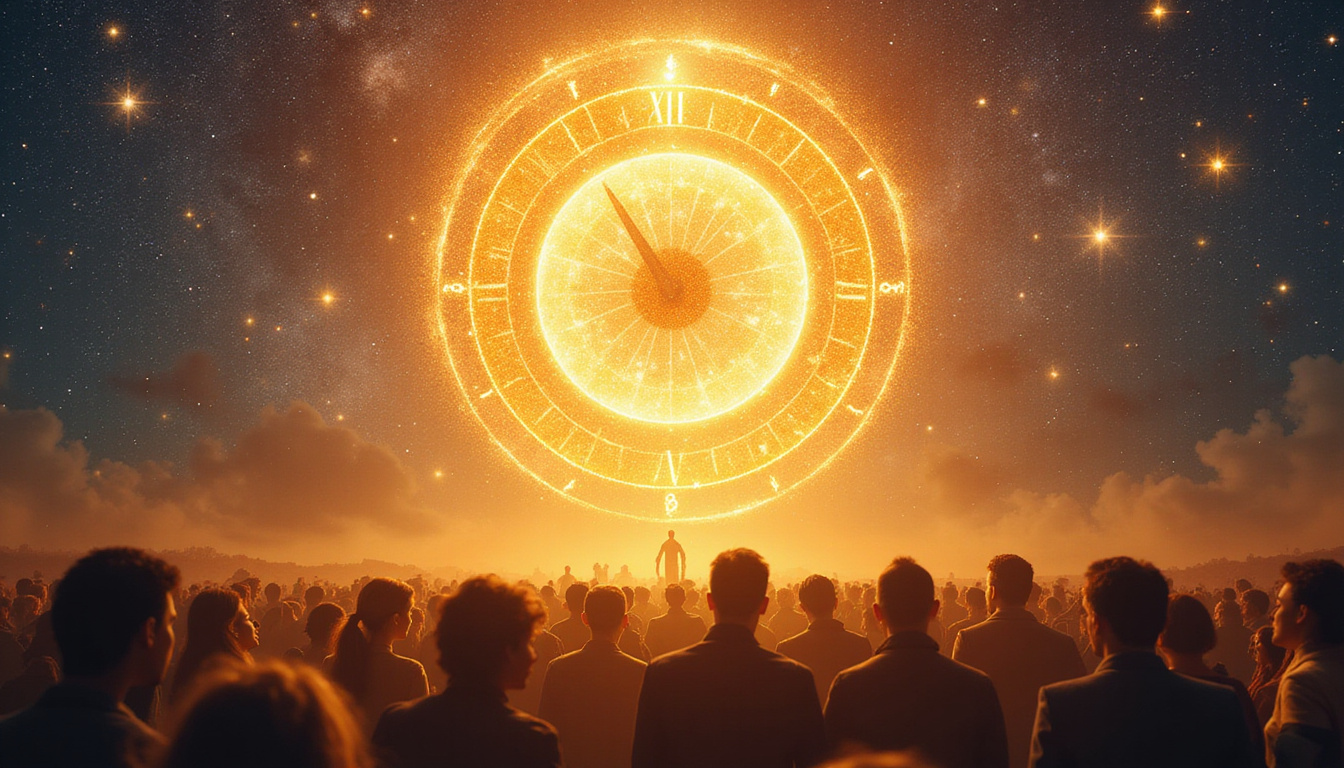
The Emerging Age of Aquarius
When people talk about astrological ages today, they’re usually referring to the Age of Aquarius—the next chapter in this long cosmic story. You may recall the 1960s song “Aquarius/Let the Sunshine In,” capturing a widespread sense that a new era was dawning.
Aquarius is an air sign ruled by Saturn (traditional) and Uranus (modern), associated with:
- Innovation and technology
- Humanitarianism and social reform
- Individual freedom and non-conformity
- Networks, groups, and collective intelligence
Are We Already in the Age of Aquarius?
Astrologers disagree on dates; some say the Age of Aquarius began around the 20th century, while others say it’s still a few centuries away. But many agree we’re at least in a transitional corridor—a bridge between Pisces and Aquarius—where both energies coexist and clash.
Observable Aquarian trends:
- Explosive growth of digital technology, the internet, and global communication networks.
- Rising focus on equality, human rights, and diversity—Aquarius values social reform and breaking hierarchies.
- Decentralization: from cryptocurrencies to remote work, power and information are spreading outwards.
- Collective movements (climate activism, social justice, open-source collaboration) organized via digital platforms.
Whether or not the calendar has clicked over to a precise Aquarian date, the themes strongly resemble an Aquarian zeitgeist.
How Astrological Ages Shape Modern Culture
Even if you treat astrological ages as metaphor, they offer a useful framework for making sense of modern life.
1. Shifting Ideas of Spirituality and Meaning
We’re moving from Piscean faith to Aquarian inquiry:
- Pisces era: Religious institutions, authority figures, and belief-based systems dominated.
- Aquarius era: Spiritual seekers explore meditation, energy work, astrology, and eclectic practices outside traditional churches.
Now, people mix science, spirituality, and personal experience. Instead of “believe and obey,” the mood is “explore and verify.” The rise in mindfulness, yoga, and non-dogmatic spirituality reflects this shift.
2. From Hierarchies to Networks
In a Piscean world, top-down institutions—churches, monarchies, empires—held power. Aquarian energy moves toward horizontal connections:
- Social media platforms enable anyone to broadcast, organize, or build a following.
- Decentralized organizations and DAOs experiment with non-traditional governance.
- Knowledge once locked in libraries and universities is now accessible online.
This transition is disruptive. Institutions built on Piscean hierarchies struggle to adapt to Aquarian transparency and public scrutiny.
3. Technology as a Collective Nervous System
Aquarius rules technology and the future. In modern culture:
- Smartphones and the internet function like a global nervous system.
- Artificial intelligence, biotech, and space exploration push the boundaries of what it means to be human.
- Online communities give people new identities, friendships, and even careers.
However, Aquarius can be emotionally detached, so we’re also grappling with dehumanization, loneliness, and digital overload. The culture is learning to balance tech with authentic connection.
4. Reimagining Community and Identity
Astrological ages influence how we answer: Who am I, and where do I belong?
- In Pisces, identity often revolved around religion, nation, or family.
- In Aquarius, people form communities around interests, causes, and ideas—across borders and cultures.
LGBTQ+ rights movements, neurodiversity advocacy, and global fandoms (from K-pop to gaming) are all part of a broader Aquarian reshaping of belonging and self-definition.
Using Astrological Ages as a Reflective Tool
You don’t need to accept astrological ages as literal cosmic law to benefit from their framework. They work well as a cultural mirror. Try asking:
-
Which Pisces patterns are fading?
- Blind faith in institutions
- Rigid “us vs. them” thinking
- Idealizing suffering and self-sacrifice
-
Which Aquarius patterns are strengthening?
- Critical thinking and skepticism
- Collaboration across borders and backgrounds
- A push for authenticity, transparency, and equality
-
Where do you feel the tension?
Many people feel caught between wanting tradition and craving freedom. Recognizing that you’re living through a major “age shift” can normalize that sense of in-between-ness.
Practical Ways to Align with the Age of Aquarius
If the symbolism of astrological ages resonates with you, you can consciously lean into Aquarian strengths in your own life.
Consider experimenting with:
-
Lifelong Learning
- Take online courses in topics like coding, design, or social science.
- Join discussion groups or book clubs that challenge your thinking.
-
Digital Consciousness
- Use social platforms intentionally: follow accounts that educate or uplift.
- Set boundaries with screen time and cultivate offline community.
-
Community and Collaboration
- Volunteer for causes aligned with your values.
- Participate in open-source projects or local mutual-aid networks.
-
Innovation in Your Work
- Adopt new tools that increase collaboration or creativity.
- Propose experimental projects, pilots, or cross-functional teams.
-
Authentic Self-Expression
- Explore your uniqueness, whether in art, fashion, or career choices.
- Connect with people who celebrate your individuality, not just conformity.
By consciously embodying these Aquarian qualities, you’re not just adapting to cultural change—you’re participating in shaping it.
Frequently Asked Questions About Astrological Ages
1. How long do astrological ages last, and why are estimates different?
Astrological ages last about 2,000–2,160 years, depending on how you calculate the precession of the equinoxes and where you place the boundaries between constellations. Because constellations are irregular in size and astrologers use different reference points, there’s no single, universally accepted calendar of astrological ages. Most practitioners agree on the sequence and broad time frames, but specific dates can differ by several centuries.
2. What is the Age of Aquarius in terms of cultural meaning?
The Age of Aquarius is associated with innovation, technology, humanitarian values, and collective awareness. In cultural terms, this age emphasizes equality, social reform, and the breakdown of rigid hierarchies. We see Age of Aquarius themes in the rise of the internet, global activism, decentralized movements, and a shift away from traditional authority structures toward individual freedom and collaborative networks.
3. How do astrological ages relate to personal astrology like birth charts?
Personal astrology focuses on your natal chart, a snapshot of the planets at your birth, while astrological ages describe broad eras of collective energy. However, they interact: your chart indicates how you personally experience the dominant cultural climate. For example, someone with strong Aquarius or Uranus placements may feel particularly attuned to the themes of the emerging Aquarian age and might be drawn to roles as innovators, reformers, or community organizers.
Stepping Consciously Into a New Cosmic Chapter
Humanity has always told stories about the sky to make sense of shifting times. The framework of astrological ages is one of those grand stories—a way to connect our personal lives to a much longer arc of cultural evolution. Whether you see the Age of Aquarius as a literal cosmic cycle or a powerful metaphor, its themes are undeniably present in our hyper-connected, innovation-driven, equality-seeking world.
If you’re curious to go deeper, explore how your own birth chart interacts with this transitional era, study historical parallels between past ages and today, or join communities that actively embody Aquarian values of cooperation and visionary thinking. By doing so, you don’t just passively watch the next age unfold—you become a conscious co-creator of what this new chapter looks like.
Now is an ideal moment to ask yourself: What kind of future do I want to help midwife into being? Because as we cross the threshold between astrological ages, every choice you make—how you connect, create, and care—contributes to the culture that will define this cosmic era.
This guide explored astrology and zodiac meanings. To discover the psychology, consciousness, and scientific perspectives behind spiritual beliefs, visit SpiritualMindScience.com.