Learning isn’t one-size-fits-all. The modalities you choose—how information is delivered, practiced, and reinforced—can dramatically affect how well you understand, remember, and apply what you learn. By aligning learning modalities with goals, context, and learner needs, you can boost retention, engagement, and real-world performance.
This guide breaks down the most effective learning modalities, when to use them, and how to combine them into a strategy that actually sticks.
What Are Learning Modalities?
In education and training, modalities are the different methods, channels, or formats used to deliver and experience learning. They’re not limited to “visual vs. auditory.” Instead, think of modalities as the broad ecosystem of how learning happens, including:
- In-person and online delivery
- Self-paced and instructor-led formats
- Text, video, audio, and interactive experiences
- Hands-on practice and simulations
The goal isn’t to “pick the right modality” once and for all, but to intentionally match modalities to the task, the learner, and the environment.
Core Learning Modalities and How They Work
1. Visual Modality: Seeing to Understand
The visual modality uses images, diagrams, charts, animations, and spatial layouts to support understanding. When information is visualized, it’s often easier to grasp relationships and patterns.
Best for:
- Complex systems and processes (e.g., supply chains, workflows)
- Data interpretation (graphs, dashboards, reports)
- Spatial or structural concepts (anatomy, architecture, maps)
How to use visual modalities effectively:
- Replace dense text with diagrams and infographics where possible.
- Use color and layout to highlight key relationships and sequences.
- Pair visuals with concise explanations, not paragraphs of text on top of images.
Research in multimedia learning shows that combining words and pictures—when well-designed—often improves understanding and retention compared to text alone (source: Mayer’s Cognitive Theory of Multimedia Learning).
2. Auditory Modality: Learning Through Listening
The auditory modality focuses on spoken language and sound: lectures, podcasts, discussions, and audio notes. It’s powerful for narrative content, stories, and nuanced explanations.
Best for:
- Story-driven topics (history, case studies, leadership)
- Language learning and pronunciation
- Situations where reading is impractical (commuting, exercising)
Auditory modality tips:
- Use short audio segments with clear structure and summaries.
- Encourage learners to pause and reflect or jot down key points.
- Combine audio with visual cues (slides, outlines) to reinforce memory.
3. Reading/Writing Modality: Deep Processing Through Text
The reading/writing modality relies on text—articles, manuals, documentation, written exercises—and on writing as a way to process and produce knowledge.
Best for:
- Detailed, reference-heavy subjects (laws, policies, technical docs)
- Independent, self-paced study
- Learners who like to annotate, outline, and reflect
To optimize this modality:
- Break text into manageable sections with clear headings.
- Include summaries, key terms, and reflection questions.
- Have learners rephrase concepts in their own words or teach them back in writing.
Written elaboration is a powerful memory tool. When learners explain ideas in writing, they encode them more deeply.
4. Kinesthetic Modality: Learning by Doing
The kinesthetic modality emphasizes physical engagement and hands-on practice. It’s critical for procedural skills and real-world performance.
Best for:
- Technical and manual skills (lab work, machinery, clinical procedures)
- Software and tool training
- Any skill where performance matters more than recall
Practical ways to use kinesthetic modalities:
- Simulations and role-plays (e.g., customer calls, emergency response)
- Labs, prototyping, and build projects
- Guided practice with feedback loops and repetition
Kinesthetic learning isn’t just “moving around”; it’s structured practice with clear outcomes.
Delivery Modalities: In-Person, Online, Hybrid, and More
Beyond sensory channels, learning is also shaped by the delivery modalities—how it’s scheduled, located, and facilitated.
Instructor-Led Training (ILT)
Traditional classroom or virtual live sessions led by an instructor. ILT is highly interactive when facilitated well.
Strengths:
- Real-time questions and feedback
- Social learning and peer interaction
- Easier to adapt on the fly to learner needs
Limitations:
- Scheduling constraints
- Variable instructor quality
- Limited scalability
eLearning and Self-Paced Courses
Self-paced online modules, videos, and interactive content that learners can access anytime.
Strengths:
- Flexible and scalable
- Consistent content delivery
- Data tracking for progress and completion
Limitations:
- Risk of low engagement if poorly designed
- Limited immediate support
- Can become passive if interaction is minimal
Blended and Hybrid Modalities
Blended modalities combine in-person and digital learning—for example, pre-work modules followed by a live workshop and post-session practice.
Why blended modalities boost retention:
- Allow learners to prepare at their own pace
- Reserve live time for application, feedback, and problem solving
- Provide multiple touchpoints that reinforce key concepts
In corporate and higher education settings, blended learning regularly outperforms purely face-to-face or purely online approaches when thoughtfully designed (source: U.S. Department of Education meta-analysis).
Modalities and Memory: Why Some Approaches Stick Better
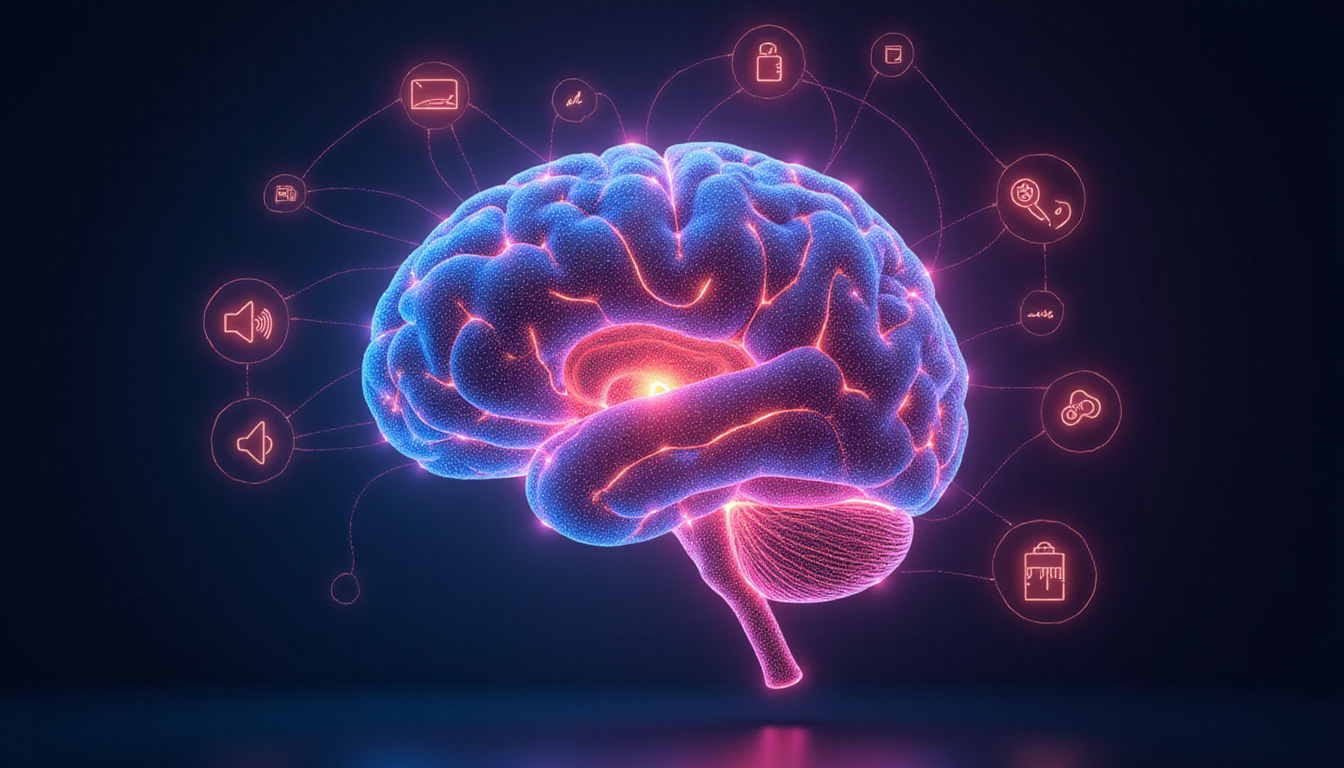
Not all modalities lead to equal retention. Effective learning modalities work with the brain’s cognitive architecture, not against it.
Active vs. Passive Modalities
- Passive: watching videos, listening to lectures, reading without interaction
- Active: answering questions, solving problems, practicing skills, teaching others
Active modalities create desirable difficulty—challenging but manageable effort that strengthens long-term memory.
Boost retention by:
- Adding short quizzes or reflection prompts to videos
- Using problem-based tasks instead of only explanations
- Having learners apply concepts in realistic scenarios
Spaced and Distributed Modalities
Spaced learning—revisiting material across time—is one of the most robust findings in cognitive science.
Instead of:
- One long workshop with no follow-up
Use:
- A series of shorter sessions across weeks
- Follow-up microlearning modules
- Periodic practice questions or scenarios
Distributing modalities (e.g., a video, then a quiz, then a live discussion a week later) gives multiple retrieval opportunities that cement learning.
Multimodal Synergy: Combining Modalities for Maximum Impact
The strongest results usually come from combining modalities, not from chasing a single “best” one.
Effective pairings include:
- Visual + verbal: diagrams with concise explanations
- Reading + discussion: pre-reads followed by live debate or Q&A
- Instruction + practice: short demo then immediate hands-on application
- Online + in-person: self-paced knowledge modules followed by a live workshop focused on practice
Multimodal designs give learners multiple encoding routes and more chances to retrieve and apply information.
Designing a Modalities Mix: A Practical Framework
To choose the right modalities, start from the end: What should learners be able to do?
Step 1: Define the Outcome
Is the goal:
- Recall (e.g., key policies)?
- Conceptual understanding (e.g., how a system works)?
- Performance (e.g., using a tool, handling a call, performing a procedure)?
- Behavior change (e.g., managing conflicts differently)?
Each outcome type suggests different primary modalities.
Step 2: Map Outcomes to Modalities
Here’s a simple guide:
-
Knowledge recall
- Reading/writing, short videos, quizzes
- Microlearning spaced over time
-
Conceptual understanding
- Visual explanations, case studies, discussions
- Concept maps, diagrams, guided questions
-
Skill performance
- Demonstrations plus hands-on practice (kinesthetic)
- Simulations, role-plays, feedback sessions
-
Behavior change
- Social learning, coaching, reflection
- Real-world experiments plus debrief
Step 3: Balance Constraints and Engagement
Consider:
- Time and budget
- Technology access
- Learner location and schedules
Then choose the richest feasible mix of modalities that still fits these constraints.
Common Mistakes in Using Modalities—and How to Avoid Them
-
Overloading learners with too many modalities at once
- Problem: Confusion and cognitive overload.
- Fix: Use a sequence of modalities, not a pile. Move from exposure → understanding → practice → feedback.
-
Assuming “learning styles” should dictate everything
- Problem: Research doesn’t support tailoring all learning to self-reported visual/auditory/kinesthetic preferences.
- Fix: Offer multiple modalities for critical content and focus on what the task requires.
-
Using rich modalities that don’t add value
- Problem: High-production videos that don’t do more than a paragraph of text would.
- Fix: Use richer modalities (video, VR, simulations) when they clearly improve clarity, realism, or practice quality.
-
No follow-up modality after training
- Problem: The “forgetting curve” erases much of a single event.
- Fix: Plan reinforcement modalities—email nudges, microlearning, quick huddles, or coaching sessions.
Practical Examples: Modalities in Action
Onboarding New Employees
- Pre-boarding reading and short videos on culture and essentials.
- First-week live sessions for Q&A and introductions (instructor-led).
- Guided practice in core systems using sandbox environments.
- Follow-up microlearning for policies and compliance.
This uses multiple modalities—text, video, live discussion, hands-on practice—timed to when new hires need each piece.
Technical Skill Training (e.g., Software)
- Short video demonstrations and annotated screenshots.
- Step-by-step written guides as reference.
- Live or virtual labs where learners perform key tasks.
- Scenario-based challenges and peer review.
Again, modalities are matched to the outcome: confident software use.
Simple Checklist for Better Use of Modalities
Before you launch a course or training, ask:
- Have I matched modalities to outcomes (knowledge vs. skills vs. behaviors)?
- Is there at least one active modality (practice, problem-solving, teaching others)?
- Are there multiple touchpoints across time (spaced learning)?
- Do visuals and media genuinely clarify or enhance the content?
- Is there a clear plan for feedback and support?
If you can answer yes to these questions, you’re well on your way to a more effective modalities strategy.
FAQ: Understanding and Applying Learning Modalities
Q1: What are the main types of learning modalities in education and training?
Common learning modalities include visual (images, diagrams), auditory (lectures, podcasts), reading/writing (texts, note-taking), and kinesthetic (hands-on practice). On top of these, delivery modalities—such as in-person, online, blended, self-paced, and instructor-led—shape how and when learners engage with content.
Q2: How do multimodal learning strategies improve retention?
Multimodal learning strategies combine different modalities, such as video plus practice or reading plus discussion. This creates multiple encoding and retrieval paths in memory, offers more opportunities for active engagement, and strengthens connections between concepts and real-world use, all of which support better retention and transfer.
Q3: How should organizations choose appropriate training modalities for employees?
Organizations should start with the desired performance outcomes, then select modalities that best support those outcomes given time, budget, and technology. For example, complex procedures call for demonstrations and hands-on practice, while basic knowledge can use reading, short videos, and quizzes. Blended modalities—mixing self-paced content with live application and coaching—often yield the strongest results.
Turn Your Modalities into a Strategic Advantage
You don’t need more content—you need smarter modalities. By deliberately choosing and combining visual, auditory, reading/writing, kinesthetic, and delivery modalities around specific outcomes, you can turn training from a box-checking exercise into a real driver of performance and retention.
If you’re ready to redesign your courses or programs with high-impact modalities, start by auditing one existing learning experience. Map what you have, identify gaps in practice and reinforcement, and pilot a multimodal upgrade with a small group. From there, you can scale what works—and finally see learning translate into lasting results.
Curious about why astrology has fascinated people for centuries? Explore evidence-based perspectives on spirituality, consciousness, and human psychology at SpiritualMindScience.com