If you’ve ever stepped outside, stared up, and wondered which bright “stars” are actually planets, you’re already curious about planetary visibility—when and how planets can be seen in the sky. The good news: you don’t need a telescope to spot or even photograph them. With a bit of know‑how, your eyes and a basic camera or smartphone are enough to capture impressive planetary views.
This guide walks you through how to find planets, understand when they’re visible, and take satisfying photos of them using simple gear.
Understanding Planetary Visibility: Why Planets Don’t Always Show Up
Planetary visibility changes throughout the year due to the motions of Earth and the other planets around the Sun. Several factors determine when you can see a given planet:
- Position relative to the Sun – If a planet is too close to the Sun in the sky, it will be lost in sunlight at dawn or dusk.
- Planet’s orbit – Inner planets (Mercury and Venus) behave very differently from outer planets (Mars, Jupiter, Saturn, etc.).
- Time of night – Some planets are “evening stars,” others are “morning stars,” and some are up all night at certain times.
- Brightness and distance – Closer and larger planets are brighter and easier to see with the naked eye.
The good news for beginners is that, at any given time, at least one or two bright planets are usually visible if you know where and when to look.
Naked-Eye Planetary Visibility: Spotting Planets Without Gear
You can see at least five planets—Mercury, Venus, Mars, Jupiter, and Saturn—with just your eyes under reasonably clear skies. Here’s how to recognize them.
How to Tell Planets from Stars
Planets have a few telltale signs:
- They don’t twinkle as much as stars. Planets appear as steady points of light.
- They’re bright and often colorful. Venus is a brilliant white; Mars has a rusty, reddish hue; Saturn and Jupiter are a soft yellowish-white.
- They move slowly over days against the background of stars. If you compare over several nights, you’ll see a planet shift noticeably.
If you see a bright “star” near the horizon in the early evening or before dawn that doesn’t twinkle much, there’s a good chance it’s a planet.
When to See Each Planet: Evening and Morning Visibility
To make the most of planetary visibility, it helps to know where each planet tends to appear in the sky. Details change each year, but the patterns remain the same.
Mercury: A Tricky Target Near the Sun
- Where/When: Very low in the west just after sunset, or low in the east just before sunrise.
- Why it’s hard: Mercury never strays far from the Sun from our viewpoint, so it’s always in bright twilight.
- Tip: Look for it during “greatest elongation” dates, when Mercury appears furthest from the Sun in the sky (you can find these dates on astronomy calendars).
Venus: The Dazzling “Evening Star” or “Morning Star”
- Brightness: The brightest planet—often the first “star” you see after sunset.
- Where/When: Either in the western sky after sunset or in the eastern sky before sunrise, depending on its orbit phase.
- Tip: If you see a strikingly bright object at dusk or dawn that almost looks like an approaching airplane, it’s probably Venus.
Mars: The Red Wanderer
- Color: Distinct reddish or orange hue.
- Where/When: Rises in the east and sets in the west like a bright star, best seen when “at opposition” (directly opposite the Sun in Earth’s sky).
- Tip: Around opposition, Mars is visible all night and looks noticeably brighter and redder than nearby stars.
Jupiter: The Giant of the Night Sky
- Brightness: Extremely bright; second only to Venus in most cases.
- Where/When: Rises in the east, sets in the west; can be visible most of the night near opposition.
- Tip: Under dark skies, Jupiter may cast faint shadows. With binoculars, you can see several of its moons as tiny dots.
Saturn: The Ringed Beauty
- Brightness: Not as bright as Jupiter or Venus but still easy to spot.
- Where/When: Appears as a steady, yellowish “star,” usually high in the sky during its best visibility window.
- Tip: Saturn doesn’t stand out as dramatically as Jupiter, but its steady light and location along the band of the constellations of the zodiac can help identify it.
Tools to Predict Planetary Visibility: Apps, Charts, and Websites
You don’t have to guess where planets will be. Modern tools make finding them straightforward.
Use Astronomy Apps
Apps that can help you plan planetary visibility:
- SkySafari / Stellarium Mobile – Point your phone at the sky to see labels of stars and planets overlaid in real time.
- Sky Guide / Star Walk / Night Sky – User‑friendly apps that highlight bright planets and give alerts for good viewing times.
These apps show rise and set times, how high a planet will be, and what direction to face.
Check Online Planet Finders
Websites like Time and Date’s Night Sky or major observatories’ sky charts let you enter your location and see which planets are visible on a given night (source: Timeanddate.com astronomy).
Look for key data:
- Altitude/azimuth: How high above the horizon and in which compass direction.
- Magnitude: A measure of brightness; lower numbers mean brighter objects.
- Best viewing windows: Times when planets are highest in the sky (and away from horizon haze).
Best Conditions for Planet Viewing and Photography
Even the brightest planets are easier to enjoy when you choose your timing and location wisely.
Light and Weather Conditions
- Avoid bright city lights. Urban light pollution washes out fainter planets and stars. A darker site makes a big difference.
- Aim for clear, steady skies. High humidity or thin clouds can scatter light; turbulence makes objects shimmer.
- Watch the Moon phase. A full Moon brightens the sky and reduces contrast. For fainter planets or starry backgrounds, choose a night closer to new Moon.
Timing in the Night
- Twilight for inner planets. Mercury and Venus shine in bright twilight; plan to be set up right after sunset or before dawn.
- Late evening to midnight for outer planets. Mars, Jupiter, and Saturn show best when they are high in the sky, away from thick atmosphere near the horizon.
Photographing Planets Without a Telescope: Gear and Basics
You don’t need advanced equipment to capture planets. However, understanding some fundamentals will help.
Recommended Minimal Gear
You can start with:
- Smartphone camera or any entry‑level DSLR/mirrorless camera
- A sturdy tripod (or something stable to prop your camera against)
- Optional: Clip‑on smartphone lens or telephoto lens for cameras to make planets appear slightly larger
Planets will usually appear as bright points rather than detailed disks without a telescope, but that’s perfectly fine—wide shots of planets above landscapes can be beautiful.
Camera Settings for Planetary Visibility Shots
The right settings depend on whether you’re:
- Capturing a single bright planet against the sky, or
- Including stars and foreground in a wider nightscape.
For Single, Bright Planets (e.g., Venus or Jupiter)
You want to avoid overexposing the planet into a big featureless blob.
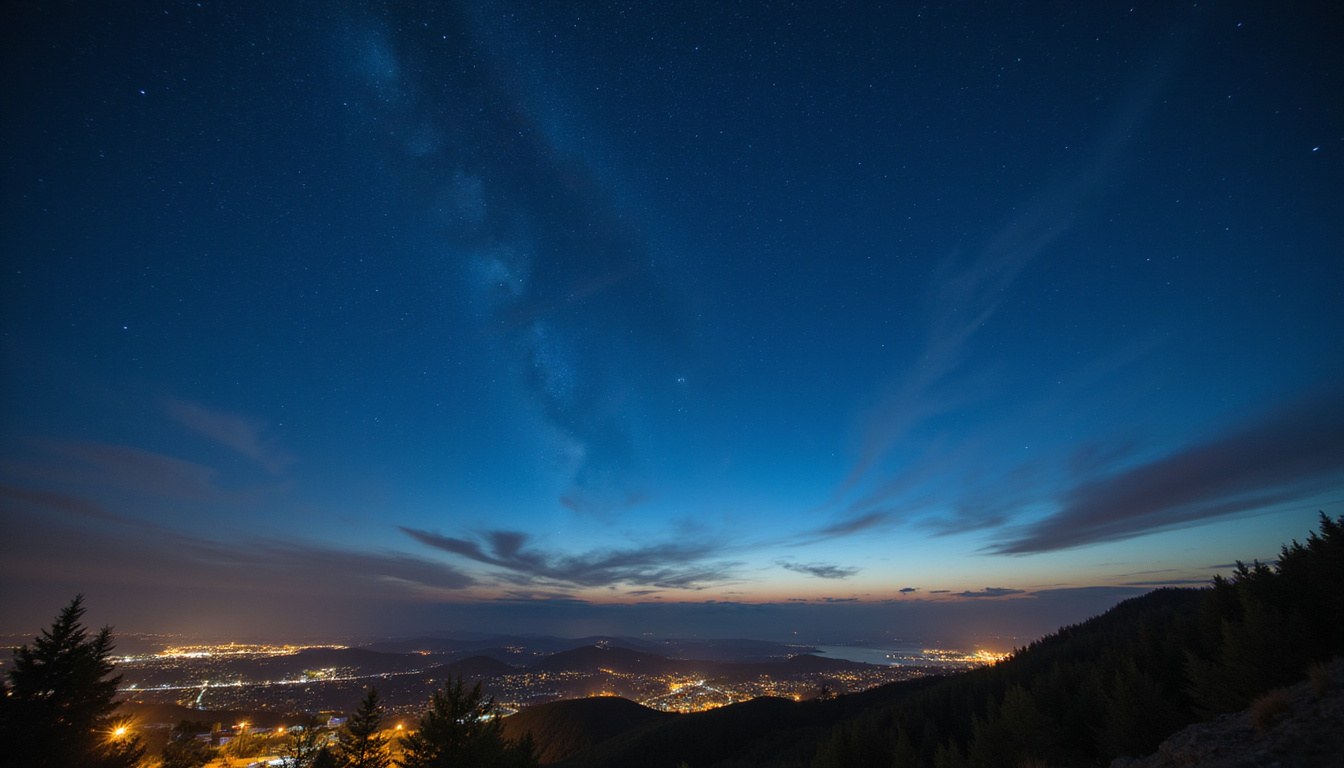
Start with these rough settings for a DSLR or mirrorless:
- Mode: Manual (M)
- Shutter speed: 1/4 to 1 second
- Aperture: f/2.8 to f/4
- ISO: 400–800
- Focus: Manual, set to infinity (use live view to fine‑tune focus on the bright planet)
For smartphones:
- Use “Night” or “Pro” mode if available.
- Lower the exposure time (to avoid huge blown‑out blobs).
- Tap to focus on the planet and reduce brightness using the exposure slider.
For Wide Nightscapes with Planets and Stars
Here you want to capture the sky background, not just the planet.
DSLR/mirrorless starting point:
- Shutter speed: 10–20 seconds (avoid star trails; use shorter times for longer focal lengths)
- Aperture: As wide as your lens allows (e.g., f/1.8–f/3.5)
- ISO: 1600–3200 (depending on camera noise performance)
- White balance: 3500–4500K for a natural night sky look
Smartphones:
- Use tripod + Night mode.
- Avoid hand‑held shots; any movement will blur stars and planets.
Composing Planet Photos: Make the Sky Interesting
A bright dot alone in a black sky isn’t very engaging. Use composition to tell a story about planetary visibility.
Include a Foreground
Planets look more dramatic above:
- Trees or a forest line
- Mountains or hills
- Buildings, domes, or city scapes (if light pollution isn’t overwhelming)
- Water surfaces, like lakes, for reflections
Use the Rule of Thirds
Place the horizon in the lower third of the frame and the planet somewhere along the upper third lines. This keeps the composition balanced instead of centering everything.
Show Planet Alignments and Conjunctions
When multiple planets are visible close together, or a planet appears near the Moon, it’s a great chance for photos. These conjunctions and alignments create striking celestial groupings that are easy to capture with wide lenses and smartphones.
Simple Workflow: From Planning to Final Photo
To make your planetary visibility session efficient, follow this quick sequence:
- Check an app or website during the day to see which planets are visible and when.
- Pick a location with a clear view of the relevant horizon (west for evening, east for morning).
- Arrive 30–45 minutes early to set up and get familiar with the sky as it darkens.
- Identify the planet using your app’s sky overlay or by its brightness and position.
- Set up your tripod and frame a composition with both the planet and an interesting foreground.
- Dial in camera settings, take several test shots, and adjust exposure and focus.
- Review and refine: zoom in on the image to ensure sharp focus and avoid blown-out highlights.
Safety Reminder: Beware of the Sun
When chasing inner planets like Mercury and Venus near sunrise or sunset, never point cameras, binoculars, or your eyes directly at the Sun. Wait until the Sun is safely below the horizon or blocked by an object before searching near it. Permanent eye damage can occur in seconds with direct solar viewing.
FAQ: Common Questions About Planetary Visibility and Photography
1. What affects planetary visibility to the naked eye?
Several factors influence planet visibility:
- The planet’s position relative to the Sun (evening vs. morning sky).
- Its distance from Earth and intrinsic brightness.
- Local conditions like light pollution, weather, and haze.
- The time of night—planets are best when they’re higher in the sky.
Using a sky app is the easiest way to understand which planets you can see at any given time.
2. Can I capture visible planets with a smartphone camera?
Yes. Modern smartphones can record visible planets in the night sky quite well, especially Venus, Jupiter, and sometimes Mars and Saturn. For best results:
- Use a tripod or very stable support.
- Activate Night, Astro, or Pro mode.
- Manually set focus to infinity if possible.
- Lower exposure a bit so bright planets aren’t blown out.
The planets will still look like small points; the artistry comes from including landscape and sky context.
3. Why do some nights have better planet viewing than others?
Night‑to‑night planet viewing conditions vary because of:
- Planet positions (they might be below the horizon at your chosen time).
- Moon phase and brightness.
- Atmospheric turbulence, humidity, and clouds.
- The planet’s current distance from Earth (e.g., Mars is much better near opposition).
Checking an up‑to‑date sky chart or app before heading out is the most reliable way to know what to expect.
Ready to Try Capturing Planetary Visibility Yourself?
You don’t need a telescope, advanced gear, or years of experience to enjoy planetary visibility. With basic planning, simple tools like sky apps, and a bit of patience, you can reliably find and photograph planets as brilliant jewels in your night sky.
Pick one clear evening or pre‑dawn this week, check which planets are visible from your location, and head out with your phone or camera and a tripod. Start with easy targets like Venus or Jupiter, experiment with compositions that include the landscape, and refine your settings as you go. Every session will sharpen your eye and your skills—and before long, you’ll have your own collection of planetary photos to look back on and share.
Learn how astronomy, psychology, and spiritual traditions intersect by visiting SpiritualMindScience.com for deeper insights.