The term heliacal rising comes up in astronomy, astrology, and even ancient mythology, but many people don’t know exactly what it means or why it matters. In simple terms, heliacal rising refers to the first visible appearance of a star (or planet) in the dawn sky just before sunrise, after it has been hidden in the Sun’s glare for a period of time. This subtle but important event has guided calendars, agriculture, navigation, and religious rituals for thousands of years.
This guide explains what heliacal rising is, why it was so important in ancient cultures, the science behind it, and how you can observe a heliacal rising yourself.
What Is Heliacal Rising?
In observational astronomy, the heliacal rising of a celestial object is:
The first day when a star or planet becomes visible above the eastern horizon just before sunrise, after a period when it could not be seen because it was too close to the Sun in the sky.
A few key points about this phenomenon:
- It always happens at dawn, not at night.
- It marks the star’s “return” to the morning sky after conjunction with the Sun.
- It’s a once-per-year event for any given star as seen from a specific location.
Heliacal rising is closely related to the Earth’s orbit around the Sun. As our planet moves, the Sun appears to shift against the background stars, changing when and where those stars rise and set relative to sunrise and sunset.
The Science Behind Heliacal Rising
To understand heliacal rising, it helps to visualize the sky as a rotating dome with the Sun slowly drifting through the constellations over the year.
Earth’s Orbit and the Sun’s Path
- The Earth orbits the Sun in about 365 days.
- From our perspective on Earth, the Sun appears to move eastward along a path called the ecliptic, passing through the zodiac constellations.
- Stars are essentially fixed on very long timescales, but the Sun’s apparent motion causes their rise times relative to sunrise to shift slightly each morning.
When a star is near the Sun’s position in the sky:
- It is hidden in the Sun’s glare and not visible at all.
- This “invisible” period can last weeks.
As the Earth continues around its orbit:
- The Sun appears to move away from that star’s position.
- The star begins to rise earlier each morning.
- Eventually, it rises just enough earlier than the Sun that it can be briefly seen in the brightening dawn sky — that morning is its heliacal rising.
Visibility and Atmospheric Conditions
Whether you can see a heliacal rising depends on:
- Brightness of the star (magnitude) – Bright stars like Sirius become visible sooner than faint ones.
- Atmospheric clarity – Haze, dust, and humidity near the horizon can hide faint objects.
- Observer’s latitude and local horizon – A mountain, building, or tree line can delay the first visible appearance.
These factors mean that the exact calendar date of a heliacal rising is location-dependent and can vary slightly from year to year.
Heliacal Rising vs. Other Astronomical Terms
It’s easy to confuse heliacal rising with other sky events, but each has a specific meaning.
Heliacal Rising vs. Acronychal Rising
- Heliacal rising: First appearance of a star before sunrise, after being hidden.
- Acronychal rising: First evening when a star rises at sunset, visible all night.
Both mark key points in the yearly cycle of a star’s visibility, but one is a morning event (heliacal) and the other an evening event (acronychal).
Heliacal Rising vs. Cosmic Rising (or True Rising)
- Cosmic (true) rising: A star rising exactly at the same moment the Sun rises.
- At cosmic rising, the star is not visible because of the Sun’s brightness.
- A heliacal rising happens when the star rises earlier than the Sun — just enough to be seen briefly in the pre-dawn twilight.
Heliacal Rising vs. Heliacal Setting
- Heliacal rising: First morning appearance before sunrise.
- Heliacal setting: Last evening when a star is visible after sunset, just before it disappears into the Sun’s glare for weeks.
Taken together, these events mark the beginning and end of a star’s annual visibility cycle.
Historical Importance of Heliacal Rising
For many ancient civilizations, heliacal rising wasn’t just an abstract astronomical concept — it was essential for survival, religion, and timekeeping.
Ancient Egypt and the Star Sirius
The most famous historical example of heliacal rising is that of Sirius (known as Sothis to the Egyptians). In ancient Egypt:
- The heliacal rising of Sirius coincided closely with the annual flooding of the Nile.
- This flood was critical for agriculture, depositing fertile silt on the farmlands.
- Egyptians used the heliacal rising of Sirius to:
- Mark the start of their new year (the “Sothic rising”).
- Predict the coming flood season.
- Anchor their calendar to a predictable celestial event.
This connection between the heliacal rising of Sirius and the Nile flood is well documented in Egyptological studies and references from the U.S. Naval Observatory and historical astronomy research (source).
Greek and Babylonian Astronomy
- Greek astronomers used heliacal risings and settings of bright stars to mark agricultural seasons — for instance, when to plant or harvest certain crops.
- Babylonians recorded heliacal risings of planets and stars on clay tablets as part of their systematic sky observations, linking them to omens and calendrical cycles.
Across Cultures
Similar practices appeared in:
- Mesoamerica – Certain star risings tied to ritual calendars.
- Polynesia – Star risings used in navigation and seasonal voyaging.
- China – Recorded appearances of stars and “guest stars” (novae, comets) near the Sun’s path.
In all these traditions, heliacal rising transformed the sky into a practical calendar, connecting cosmic cycles with human activities.
How to Observe a Heliacal Rising Today
You don’t need advanced equipment to see a heliacal rising — just planning, clear skies, and patience.
Step 1: Choose a Bright Star
Beginners should start with a very bright star, such as:
- Sirius (Canis Major)
- Arcturus (Boötes)
- Vega (Lyra)
- Fomalhaut (Piscis Austrinus)
Because these stars are bright, their heliacal rising is easier to detect against dawn twilight and low-level haze.
Step 2: Find Approximate Dates
Use one or more of these tools:
- Planetarium apps (e.g., Stellarium, SkySafari, Star Walk).
- Online almanacs and star charts.
- Desktop planetarium software.
Set the location to your exact latitude and longitude, then:
- Find when your chosen star is conjunct the Sun (same right ascension/close in the sky).
- Advance the date until the star rises about 30–60 minutes before the Sun.
- Note those approximate dates as your target window.
Step 3: Select an Observing Site
For a successful heliacal rising observation:
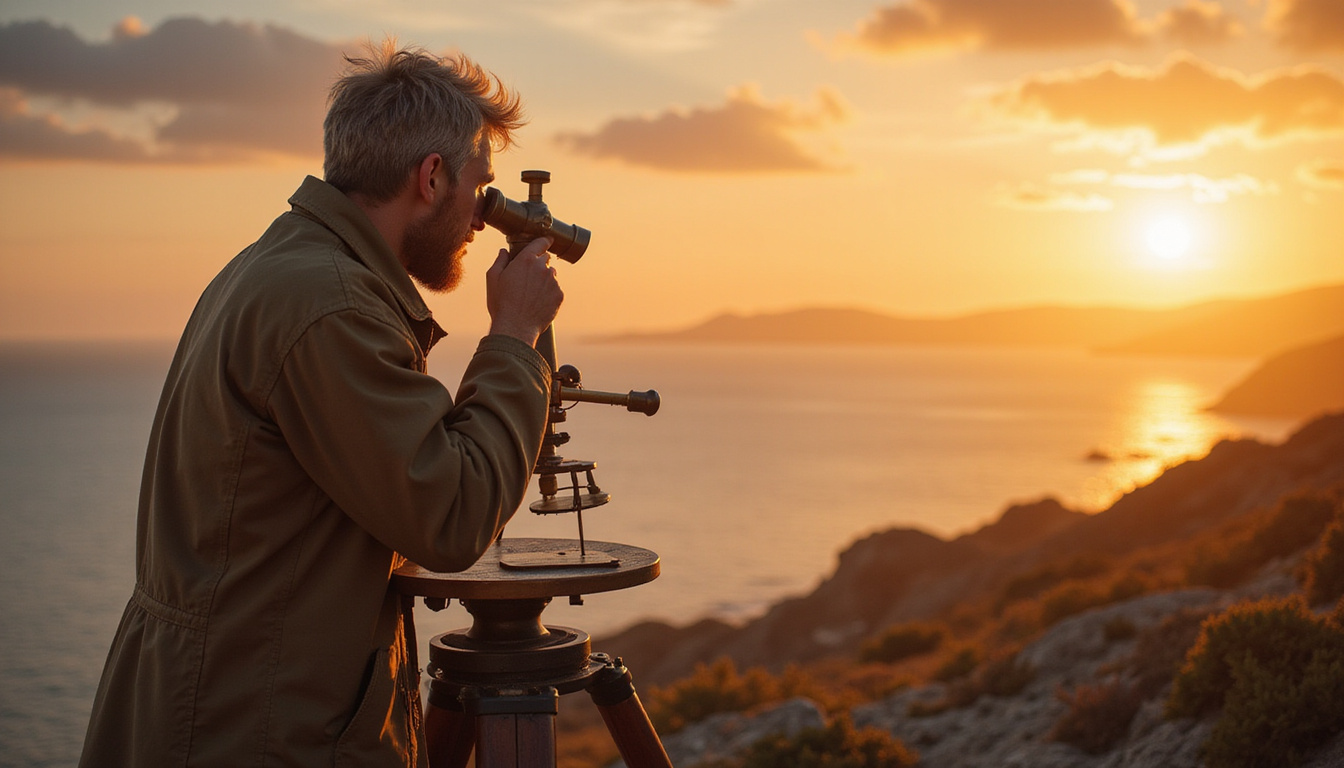
- Choose a site with a clear eastern horizon — no trees, hills, or buildings.
- Avoid light pollution in the direction of dawn, if possible.
- Higher elevation sites can reduce haze, but any open field or shoreline can work.
Step 4: Timing the Observation
On the morning of your planned observation:
- Arrive at least 60–90 minutes before local sunrise.
- Use a reliable sunrise time from a weather app or astronomical almanac.
- Begin scanning the eastern sky about 45–60 minutes before sunrise, focusing low along the horizon where the star should appear.
The star may be visible for only a few minutes before the sky brightens too much.
Step 5: Know What to Expect
During a star’s heliacal rising:
- The sky will already be brightening with dawn.
- Only the brightest stars or planets will be visible.
- Your target star will appear low, often less than 10° above the horizon (about the width of your fist at arm’s length).
Bring:
- Binoculars (helpful but not required).
- A printed star chart or app screen showing the star’s position relative to recognizable constellations.
- A notebook or app to record:
- Date and time of first sighting.
- Sky conditions (clear, hazy, etc.).
- Star altitude estimate (if you can).
Step 6: Allow a Few Days of Attempts
Because atmospheric and local conditions can hide the star, you may need several mornings:
- You might miss the exact first morning of heliacal rising.
- But within a 2–3 day window, you can still observe the star’s early return to the dawn sky.
- Each morning after the heliacal rising, the star will rise a little earlier and become easier to see.
Why Heliacal Rising Still Matters
Even though we now have precise calendars and sophisticated astronomy, heliacal rising remains significant in several ways.
Cultural and Ritual Significance
- Some modern religious and cultural communities still time festivals and rituals using traditional star risings.
- Reenactments of ancient Egyptian New Year, Greek agricultural festivals, and indigenous ceremonies can incorporate heliacal rising dates.
Educational Value
Heliacal rising is an excellent teaching tool for:
- Demonstrating Earth’s orbit and the Sun’s apparent motion.
- Connecting modern astronomy with ancient observational practices.
- Showing the relationship between celestial cycles and seasonal changes.
Amateur Astronomy and Citizen Science
- Observers can log heliacal risings and share data with amateur astronomy groups.
- Such records help illustrate local atmospheric patterns and visibility limits.
- They also reconnect observers with the sky in a way that feels both empirical and historical.
Practical Tips for First-Time Observers
To improve your chances of seeing a heliacal rising:
- Start with planets: The heliacal rising of bright planets like Venus or Jupiter is easier to notice than that of most stars.
- Use twilight sky charts: Many apps have a “horizon view” to show exactly where a star will be at dawn.
- Track for weeks: Follow your chosen star:
- When it is visible in the evening sky (before heliacal setting).
- Through the period it disappears near the Sun.
- To its return at heliacal rising.
This full cycle deepens your understanding of celestial mechanics far beyond a single morning’s observation.
FAQ About Heliacal Rising and Related Terms
What is heliacal rising in simple words?
In simple words, heliacal rising is the first morning of the year when a star becomes visible in the eastern sky just before sunrise, after having been hidden in the Sun’s glare for weeks. It’s the star’s “comeback” appearance in the dawn sky.
How is the heliacal rising of Sirius important?
The heliacal rising of Sirius was crucial in ancient Egypt. It coincided closely with the life-giving flood of the Nile and marked the Egyptian New Year. Priests and astronomers watched for Sirius’s heliacal rising to predict the flood season and maintain their civil and religious calendar.
How can I predict the heliacal rising date for my location?
To estimate a heliacal rising date:
- Choose a bright star (like Sirius or Arcturus).
- Use a planetarium app or online star chart set to your location.
- Advance the dates until the star rises about 30–60 minutes before sunrise.
- Plan observations on a few mornings around that date, allowing for weather and atmospheric conditions.
Understanding and observing heliacal rising offers a powerful way to reconnect with the sky as our ancestors saw it — not just as a backdrop of stars, but as a living calendar guiding time, seasons, and human activity. If this fascinates you, choose a bright star or planet, mark your calendar, and head out before dawn to witness its quiet return to the morning sky.
Take the next step: download a planetarium app, pick one bright star, and commit to tracking its disappearance and heliacal rising over the coming months. By doing so, you’ll turn the abstract motions of the heavens into a visible, personal experience — and rediscover why people have watched the dawn for millennia.
Learn how astronomy, psychology, and spiritual traditions intersect by visiting SpiritualMindScience.com for deeper insights.