Eclipses have fascinated people for thousands of years, inspiring myths, scientific breakthroughs, and worldwide viewing parties. But beyond the dramatic darkening of the Sun or Moon, eclipses have real, measurable effects on weather, wildlife, and human culture. From sudden temperature drops to confused birds and centuries-old rituals, eclipses quietly reshape the world around us for a few extraordinary minutes.
In this article, we’ll explore how eclipses affect the atmosphere, animals, and human societies—and why scientists are so eager to study these rare events.
What Are Eclipses—and Why Do They Matter?
At their core, eclipses are simple alignments of celestial bodies:
- Solar eclipse: The Moon passes between Earth and the Sun, blocking some or all sunlight.
- Lunar eclipse: Earth passes between the Sun and the Moon, casting its shadow on the Moon.
Despite this straightforward geometry, eclipses matter because they:
- Dramatically change light and temperature over very short timescales.
- Offer natural “experiments” for studying Earth’s atmosphere and space weather.
- Trigger noticeable shifts in animal behavior and human activity.
- Play a powerful role in religion, art, and societal beliefs.
Each eclipse is brief, but its effects ripple through nature and culture in surprising ways.
How Eclipses Affect Weather and the Atmosphere
A total or even partial solar eclipse temporarily reduces the Sun’s energy reaching Earth’s surface. That rapid change in solar radiation can cause short-lived but significant weather effects.
Rapid Temperature Drops
One of the most obvious atmospheric impacts of solar eclipses is a sudden cooling of the air.
- During total solar eclipses, temperatures can drop by 3–10°F (2–5°C) in minutes, depending on local conditions.
- The coolest point usually occurs a few minutes after totality, as the surface and lower atmosphere respond with a slight delay.
- Observers often report a quick shift from a hot afternoon to what feels like an early evening chill.
This temperature drop mimics sunset, but compressed into a much shorter time period, giving researchers a unique way to study how the atmosphere responds to fast changes in solar energy.
Changes in Winds and Air Circulation
As temperatures fall, the atmosphere’s structure also changes:
- The ground cools, reducing the convection (rising warm air) that drives many local breezes.
- Wind speeds may decrease, and in some cases change direction.
- Air layers near the ground become more stable, similar to nighttime conditions.
During the 2017 total solar eclipse across the United States, meteorologists recorded:
- A clear drop in surface winds.
- A brief weakening of certain local weather patterns tied to heating of the ground (source: American Meteorological Society).
These changes are temporary, but they show how tightly linked solar radiation is to day-to-day weather.
Eclipse Shadows and the Upper Atmosphere
Not all eclipse effects are felt at the surface. In the upper atmosphere, especially the ionosphere (a layer filled with charged particles), eclipses cause measurable changes:
- Reduced solar radiation lowers ionization, affecting how radio waves travel.
- Scientists use eclipses to test models of how the ionosphere responds to rapid shifts in sunlight.
- This research helps improve understanding of radio communication, GPS accuracy, and space weather impacts.
In this sense, eclipses act as a controlled “off switch” for the Sun’s energy in a narrow path, which is incredibly useful for atmospheric science.
Wildlife and Eclipses: Nature’s Confused Reaction
Animals rely heavily on light cues to regulate their behavior. When eclipses temporarily turn day into night, many species react as if evening has arrived—often with striking results.
Birds, Insects, and the Twilight Illusion
Birds are among the most visibly affected:
- Daytime birds may stop singing and fly back to roost as the sky darkens.
- Nocturnal species, such as owls or nighthawks, may become more active.
- Flocks can change flight patterns, sometimes circling in confusion.
Insects also respond strongly:
- Diurnal insects (like butterflies and bees) reduce activity or return to nests.
- Crickets and other nighttime insects may begin their characteristic evening chirping.
During recent major solar eclipses, citizen science projects reported:
- Bees leaving fields and returning to hives.
- Sudden declines in butterfly and dragonfly movement.
- A clear rise in nighttime insect sounds during totality in many locations.
Livestock and Domestic Animals
Farm and companion animals often show subtle but noticeable responses:
- Cows and sheep may move toward barns or grouping areas, as they do near dusk.
- Horses can become agitated or restless when the light drops rapidly.
- Dogs and cats may bark, pace, or behave as if something unusual is happening, responding more to changes in light and human behavior than to any direct celestial awareness.
These reactions are typically short-lived and not harmful, but they demonstrate just how strongly daily rhythms are tied to light.
Wild Animals and Circadian Rhythms
Wildlife biologists use eclipses to study circadian rhythms—the internal clocks that govern daily activity:
- Many animals use light levels and sky color to decide when to feed, migrate, or rest.
- During eclipses, species like bats, swallows, and swifts can show “false evening” patterns.
- Some marine animals may also adjust vertical movements slightly in response to changing light, similar to what happens at sunset.
Eclipses give researchers a rare chance to watch what happens when day briefly pretends to be night.
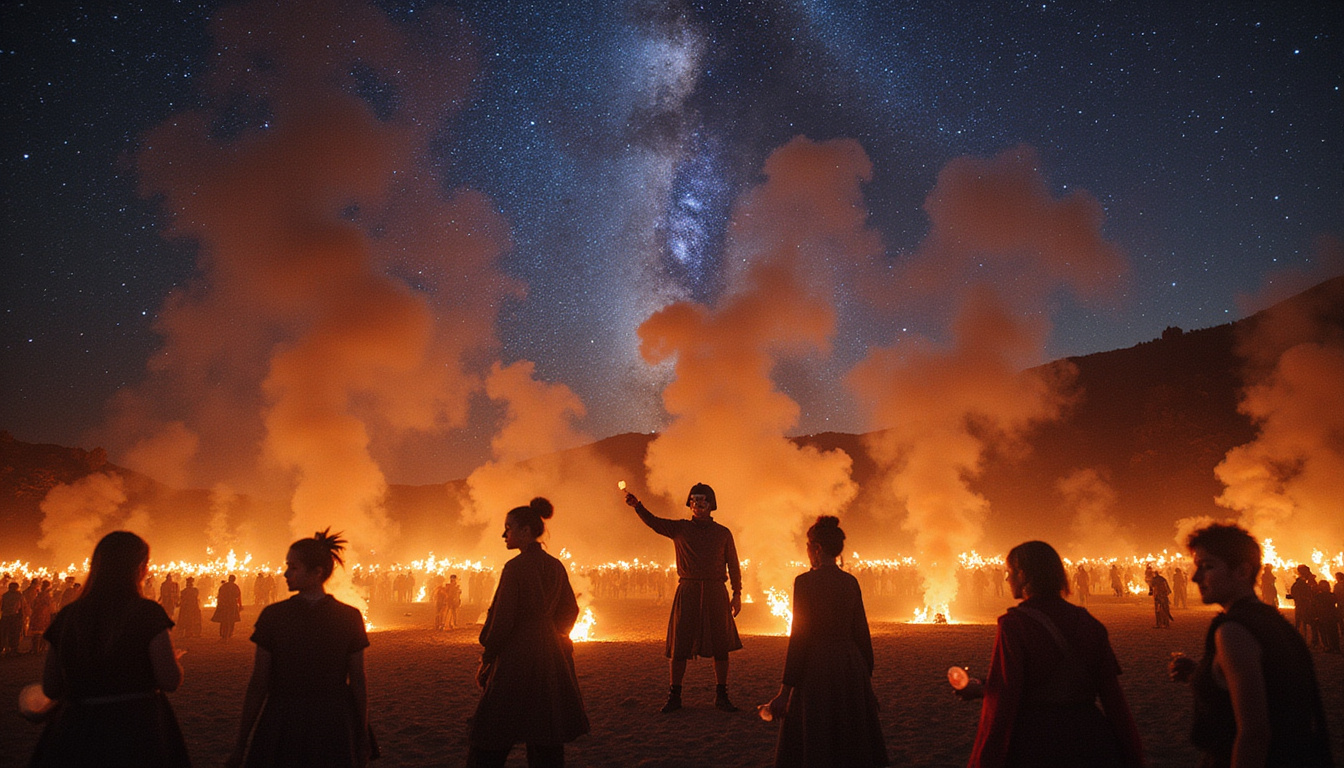
Human Culture and Eclipses: From Fear to Festival
Few natural events have left a deeper cultural footprint than eclipses. For much of history, these sudden darkenings of the Sun or blood-red Moons were terrifying and mysterious.
Ancient Myths and Omens
Across civilizations, eclipses were often seen as supernatural warnings or battles:
- In ancient China, a solar eclipse was thought to be a celestial dragon devouring the Sun. People would bang drums and shout to scare it away.
- In Mesopotamia, eclipses were recorded on clay tablets and associated with omens for kings and nations.
- Norse mythology described wolves Sköll and Hati chasing and sometimes catching the Sun or Moon, causing eclipses.
- In some Indigenous American traditions, eclipses were linked to powerful spirits, transformation, or the need for ritual respect.
Because eclipses are predictable in hindsight but rare for any given place, they stood out as events worthy of stories, warnings, and rituals.
Rituals, Taboos, and Religious Responses
Eclipses influenced religious practices, taboos, and community responses:
- Some cultures developed fasting rules or prayers during eclipses to ward off bad luck or restore cosmic order.
- Pregnant women in some traditions were warned to stay indoors to avoid harm to unborn children.
- Priests and astronomers became important as they learned to predict eclipses, turning fear into a demonstration of knowledge and power.
These customs varied widely, but they illustrate how seriously societies took these events—even when they lasted only a few minutes.
Eclipses and the Rise of Science
Eclipses also propelled scientific discovery:
- In 1919, a total solar eclipse allowed astronomers led by Arthur Eddington to photograph stars near the Sun and confirm Einstein’s theory of general relativity by measuring starlight bending around the Sun’s gravity.
- Historically, careful eclipse records helped refine models of Earth’s orbit, the Moon’s motion, and the length of the year.
- Modern eclipse expeditions continue to study the solar corona, the Sun’s outer atmosphere, which is otherwise washed out by daylight.
As understanding grew, the cultural meaning of eclipses shifted—from terrifying omens to celebrated opportunities for exploration and learning.
Modern Society: Eclipses as Shared Global Events
Today, eclipses are global media events that blend science, tourism, and shared wonder.
Eclipse Tourism and Local Economies
When a total solar eclipse path crosses populated regions, people travel hundreds or thousands of miles to stand in the path of totality. This has real economic and social effects:
- Towns along the path can see huge spikes in visitors, filling hotels, campgrounds, and restaurants.
- Local governments and businesses organize festivals, viewing parties, and educational programs.
- Traffic surges, infrastructure is tested, and communities often plan for months or years in advance.
For a brief window, eclipses can transform quiet regions into hubs of international attention and economic activity.
Technology, Safety, and Global Participation
Modern tools have changed how we experience eclipses:
- Live streams and social media allow real-time global sharing, so even those outside the eclipse path can watch.
- Mass production of eclipse glasses and filters makes safe viewing widely accessible.
- Space agencies like NASA publish interactive maps, safety tips, and mobile apps to guide observers.
This combination of technology and outreach has turned eclipses into inclusive educational events, inspiring curiosity in astronomy and Earth science.
FAQ: Common Questions About Eclipses and Their Effects
1. Do eclipses change the weather in any lasting way?
Eclipses do affect weather locally, but only temporarily. During a solar eclipse, temperatures can drop, winds may weaken or shift, and the atmosphere becomes more stable, similar to evening conditions. However, these changes are short-lived and do not cause long-term weather or climate effects.
2. How do solar eclipses affect animals in the wild?
Solar eclipses can confuse wildlife because the rapid darkening mimics sunset. Day-active birds may stop singing and head to roost, while nocturnal creatures like bats might become more active. Insects can change their activity patterns, and some animals show signs of stress or disorientation, but behavior typically returns to normal quickly after the eclipse ends.
3. Why have eclipses been so important in different cultures?
Eclipses have been culturally important because they dramatically alter the Sun or Moon—objects deeply tied to timekeeping, agriculture, and belief systems. For many societies, eclipses were seen as omens, battles between gods, or disruptions of cosmic order. Over time, the ability to predict eclipses enhanced the prestige of astronomers and priests and eventually contributed to advances in astronomy and physics.
Witnessing Eclipses: An Invitation to Look Up
Eclipses compress profound changes—darkness, temperature shifts, animal reactions, and human awe—into a few unforgettable minutes. They reveal how interconnected our world is: the Sun’s light drives weather, guides wildlife, and shapes human culture, and when that light briefly falters, everything responds.
If you have the chance to stand in the path of a future eclipse, prepare in advance:
- Get certified eclipse glasses or proper viewing equipment.
- Learn about the local wildlife and weather you might observe.
- Explore the history and cultural stories of eclipses in your region.
Then, when the Moon’s shadow races overhead or Earth’s shadow reddens the Moon, you’ll see more than a spectacle—you’ll be witnessing a moment that unites science, nature, and human experience.
Start checking eclipse maps and calendars now, and plan your own journey into the shadow. The next eclipse may last only minutes, but the memory—and the insight into our planet and ourselves—can last a lifetime.
Curious about why astrology has fascinated people for centuries? Explore evidence-based perspectives on spirituality, consciousness, and human psychology at SpiritualMindScience.com