Astrology lovers often focus on planets and signs, but the real structure of your chart comes from the house cusps. If you’ve ever wondered why your friend with the same Sun sign lives a totally different life, the answer is usually in the houses—and especially in the exact way their house cusps are arranged.
This guide breaks down what house cusps are, how they’re calculated, what they mean in your real life, and how to read them without getting overwhelmed.
What are house cusps?
In astrology, house cusps are the dividing lines between the 12 houses in your birth chart. They are specific degrees of the zodiac that mark where one house ends and the next begins.
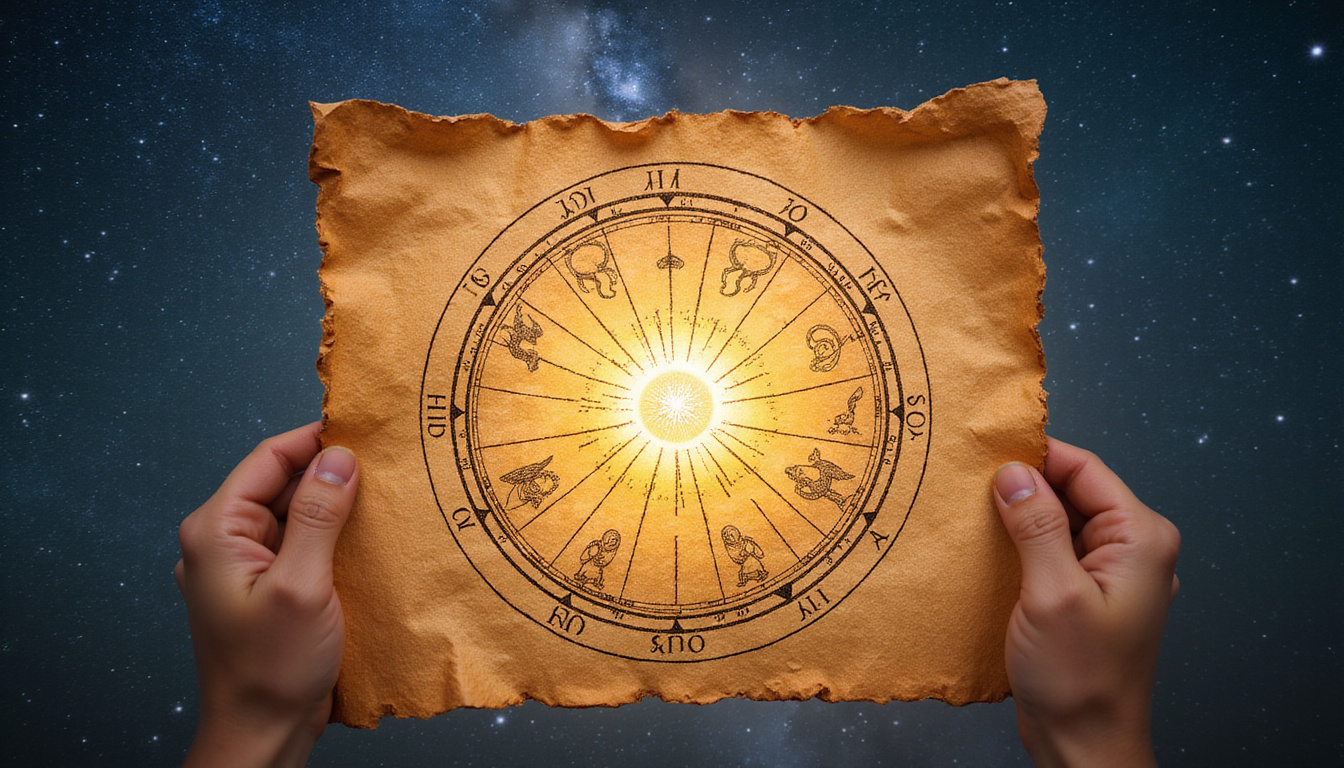
Think of your birth chart like a wheel:
- The wheel is divided into 12 slices (the houses).
- Each slice covers a certain area of life (self, money, relationships, career, etc.).
- The cusp is the edge of each slice—the exact degree where that area of life begins.
So, while houses describe what part of life we’re talking about, the cusps show:
- Which sign rules that part of your life.
- How that area tends to play out.
- Which planet becomes the “ruler” of that house.
Without house cusps, you just have floating planets. With them, your chart becomes a map with clear territories and rulers.
The four most important house cusps: Angles of the chart
All house cusps matter, but four are especially powerful. These are called the angles, and they act like anchor points in your chart:
-
1st house cusp – Ascendant (AC)
- Represents your physical body, identity, and how others first see you.
- Sets the tone for your entire chart, because the sign on this cusp determines the order of the remaining house cusps.
-
4th house cusp – IC (Imum Coeli)
- Relates to home, family, roots, and inner emotional foundation.
- Shows the kind of environment you tend to create behind closed doors.
-
7th house cusp – Descendant (DC)
- Governs committed relationships, partnerships, and “the other.”
- The sign on this cusp describes what you seek in long-term partners.
-
10th house cusp – MC (Midheaven)
- Rules career, public image, and life direction.
- Indicates how you’re seen in the outer world and what kind of success you chase.
These four house cusps are like the skeleton of your chart. When interpreting anything else—planets, aspects, transits—it’s vital to see how they connect back to these four powerful points.
How are house cusps calculated?
To understand your house cusps, you first need an accurate birth time—ideally from a birth certificate. Even a 10–15 minute difference can shift the cusps, especially in smaller houses.
Online chart calculators use:
- Your date of birth
- Your exact time of birth
- Your place of birth
From there, the software chooses a house system and calculates which zodiac degree lands on each house cusp.
You can generate a free natal chart with clearly marked cusps on many reputable astrology sites. One widely used option is Astro.com, which uses precise astronomical data (source: Astro.com).
Different house systems and what they mean for cusps
Here’s where it gets a bit technical: astrologers don’t all agree on how to divide the chart into houses. Different house systems will give you slightly different house cusps, especially in higher latitudes.
Some of the most common systems:
Placidus
- The most widely used in modern Western astrology.
- Houses are unequal in size.
- Time-based division of the chart.
- Your signs may “intercept” (completely fall inside a house without touching a cusp).
Whole Sign
- Simpler, very popular in Hellenistic and modern traditional astrology.
- The entire sign that contains your Ascendant becomes the 1st house.
- Each following sign becomes the next house.
- In this system, each house cusp starts at 0° of a sign—so the sign and cusp are the same.
Koch, Porphyry, Equal House, etc.
- Variations on how to slice the zodiac into houses.
- Some keep houses equal in size; some make them unequal.
Key point:
Your Ascendant sign and degree stay the same, but the exact positions of the other house cusps can change depending on the house system. Many astrologers recommend experimenting with a few systems to see which resonates most with your lived experience.
Why house cusps matter more than you think
House cusps quietly shape nearly everything in your chart. Here’s how.
1. They show which sign “rules” each life area
Each house cusp has a sign on it, and that sign colors how that house behaves.
For example:
-
Aries on the 2nd house cusp (money, possessions):
You may earn or spend money quickly, prefer to make your own income, or take financial risks. -
Virgo on the 6th house cusp (work, health):
You’re detail-oriented at work, health-conscious, and possibly perfectionistic in daily routines.
Even if there are no planets in a house, the cusp sign still gives a ton of information about that area of life.
2. They determine house rulers (dispositors)
The planet that rules the sign on a cusp becomes the house ruler. This planet is like the “governor” of that area of life.
Example:
- 7th house cusp in Libra → ruled by Venus
- Wherever Venus sits in your chart (house + sign) gives deeper insight into your relationships and partnerships.
Reading house cusps + house rulers together produces rich, specific interpretations that go far beyond your Sun sign.
3. They mark sensitive points for transits and progressions
When transiting planets hit your house cusps, life events often follow.
- A planet crossing the 1st house cusp (Ascendant) can signal a new phase of identity or appearance.
- A planet touching the 10th house cusp (MC) may bring career changes, public attention, or new responsibilities.
- The 4th and 7th house cusps often activate home, family, or relationship milestones.
House cusps act like energetic doorways: when activated, that area of life lights up.
Interpreting empty houses through their cusps
One of the most common questions people ask is: “My ____ house is empty. Does that mean I’m unlucky in that area?”
No. An empty house doesn’t mean that part of life is missing. It simply means there are no planets placed there at your birth time. You still have:
- A sign on the house cusp.
- A planetary ruler of that sign somewhere else in your chart.
To interpret an empty house using its cusp:
-
Look at the sign on the cusp.
- This sign describes your style and approach.
-
Identify the ruling planet of that sign.
- Aries → Mars, Taurus/Libra → Venus, Gemini/Virgo → Mercury, etc.
-
Find where that planet is located (house + sign).
- That’s where and how the themes of the empty house tend to express themselves.
Example:
- 5th house cusp in Cancer (creativity, children, romance).
- Ruler: Moon.
- Moon in the 11th house of friends and community.
You may express your creativity and romantic nature most strongly in group settings, networks, or through shared causes—and emotional bonds with friends can feel almost like family.
Intercepted signs and duplicated cusps
In some house systems like Placidus, you may run into two advanced features tied to house cusps: intercepted signs and duplicated cusps.
Intercepted signs
An intercepted sign is a sign that doesn’t appear on any house cusp—it’s completely enclosed inside a house.
For example:
- Your 2nd house cusp is in late Aries.
- Your 3rd house cusp is in early Taurus.
- That means all of Pisces is hidden inside the 2nd house and doesn’t touch a cusp.
Interpretation themes:
- The intercepted sign can feel blocked, internalized, or harder to access.
- You might feel its energy, but not know how to express it outwardly.
- Over time, life experiences push you to unlock and integrate that sign in the house it occupies.
Duplicated cusps
Sometimes, the same sign appears on two consecutive house cusps.
For example:
- 3rd house cusp in Gemini.
- 4th house cusp also in Gemini.
Themes:
- Extra emphasis on that sign’s energy in those life areas.
- The opposite sign is usually intercepted, creating a dynamic of overdeveloped vs. underdeveloped traits that you’re learning to balance.
These patterns show how nuanced house cusps can be; they’re not just lines, but energy gateways with psychological depth.
Practical steps: How to start reading your own house cusps
Here’s a simple process to explore your chart through its cusps.
-
Get your birth chart with houses clearly marked
Use a reliable astrology site, select a house system (Placidus or Whole Sign is a good start), and make sure birth time is as accurate as possible. -
Note the sign on each house cusp
Write them down from 1st to 12th:- 1st house cusp: sign = ?
- 2nd house cusp: sign = ?
- … all the way to the 12th.
-
List the planetary rulers
Match each cusp sign to its ruler:- Aries → Mars
- Taurus, Libra → Venus
- Gemini, Virgo → Mercury
- Cancer → Moon
- Leo → Sun
- Scorpio → Mars and/or Pluto (depending on your approach)
- Sagittarius → Jupiter
- Capricorn → Saturn
- Aquarius → Saturn and/or Uranus
- Pisces → Jupiter and/or Neptune
-
Find where each house ruler sits
For each house, find the ruler’s house and sign in your chart. This ties life areas together.For example, if the 10th house cusp (career) is in Leo (ruled by the Sun), and your Sun is in the 6th house (work, service, routines), career and daily work/service are deeply linked for you.
-
Pay extra attention to the angles
Explore the 1st, 4th, 7th, and 10th house cusps first; they’re the foundation. Ask:- 1st house cusp: How do I come across? What’s my approach to life?
- 4th house cusp: What kind of home/family vibe do I create?
- 7th house cusp: What traits do I attract or seek in partners?
- 10th house cusp: How do I want to be seen publicly?
Common mistakes when working with house cusps
-
Ignoring birth time accuracy
Guessing the time can throw off the Ascendant and all cusps, making interpretations unreliable. -
Only reading planets, skipping cusps
Planets show “what,” but cusps show where in life things are happening. -
Assuming an empty house is unimportant
The cusp sign and ruler still tell a story. Every house is active in some way. -
Not choosing a consistent house system
Jumping between systems too fast can confuse you. Experiment, but interpret a chart within one system at a time.
FAQ: House cusps and your birth chart
Q1: What do house cusps represent in astrology?
House cusps represent the exact boundaries between the 12 houses in your birth chart. Each cusp marks where a new life area begins and shows which zodiac sign rules that domain. By studying the signs on the house cusps, you can understand your style and patterns in areas like money, relationships, career, and home.
Q2: How do I find the house cusps in my natal chart?
To find your natal chart house cusps, you need your accurate birth time, date, and place. Enter this information on a reputable astrology site and generate your chart using a house system such as Placidus or Whole Sign. The chart will show the zodiac degree at the start of each house—these labeled degrees are the house cusps.
Q3: Do different house systems change my house cusps?
Yes. Different house systems divide the sky in different ways, which can shift the positions of your house cusps. Your Ascendant degree stays constant, but the signs and degrees on other cusps may change. That’s why some people experiment with multiple systems to see which house cusps and interpretations feel most accurate to their experience.
Ready to unlock your story through your house cusps?
Your planets and signs are only half the picture. The house cusps reveal where those energies actually play out in real life—your work, your relationships, your home, your dreams. When you understand which signs sit on your cusps and which planets rule them, your birth chart stops feeling abstract and starts reading like a deeply personal map.
Take the next step: pull up your chart, write down each house cusp and its ruling planet, and start connecting the dots. If you’d like help interpreting complex features like intercepted signs or repeated cusps, consider working with a professional astrologer or using a detailed astrology report. The more you understand your house cusps, the more clearly you’ll see the unique path your chart is pointing you toward—and how to walk it with confidence.
Want to understand the deeper meaning behind spiritual practices and beliefs? Visit SpiritualMindScience.com for science-informed spiritual education.