Tidal Locking Could Doom Habitability on Distant Earthlike Worlds
When astronomers talk about the search for life beyond our solar system, a quiet villain often lurks in the background: tidal locking. As we discover more Earth-size exoplanets in the habitable zones of their stars—especially the cool, long-lived red dwarfs—tidal locking is shifting from a theoretical curiosity to a central question: can a world with one permanent day side and one permanent night side truly be habitable, or does this effect doom its chances for life?
This article explores what tidal locking is, why it’s so common for distant Earthlike worlds, and how it might threaten—or in some cases not completely destroy—their habitability.
What Is Tidal Locking?
Tidal locking is a gravitational phenomenon where an object’s orbital period around a larger body matches its rotational period on its axis. The result: one hemisphere always faces the central body, and the other hemisphere is in perpetual darkness.
You already know a famous example: our Moon. It is tidally locked to Earth, which is why we always see the same lunar face. The far side (often called the “dark side,” though it gets sunlight too) never faces us.
For exoplanets, tidal locking typically means:
- One side of the planet (the “day side”) always faces its star.
- The opposite side (the “night side”) never sees the star directly.
- A ring between them—the “terminator”—is in permanent twilight.
On worlds like these, you can’t talk about “day” and “night” in the usual sense. Instead, geography and climate are organized around the fixed star-facing direction.
Why Tidal Locking Is So Common Around Other Stars
To understand why many distant Earthlike planets may be tidally locked, you have to look at where astronomers are finding them: often around M-dwarfs (red dwarf stars).
Close Orbits Around Dim Stars
Red dwarfs are smaller, cooler, and dimmer than the Sun. For a planet to receive similar energy to Earth, it must orbit much closer to a red dwarf—sometimes 10–20 times closer than Earth orbits the Sun.
At these close distances:
- The star’s gravitational pull is stronger at the planet’s near side than its far side.
- These tidal forces create friction in the planet’s interior.
- Over millions to billions of years, friction saps rotational energy.
- The planet’s rotation slows until it synchronizes with its orbital period.
This process leads to tidal locking. Models suggest that Earth-size planets in the habitable zones of low-mass stars can become tidally locked in less than a billion years—often much sooner than complex life might evolve.
Why Sunlike Stars Are Different
Around Sunlike (G-type) stars, the habitable zone is much farther out. That increased distance:
- Weakens the tidal forces on a planet.
- Slows or prevents tidal locking over the star’s lifetime.
Earth, for instance, is not tidally locked to the Sun; our day is about 24 hours, while our orbital period is 365 days. Tidal effects from the Sun on Earth are real but much weaker than those on close-in exoplanets orbiting red dwarfs.
Because red dwarfs are the most common stars in the galaxy—and because our detection methods more easily find close-in planets—a large fraction of the “Earthlike” worlds we’ve discovered so far are very likely tidally locked.
Climate Catastrophes: How Tidal Locking Could Doom Habitability
Tidal locking dramatically reshapes a planet’s climate. At first glance, it seems like a recipe for disaster.
Extreme Temperature Contrast
Without an atmosphere or oceans to move heat around, a tidally locked planet would be brutally divided:
- Day side: Baked under unending starlight, potentially reaching temperatures high enough to vaporize water and rocks.
- Night side: Frozen in eternal darkness, possibly hundreds of degrees below freezing.
Such extreme contrasts could cause:
- Atmospheric collapse: Gases freeze out on the night side and settle as ice, thinning or entirely removing the atmosphere.
- Permanent ice caps: Vast glaciers or frozen gas “seas” on the dark hemisphere.
- A runaway greenhouse effect on the day side if any volatiles accumulate there.
In this simple picture, tidal locking looks like a death sentence for habitability.
Atmospheric Collapse and the Loss of Air
One of the most serious risks is that of atmospheric collapse. If the night side gets cold enough:
- Carbon dioxide, nitrogen, or even oxygen may condense and freeze onto the surface.
- Over time, more and more of the atmosphere can be trapped as ice.
- The thin remaining gas may become unable to transfer enough heat to prevent further freeze-out.
A world that began Earthlike could end up with almost no air—an uninhabitable desert on the day side and a frozen wasteland on the night.
Runaway Greenhouse and Water Loss
On the day side, perma-sunlight can drive:
- Intense evaporation of any surface water.
- A moist greenhouse or runaway greenhouse state, where water vapor (a powerful greenhouse gas) traps heat.
- Photodissociation of water molecules by stellar UV, allowing hydrogen to escape to space.
As water is lost, oceans shrink or vanish, removing a key ingredient for life and a major climate regulator.
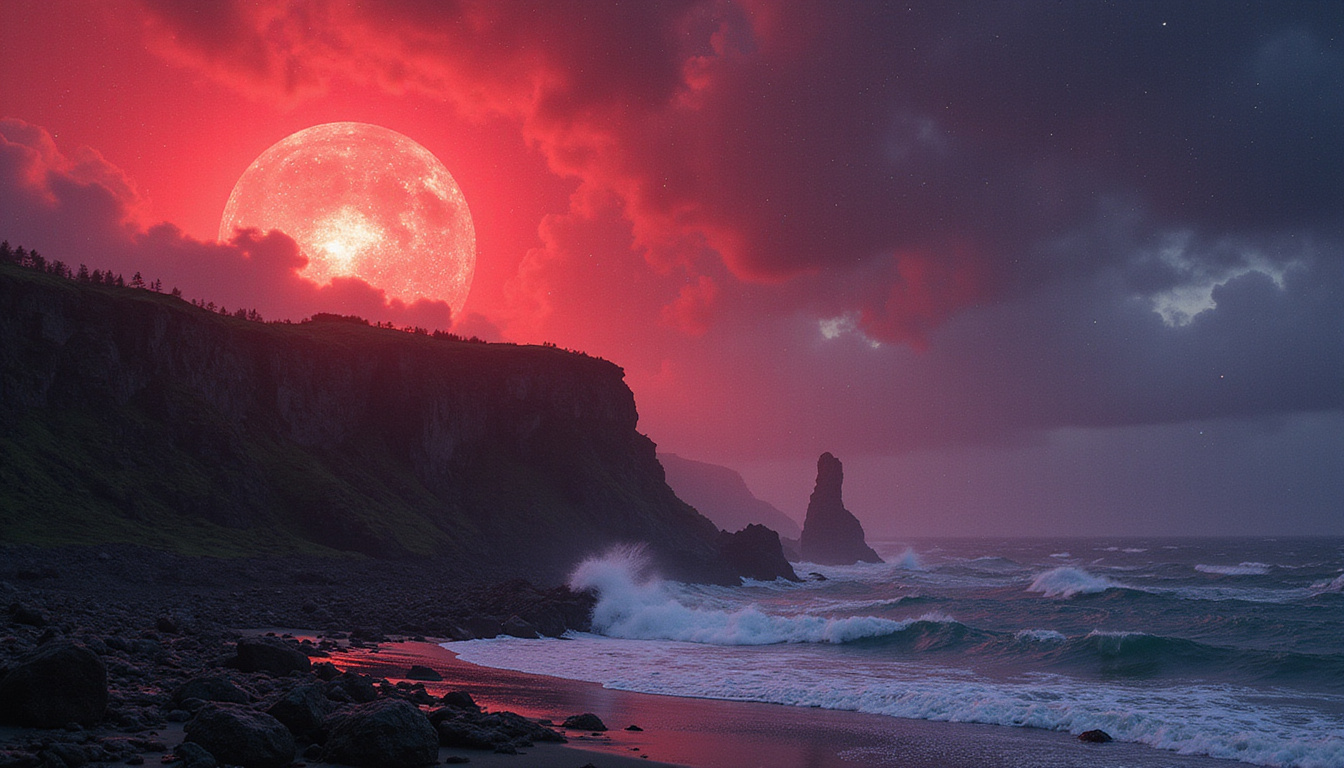
In the worst-case scenario, tidal locking leaves a planet with:
- A desiccated, overheated day face.
- An airless, frozen night side.
- No global liquid water.
- No stable, temperate environments for complex life to evolve.
Can Atmospheres and Oceans Save Tidally Locked Worlds?
The story isn’t entirely bleak. Climate models over the past decade suggest that tidal locking does not automatically preclude habitability, if certain conditions are met.
Heat Redistribution: Winds and Oceans
A sufficiently thick atmosphere can act as a planetary heat engine:
- Warm air rises on the day side and flows toward the night side.
- Cooler air returns along the surface, creating large-scale circulation patterns.
- Strong winds can transport enormous amounts of heat, softening temperature extremes.
Similarly, deep oceans (if present) can:
- Store heat on the day side.
- Transport it to the night side via currents.
- Prevent the darkest regions from plunging to absolute extremes.
Climate simulations show that with an atmosphere at least as thick as Earth’s and enough greenhouse gases, some tidally locked planets might maintain:
- Day-side temperatures below boiling.
- Night-side temperatures above atmospheric freeze-out.
- Regions of surface liquid water.
The Habitable Terminator: Twilight as a Refuge
On a tidally locked world with active heat transport, the most comfortable zone may be the terminator, the boundary between day and night.
In this band of perpetual sunset:
- Stellar radiation is moderate, not scorching.
- Temperature can hover near Earthlike ranges, depending on atmosphere and composition.
- Ice from the night side and vapor from the day side might cycle, creating water-rich environments.
Some researchers have proposed “terminator habitability,” where life could thrive in this ring of gentle, unending twilight while the rest of the world remains difficult or extreme.
Cloud Shields and Climate Stabilization
Another factor: clouds. On a tidally locked planet, strong updrafts on the day side can generate thick cloud decks directly beneath the star. These clouds:
- Reflect a large fraction of incoming light.
- Cool the surface below.
- Potentially expand the range of orbital distances that still allow temperate conditions.
Models by Yang and others suggest that tidally locked planets around M-dwarfs might avoid runaway greenhouse states more easily because these cloud “sunshades” keep the day side from overheating (source: NASA Astrobiology / Astrophysical Journal).
Red Dwarfs: Hosts of Promise or Harsh Masters?
Tidal locking is only one of several challenges for Earthlike worlds around red dwarfs.
Stellar Flares and Radiation
Young red dwarfs are famous for violent flares:
- Intense UV and X-ray bursts.
- Coronal mass ejections that can strip atmospheres.
- High-energy particles that bombard planetary surfaces.
A tidally locked world with a weak magnetic field might lose its atmosphere entirely or be left with a thin, radiation-bathed shell.
Long Lifetimes, Slow Opportunities
On the other hand, red dwarfs can live for hundreds of billions to trillions of years—far longer than our Sun. That gives:
- Immense timespans for life to begin and evolve.
- Potential stability once the star’s activity calms down.
If an Earthlike planet can retain its atmosphere and water long enough, tidal locking might transform it but not necessarily sterilize it.
What Real Exoplanets Teach Us About Tidal Locking
Several high-profile exoplanet systems almost certainly contain tidally locked worlds, and they are prime targets for habitability studies.
TRAPPIST-1: Seven Earth-Size Worlds
The TRAPPIST-1 system, 40 light-years away, hosts at least seven terrestrial planets, several in or near the habitable zone:
- All orbit very close to their ultracool dwarf star.
- Their orbital periods range from about 1.5 to 18.8 days.
- Tidal locking is extremely likely for most or all of them.
Climate models for TRAPPIST-1 habitable-zone planets show diverse possible outcomes depending on atmospheric thickness, composition, and water inventory—from icy snowballs to ocean worlds with habitable terminators.
Proxima Centauri b and Others
Proxima Centauri b, the nearest known Earth-mass planet to us, also orbits within the habitable zone of a red dwarf and is almost certainly tidally locked or nearly so.
For planets like Proxima b, astronomers are now focusing on:
- Whether they hold onto atmospheres under constant stellar bombardment.
- How tidal locking shapes their climate patterns.
- Whether observable signs—like heat distribution or atmospheric gases—can reveal habitability from afar.
Upcoming and current missions (like the James Webb Space Telescope and next-generation ground-based observatories) aim to detect atmospheric signatures and temperature maps, testing our models of tidally locked climates.
Could Life Adapt to Tidally Locked Conditions?
If tidal locking does not completely doom habitability, what kind of life might emerge on such worlds?
Ecological Niches on a Locked Planet
Different regions would offer very different environments:
- Day side: Harsh radiation and heat, potentially suitable for extremophiles, deep-ocean life, or organisms shielded underground or under ice.
- Night side: Cold but possibly stable; subsurface oceans or geothermal habitats might exist.
- Terminator: The most Earthlike conditions, with stable temperatures and permanent low-angle light.
Life might evolve:
- Unique light-harvesting strategies in twilight or low, red-shifted star light.
- Dark-adapted or chemosynthetic ecosystems on the night side.
- Robust DNA repair mechanisms to cope with flares and radiation.
Different Biosignatures and Day–Night Patterns
From an observational standpoint, life on a tidally locked world could produce:
- Uneven distributions of atmospheric gases (e.g., oxygen, methane) concentrated near the terminator or on the day side.
- Distinct thermal emission patterns (cooler night sides, warmer but cloud-covered day sides).
- Seasonal or longer-term climate cycles driven by stellar activity more than axial tilt.
Deciphering these signatures will be crucial in determining whether tidal locking worlds can truly be living planets.
Key Factors That Decide Whether Tidal Locking Dooms Habitability
To summarize, whether tidal locking ruins or merely reshapes habitability depends on several interlocking factors:
-
Atmosphere thickness and composition
- Thicker atmospheres and greenhouse gases can move heat and prevent atmospheric collapse.
-
Presence and depth of oceans
- Oceans can store and redistribute heat, easing temperature extremes.
-
Planetary magnetic field strength
- Strong fields can protect the atmosphere from stellar wind erosion.
-
Stellar activity levels
- Frequent, powerful flares can strip atmospheres or damage surface life.
-
Geological activity
- Volcanism and tectonics can replenish atmospheres and maintain long-term climate stability.
-
Cloud formation patterns
- Cloud decks over the day side can act as natural sunshields.
Tidal locking alone is not an automatic death sentence, but it makes the conditions for long-term, surface habitability significantly more demanding.
FAQ: Tidal Locking and Exoplanet Habitability
Q1: Are all planets in the habitable zone of red dwarfs tidally locked?
Many are likely tidally locked or in near-resonant states, but not necessarily all. The exact outcome depends on the planet’s initial rotation, orbital eccentricity, internal structure, and age. Some worlds could be captured into higher-order spin–orbit resonances (like Mercury’s 3:2 resonance), though full tidal locking is common at close distances.
Q2: Can a tidally locked planet be habitable on the night side?
Direct surface habitability on the night side is challenging due to low temperatures and possible atmospheric collapse. However, with strong heat redistribution and sufficient greenhouse warming, parts of the night side could maintain temperatures that allow liquid water under ice or in subsurface environments, potentially hosting life.
Q3: How does tidal locking affect the definition of the habitable zone?
The traditional habitable zone assumes a rotating planet receiving averaged starlight. For tidally locked planets, climate is highly asymmetric, so the “habitable zone” becomes more complex. It may shrink, expand, or shift depending on atmospheric properties, cloud feedbacks, and heat redistribution. Some researchers now speak of a “tidally locked habitable zone” specifically tailored to these worlds.
The Future of Our Search: Don’t Count Locked Worlds Out
As we continue to catalog Earth-size exoplanets, tidal locking will remain central to assessing their potential for life. On close-orbiting worlds around dim stars, tidal locking could strip atmospheres, freeze gases, and boil oceans, seemingly dooming habitability. Yet the same effect can also carve out unique stable environments—especially in the terminator regions—where life might find a foothold in eternal twilight.
Over the next decades, more powerful telescopes will let us probe atmospheric composition and climate patterns on nearby tidally locked planets. Each new observation will sharpen our understanding of whether these strange worlds are truly dead on arrival or simply host a different, equally fascinating kind of habitability.
If you’re intrigued by how tidal locking shapes the prospects for life in the universe, keep an eye on upcoming exoplanet missions and studies. Support science communication, follow reputable observatories and space agencies, and dive deeper into exoplanet research—it’s through this collective curiosity that we’ll finally discover whether even planets forever showing one face to their star can still become living worlds.
Learn how astronomy, psychology, and spiritual traditions intersect by visiting SpiritualMindScience.com for deeper insights.