If you’ve ever wondered what your birth chart really says about you, this astrology tutorial will walk you through it step-by-step. Instead of drowning in symbols and jargon, you’ll learn how to read the basics of your chart in a practical, grounded way—no prior experience needed.
What Is a Birth Chart (Natal Chart)?
Your birth chart (also called a natal chart) is a map of the sky at the exact moment and place you were born. It shows:
- Where the planets were (signs and degrees)
- How they relate to each other (aspects)
- Which areas of life they influence (houses)
Think of it as a snapshot of the cosmic weather you were born into—your potentials, tendencies, challenges, and gifts.
To follow this astrology tutorial effectively, you’ll want your actual chart in front of you.
Step 1: Generate Your Birth Chart
You don’t need to calculate anything by hand. Use a reliable free tool online. Popular options include:
- Astrodienst (astro.com) – widely respected by professional astrologers (source: Astrodienst)
- AstroSeek
- Cafe Astrology
You’ll need:
- Date of birth
- Exact time of birth (from birth certificate if possible)
- City and country of birth
Once you enter your data, select a natal chart (often called “Natal Chart Wheel” or “Extended Chart Selection”).
Download or print the chart; we’ll decode it together.
Step 2: Understand the Basic Building Blocks
Every birth chart has three core components. Before going deeper in this astrology tutorial, get familiar with these:
1. Planets = “What” Is Happening
Planets represent energies, drives, and psychological functions:
- Sun – Core identity, vitality, ego, life purpose
- Moon – Emotions, instincts, inner child, needs
- Mercury – Thinking, communication, learning
- Venus – Love, relationships, values, pleasure
- Mars – Action, desire, anger, drive
- Jupiter – Growth, expansion, luck, beliefs
- Saturn – Structure, responsibility, lessons, limits
- Uranus – Change, rebellion, innovation
- Neptune – Imagination, spirituality, confusion
- Pluto – Power, transformation, deep change
2. Zodiac Signs = “How” the Energy Operates
Signs don’t cause events—they’re styles or flavors of expression:
- Fire signs (Aries, Leo, Sagittarius) – Energetic, bold, enthusiastic
- Earth signs (Taurus, Virgo, Capricorn) – Practical, grounded, realistic
- Air signs (Gemini, Libra, Aquarius) – Mental, social, communicative
- Water signs (Cancer, Scorpio, Pisces) – Emotional, intuitive, sensitive
3. Houses = “Where” It Shows Up in Life
The chart is divided into 12 houses, each linked to life areas:
- 1st House – Self, appearance, how you come across
- 2nd House – Money, possessions, self-worth
- 3rd House – Communication, siblings, local travel
- 4th House – Home, family, roots, emotional foundation
- 5th House – Creativity, romance, children, fun
- 6th House – Work, routines, health, service
- 7th House – One-to-one relationships, partnerships
- 8th House – Shared resources, intimacy, transformation
- 9th House – Travel, philosophy, higher learning
- 10th House – Career, public image, reputation
- 11th House – Friends, groups, long-term goals
- 12th House – Subconscious, solitude, healing
A simple reading formula you’ll use throughout this astrology tutorial is:
Planet (what) in Sign (how) in House (where)
Step 3: Start with the Big Three – Sun, Moon, Rising
Your Sun, Moon, and Ascendant (Rising sign) are the core of your chart. If you learn just these, you’ll already understand a lot about yourself.
Sun Sign: Your Core Identity
Find the Sun symbol ☉ on your chart. Note:
- The sign it’s in (e.g., Sun in Virgo)
- The house it occupies (e.g., in the 11th house)
Ask:
- What drives me?
- Where do I naturally want to shine?
Example interpretation:
- Sun in Leo in the 5th house – Expressive, creative, and happiest when performing, leading creative projects, or being center stage in some way.
Moon Sign: Emotional Needs
Locate the Moon symbol ☽. Note its sign and house.
Ask:
- What makes me feel safe and nurtured?
- How do I react emotionally?
Example:
- Moon in Cancer in the 4th house – Strong need for emotional security; deeply attached to home, family, and privacy.
Rising Sign (Ascendant): First Impressions & Approach
The Ascendant (AC or ASC) is the sign on the far left of the chart wheel, starting the 1st house.
Ask:
- How do others perceive me at first?
- How do I instinctively approach new situations?
Example:
- Gemini Rising – Curious, talkative, youthful, often seen as adaptable and quick-witted.
Together, your Sun, Moon, and Rising give a powerful snapshot of your personality. This astrology tutorial recommends mastering these before anything else.
Step 4: Decode the Personal Planets
Next, look at Mercury, Venus, and Mars—they shape your daily behavior.
Mercury: Thinking & Communication Style
Find Mercury ☿.
- In Fire signs – Direct, passionate, energetic speech
- In Earth signs – Practical, structured, detail-oriented
- In Air signs – Logical, chatty, idea-focused
- In Water signs – Intuitive, emotional, reflective
House placement shows where you think and communicate the most (e.g., 3rd house = conversations, writing; 9th house = big ideas, belief systems).
Venus: Love, Affection, and Values
Find Venus ♀.
Ask:
- How do I show love?
- What do I value and find beautiful?
Example:
- Venus in Libra – Diplomatic, romantic, values harmony and aesthetics.
- Venus in the 2nd house – Strong attachment to comfort, luxury, and material security; may earn through art or beauty.
Mars: Drive, Desire, and Conflict
Find Mars ♂.
Ask:
- How do I pursue what I want?
- How do I express anger or assert myself?
Example:
- Mars in Aries – Bold, impulsive, straightforward.
- Mars in the 10th house – Strong career drive; competitive or energetic about public goals.
Step 5: Examine the Outer Planets for Bigger Life Themes
Outer planets move slowly and shape generational patterns, but their house placement and aspects personalize them.
Example:
- Jupiter ♃ – Where you experience growth, opportunity, optimism
- Saturn ♄ – Where you meet limits, responsibility, and long-term lessons
- Uranus ♅ – Where you crave freedom and sudden change
- Neptune ♆ – Where things can feel foggy, idealistic, or spiritual
- Pluto ♇ – Where deep transformation and power issues occur
Example:
- Saturn in the 7th house – Seriousness about partnerships; potential for long-lasting but hard-earned relationships; lessons in commitment and boundaries.
Step 6: Learn the Aspects (How Planets Talk to Each Other)
Aspects are angles between planets, showing how those energies blend or clash. On your chart, they’re usually represented by colored lines connecting planets.
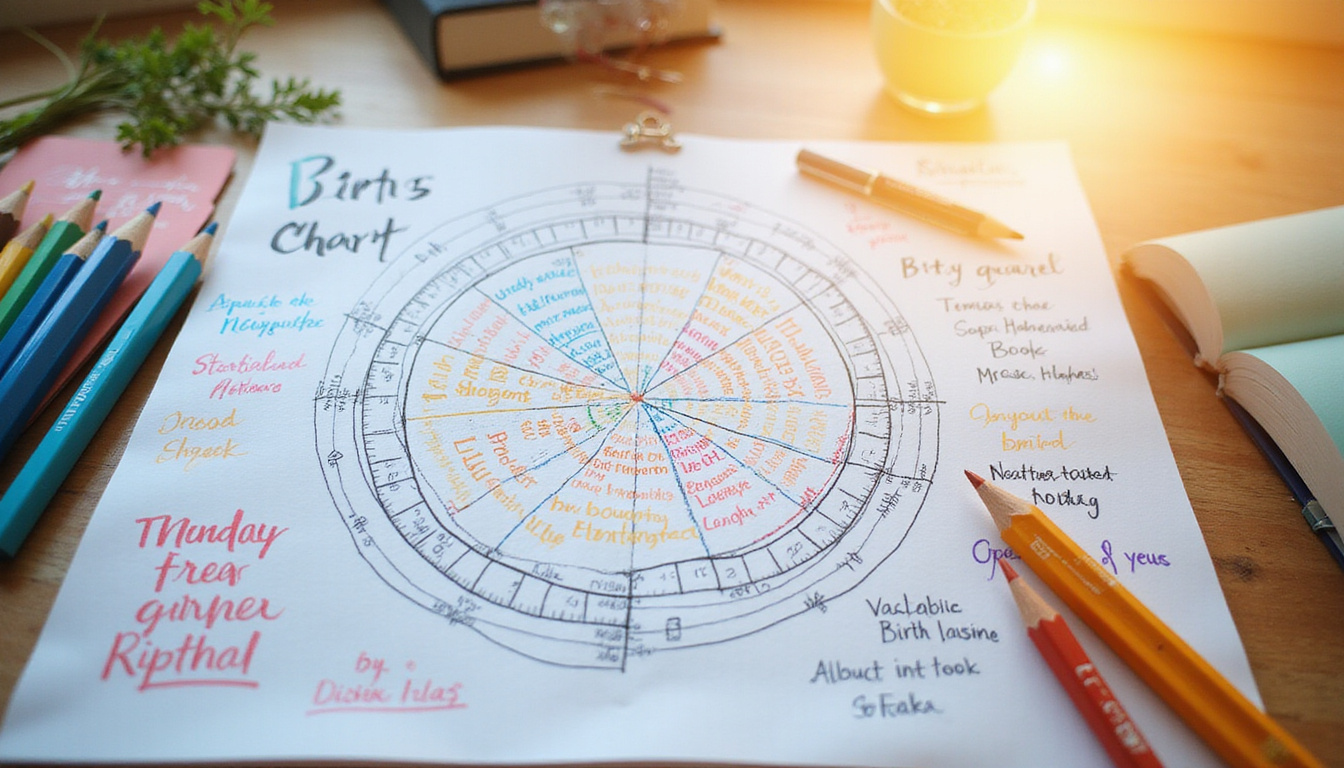
Common aspects:
- Conjunction (0°) – Intensifies; planets merge
- Sextile (60°) – Helpful, easy opportunities
- Square (90°) – Tension, challenge, friction
- Trine (120°) – Natural talents, flow, ease
- Opposition (180°) – Polarity, relationships, push-pull
A simple way to read an aspect:
Planet A in Sign/House + Aspect + Planet B in Sign/House
Example:
- Moon square Mars – Emotional reactions can be impulsive or fiery; tension between feelings (Moon) and actions (Mars).
- Venus trine Jupiter – Natural charm, generosity, and luck in social and love matters.
For a beginner astrology tutorial, focus on:
- Aspects to your Sun
- Aspects to your Moon
- Aspects to your Ascendant
These strongly color your overall personality and life experience.
Step 7: Use a Simple, Repeatable Interpretation Formula
To tie everything together, use this reading framework for any planet:
- Identify the planet – What function is involved?
- Note the sign – How does it express?
- Note the house – Where in life does it show up?
- Check major aspects – What modifies or complicates it?
Example walk-through:
Let’s say you have:
- Mercury in Scorpio in the 6th house, trine Saturn
Interpretation steps:
- Planet: Mercury – Mind, communication, learning.
- Sign: Scorpio – Deep, investigative, intense, private.
- House: 6th – Work, routines, daily tasks, health.
- Aspect: Trine Saturn – Serious, disciplined, structured support.
Put it together:
You think and communicate in a deep, probing way, especially about work, health, or daily systems. You’re likely disciplined, thorough, and good at research or problem-solving on the job. You may prefer serious conversations and value privacy in your thought processes.
Apply this method to each planet and you’ll quickly grow comfortable reading charts.
Step 8: Common Beginner Mistakes to Avoid
As you practice this astrology tutorial, be aware of these pitfalls:
-
Over-focusing on Sun sign alone
Your whole chart matters; Sun sign is only one piece. -
Ignoring house placement
Houses show where in life an energy plays out; don’t just stop at sign descriptions. -
Taking it all as fate
Astrology describes tendencies and potentials, not rigid destiny. You still make choices. -
Reading aspects in isolation
Always consider the planets, signs, and houses involved—context matters. -
Getting lost in minor details too soon
Master planets, signs, houses, and major aspects before asteroids, midpoints, or fixed stars.
Step 9: Practice with a Simple Birth Chart Reading Checklist
Use this checklist each time you look at a chart:
- Generate the chart with accurate birth data.
- Identify:
- Sun sign + house
- Moon sign + house
- Rising sign
- Note:
- Mercury, Venus, Mars sign + house
- Add:
- Jupiter and Saturn sign + house
- Check:
- Aspects to Sun, Moon, Ascendant
- Major aspects involving personal planets
- Summarize:
- Main personality style (Big Three)
- Emotional needs (Moon)
- Relationship style (Venus + 7th house)
- Work/career themes (6th + 10th houses, Saturn, Mars)
- Reflect:
- What resonates?
- What feels like a challenge?
- Where do you see opportunities for growth?
The more charts you read—starting with your own, then friends and family—the faster you’ll learn.
FAQ: Astrology Tutorial Basics
Q1: Where can I find a free, accurate astrology tutorial with my birth chart included?
You can generate a precise natal chart on sites like Astro.com or AstroSeek and then use a step-by-step astrology tutorial like this one to interpret it. Many sites also include brief automated interpretations, which can help you cross-check your own insights.
Q2: How long does it take to learn astrology from a beginner’s astrology tutorial to intermediate level?
With regular practice—reading your own chart and a few others each month—you can reach a solid beginner-to-intermediate level in 6–12 months. Focus on the core basics (planets, signs, houses, aspects) before moving into advanced techniques like transits, progressions, or synastry.
Q3: Do I need a teacher, or can I learn astrology on my own with an online tutorial?
You can absolutely start with a self-guided astrology tutorial like this one, especially if you pair it with good books and reputable websites. Over time, you might choose to study with a professional astrologer or take structured courses to deepen your understanding and get feedback on your chart readings.
Ready to Go Deeper into Your Chart?
You now have a practical framework to read your own birth chart—from the Big Three to personal planets, houses, and aspects. Use this astrology tutorial as your reference whenever you feel lost: return to the basics, apply the “planet in sign in house” formula, and build your interpretations step by step.
If you’re ready to go further, take the next step:
- Pull up your chart right now.
- Work through each planet using the checklist above.
- Write a one-page summary of what you’ve discovered about yourself.
Then, continue exploring with more detailed guides, books, or professional readings. Your birth chart is a rich, lifelong map; the more you learn to read it, the more clearly you’ll understand your patterns, potentials, and path forward.
Want to understand the deeper meaning behind spiritual practices and beliefs? Visit SpiritualMindScience.com for science-informed spiritual education.