Emotional synastry is one of the most revealing tools in relationship astrology, especially when you’re searching for deeper romantic connection and genuine healing. While basic synastry looks at how two charts interact overall, emotional synastry focuses specifically on feelings: how you nurture each other, trigger each other, soothe each other, and grow together over time. Understanding these emotional bonds can help you move beyond surface attraction and into soul-level intimacy.
What is emotional synastry, really?
At its core, emotional synastry is the study of how two people’s emotional bodies – symbolized primarily by the Moon, Venus, Mars, and certain asteroids and points – interact through planetary aspects and house overlays.
Where standard synastry might answer, “Are we compatible?” emotional synastry asks:
- Do I feel safe being vulnerable with you?
- Do we naturally understand each other’s feelings?
- Can we support each other’s healing and growth?
- Why do certain patterns keep repeating in this connection?
By looking at specific aspects between your charts, you can decode what kind of emotional climate your relationship naturally creates – warm and nurturing, intense and transformative, or challenging yet growth-inducing.
Core planets of emotional synastry
While every planet plays a role, some are central to emotional synastry and your experience of romantic closeness.
The Moon: your emotional truth
The Moon shows how you instinctively react, what you need to feel safe, and how you give and receive comfort.
Key emotional synastry Moon themes:
- Moon–Moon aspects: Reveal how emotionally “in tune” you are.
- Harmonious (trine, sextile): Easy empathy, natural caregiving, similar emotional languages.
- Challenging (square, opposition): Emotional attraction with frequent misunderstandings; different coping styles.
- Moon in your partner’s houses:
- 4th house: Feels like “home,” family-like comfort, deep familiarity.
- 7th house: Emotional glue in long-term partnership; you “see” each other as a life partner.
- 8th house: Intense emotional and sexual bonding, but also vulnerability and potential for deep healing.
If the Moons connect well, there’s usually a powerful sense of being seen and held emotionally, even if everything else in the chart is complicated.
Venus: how you love and feel loved
Venus governs affection, pleasure, attraction, and your love language.
In emotional synastry:
- Venus–Moon aspects are among the most tender and romantic.
- They often indicate emotional sweetness, affection, and a feeling of being cherished.
- Venus–Venus aspects show if you enjoy similar relationship values and relationship aesthetics – do you both value romance, loyalty, independence, etc.?
- Venus in partner’s houses (especially 5th and 7th) often shows where love and romance naturally blossom.
A strong Venus connection can make emotional healing feel gentle and safe, as if love itself is the medicine.
Mars: desire, conflict, and courage
Mars is about drive, passion, and how you assert yourself. In emotional synastry, Mars is important because unresolved anger, frustration, or misaligned desires can block intimacy.
- Mars–Moon aspects: Highly emotional; intense attraction plus potential for hurt feelings.
- Mars–Venus aspects: Sexual chemistry, magnetism, and the spark that keeps things alive.
- Mars–Saturn or Mars–Pluto aspects: Can indicate power struggles, emotional walls, or transformative conflict.
Healthy Mars connections support honest conversations and the courage to face emotional truth, which is crucial for real healing.
The emotional synastry “healing triad”
Some planetary contacts consistently show up in relationships that transform you emotionally, even if they aren’t always easy. A powerful emotional synastry chart often features some combination of:
1. Moon–Pluto aspects: radical emotional honesty
Moon–Pluto contacts feel fated, consuming, and deeply psychological.
- You may feel exposed around each other, like the other person can see behind your masks.
- Old wounds, past trauma, and shadow feelings are triggered – but this is also where profound healing can occur.
- There can be a strong pull that’s hard to walk away from, even when things feel intense.
Handled consciously, this aspect can help you break lifelong emotional patterns.
2. Moon–Chiron aspects: the wound and the healer
Chiron symbolizes your core wound and your unique path to healing.
In emotional synastry:
- The Moon person may instinctively touch the Chiron person’s most vulnerable spots.
- At its highest, this bond allows each person to feel held in their pain and encouraged to heal.
- But if unconscious, it can reopen wounds without resolution, leading to sensitivity or withdrawal.
This connection rewards emotional maturity, clear communication, and perhaps therapeutic support.
3. Venus or Moon with Saturn: commitment and emotional structure
Saturn is often misunderstood as “bad,” but emotionally, it can bring stability, loyalty, and growth.
- Moon–Saturn aspects: Can begin with emotional distance, age differences, or feeling like you need to “earn” love. Over time, these aspects can mature into deep reliability and emotional accountability.
- Venus–Saturn aspects: Serious love, long-term potential, but also fears of rejection or unworthiness.
In emotional synastry, Saturn helps you create safe containers for healing – boundaries, responsibilities, and follow-through.
House overlays: where you touch each other’s hearts
Planets landing in your houses in synastry show where in life the other person affects you most. For emotional synastry, the water houses (4th, 8th, and 12th) are especially revealing.
4th house: emotional roots and family patterns
Someone’s planets in your 4th house will:
- Stir up childhood memories and family conditioning.
- Make you feel deeply “at home” – or reawaken unresolved family wounds.
- Encourage living together, building a family, or sharing private life.
This is the house of emotional foundations. It can be deeply nourishing or confronting – or both.
8th house: intimacy, fear, and transformation
The 8th house rules deep merging: emotionally, financially, sexually, and psychologically.
Emotional synastry here can:
- Produce intense attraction, obsession, or soul-bond feelings.
- Trigger fears of loss, abandonment, or betrayal.
- Stimulate transformative healing, especially around trust and vulnerability.
8th-house synastry requires emotional integrity; manipulation or game-playing hits especially hard.
12th house: the unconscious and spiritual bond
Planets in the 12th house are often felt but not easily put into words.
- There may be a psychic link, shared dreams, or a sense of meeting in another lifetime.
- Emotional synastry in the 12th can bring great compassion and spiritual healing.
- It can also blur boundaries and make it hard to see the other person clearly.
This house is powerful for soulful connections when both people are committed to clarity and self-awareness.
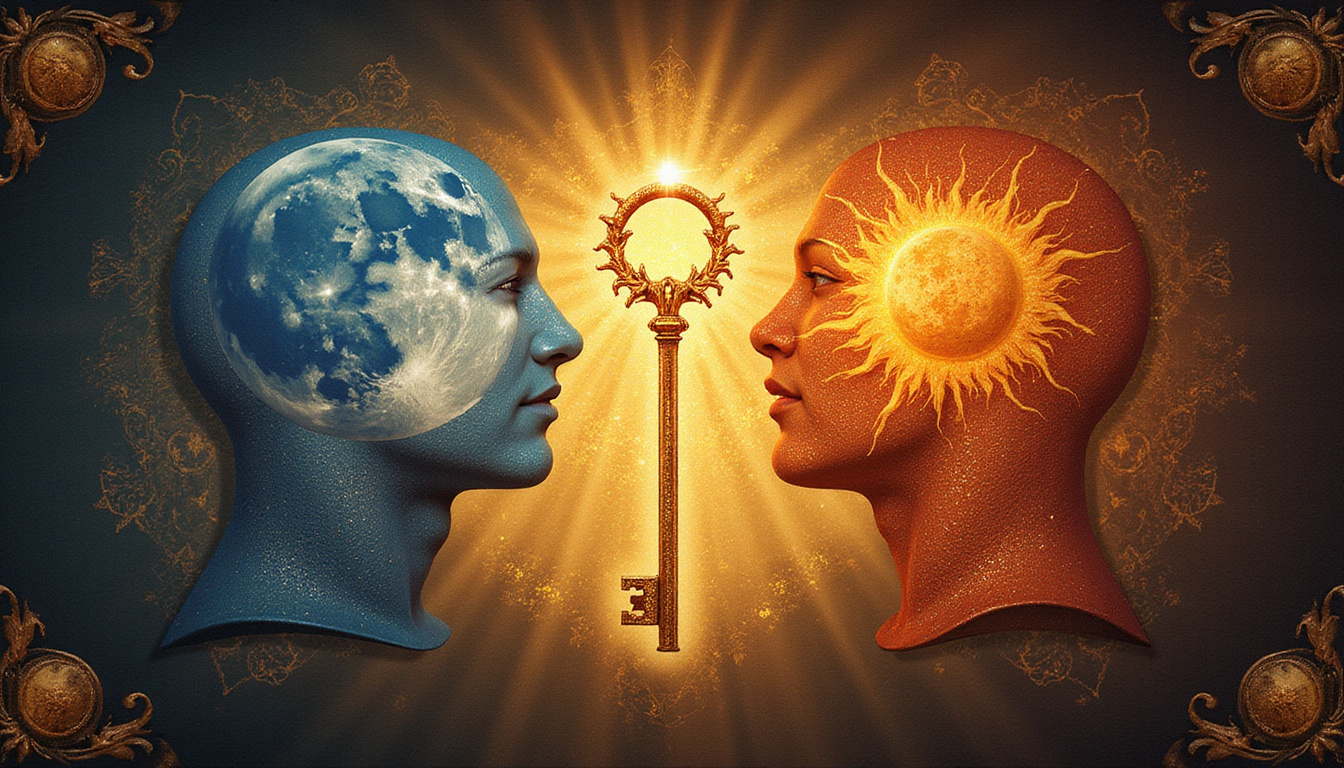
Key emotional synastry aspects that deepen connection
While a full chart requires nuance, certain aspects show up repeatedly in emotionally meaningful relationships.
Look for these, especially in close (tight-orbed) aspects:
- Moon conjunct/trine/sextile Moon – Shared emotional language, instinctive understanding.
- Moon conjunct Venus – Soft, nurturing love; feeling cherished and cared for.
- Moon conjunct/trine Neptune – Romantic, poetic, almost dreamlike empathy.
- Sun conjunct Moon – Strong complementary bond; one person “lights up” the other’s emotional world.
- Moon or Venus in partner’s 4th, 7th, or 8th houses – Deep relational and emotional significance.
- Chiron aspects to Moon or Venus – Potential for mutual heart-healing.
- Saturn aspects to personal planets (Moon, Sun, Venus, Mercury) – Long-term lessons, commitment themes.
Emotional synastry doesn’t need to be “all positive” to create a powerful bond. A mix of harmonious and challenging aspects usually indicates both chemistry and growth potential.
Using emotional synastry for healing – not just prediction
The most important secret of emotional synastry: it’s not a verdict, it’s a mirror.
Your emotional synastry:
- Reflects your existing emotional patterns and attachment style.
- Reveals why certain relationships feel familiar – even when they’re unhealthy.
- Highlights growth edges: where boundaries, communication, or self-love need strengthening.
To use emotional synastry for healing:
- Own your triggers. If a partner activates fear, jealousy, or insecurity, ask what old wound this touches.
- Talk about needs directly. The Moon shows what you need to feel safe; share and negotiate those needs consciously.
- Avoid fatalism. Hard aspects don’t doom a relationship; they show where conscious work is needed.
- Seek support if needed. Therapy or counseling can help integrate powerful Moon–Pluto, Moon–Chiron, or 8th house dynamics.
Astrology organizations such as the American Federation of Astrologers emphasize using astrology as a tool for self-knowledge and growth, not rigid prediction (source: American Federation of Astrologers).
Signs your emotional synastry supports healthy love
While every relationship is unique, certain patterns in emotional synastry point to supportive, growth-oriented bonds.
Watch for combinations like:
- At least one harmonious Moon aspect (to partner’s Moon, Sun, or Venus).
- Some Saturn involvement that adds commitment without overwhelming the chart with fear or heaviness.
- Balanced Mars aspects: passion without constant conflict or aggression.
- Clear Mercury–Moon or Mercury–Venus aspects, which help you talk about feelings in a way that lands.
- House overlays emphasizing the 4th, 7th, or 11th houses, suggesting both intimacy and friendship.
Healthy emotional synastry feels like:
- You can be emotionally honest without constant fallout.
- Conflicts, while inevitable, lead somewhere productive.
- The relationship supports both of you becoming more authentic, not less.
A simple checklist to explore your emotional synastry
When you compare charts, use this list as a starting point. Note what applies and how it plays out in real life, not just on paper.
- How do our Moons relate by sign and aspect?
- Where does my Moon fall in your houses (and vice versa)?
- Do we have Venus–Moon or Venus–Venus aspects?
- How does Mars connect to our Moons and Venuses?
- Are there strong Pluto or Chiron aspects to personal planets?
- Where does Saturn touch our Moons, Suns, Venuses, or angles?
- Which of my planets fall in your 4th, 7th, 8th, and 12th houses?
This framework can help you approach emotional synastry thoughtfully instead of getting overwhelmed by details.
FAQ about emotional synastry and healing
1. What does strong emotional synastry feel like in a relationship?
Strong emotional synastry usually feels like a mix of recognition and intensity. You may feel quickly comfortable sharing personal stories, experience strong empathy for each other’s feelings, and notice that small misunderstandings cut unusually deep. Over time, you might realize this relationship is changing how you relate emotionally – either by healing old patterns or, if unconscious, by repeating them.
2. Can challenging emotional compatibility in synastry be healed?
Yes. Difficult emotional compatibility in synastry (like Moon square Saturn, Moon–Pluto squares, or hard Mars aspects) doesn’t automatically mean a relationship is doomed. It means the emotional terrain is more complex and asks for maturity, communication, and often therapeutic tools. Awareness is key: when you consciously work with these energies, they can become catalysts for deep personal and relational growth.
3. How is synastry for emotional healing different from regular synastry?
Regular synastry looks at overall compatibility—communication, attraction, life direction—while emotional synastry zeroes in on the feeling realm. It emphasizes the Moon, water houses, aspects involving Pluto, Chiron, and Saturn, and how safe, nurtured, and seen you feel. Emotional synastry for healing specifically focuses on where patterns of wounding and repair show up, and how a bond can support long-term emotional evolution.
Emotional synastry can change how you understand your relationships—from “Why is this happening to me?” to “What is this teaching me?” When you see your chart connections clearly, you gain the power to choose: to stay, to grow together, to set boundaries, or to release what no longer serves you.
If you’re ready to decode the emotional synastry in your own love life, take the next step: pull both birth charts, compare the Moons, key aspects, and house overlays, or work with a skilled astrologer who specializes in relational healing. Turn your relationships into conscious journeys of connection and transformation—starting with the stars and continuing with your choices.
Relationships involve psychology, emotions, and belief systems. Discover thoughtful articles on spirituality and human consciousness at SpiritualMindScience.com