Understanding moon phases isn’t just for stargazers and astrologers—gardeners have used the lunar cycle as a planting guide for centuries. The idea is simple: as the Moon waxes and wanes, it subtly influences moisture, sap flow, and plant growth rhythms. When you align your gardening tasks with these cycles, you may see stronger germination, better root development, and more abundant harvests.
This guide explains the science and tradition behind moon phases, then shows you exactly how to use each phase in your garden, step by step.
What Are Moon Phases? A Quick Overview
The Moon doesn’t shine on its own—it reflects the Sun’s light. As the Moon orbits Earth, we see different portions of its sunlit side, creating the phases.
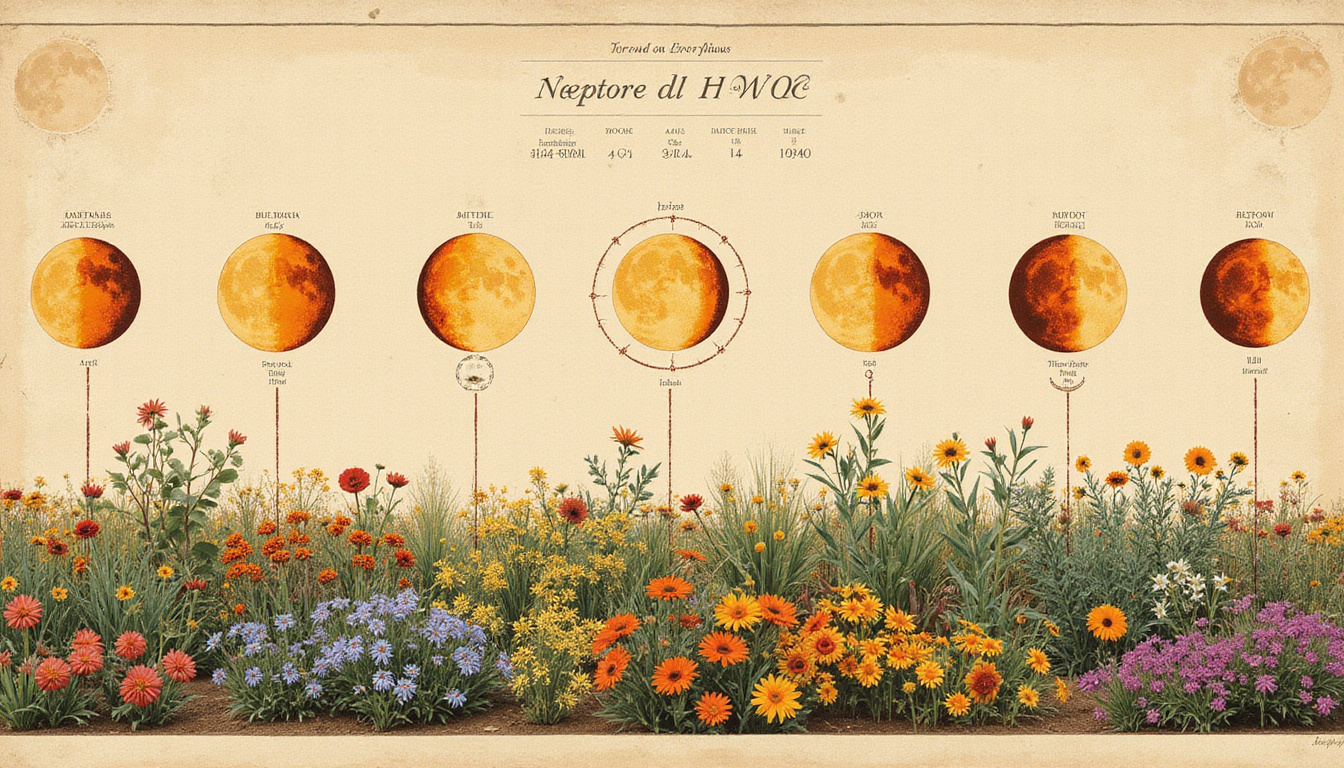
The main moon phases you’ll use in gardening are:
- New Moon – The Moon is between Earth and the Sun; we see little to no light.
- Waxing Crescent – A small sliver of light grows larger each night.
- First Quarter – Half the Moon is lit; light is increasing.
- Waxing Gibbous – More than half lit, moving toward full.
- Full Moon – The entire face is lit and bright.
- Waning Gibbous – Light starts decreasing after the full moon.
- Last (Third) Quarter – Half lit again, but light is shrinking.
- Waning Crescent – A thin sliver remains before the next new moon.
In gardening, we generally group these into two big halves:
- Waxing Moon (New → Full) – Light increasing
- Waning Moon (Full → New) – Light decreasing
Each half is associated with different plant energies: upward growth vs. downward/root growth.
Why Garden by the Moon? Tradition Meets Science
The traditional view
For generations, farmers have tracked moon phases in almanacs and planting calendars. Folk wisdom says:
- Rising lunar light (waxing) = pull of sap and energy upward
- Falling lunar light (waning) = pull of energy downward to roots
Many gardeners report:
- Better germination
- Stronger seedlings
- Improved yields
- More rhythmic, organized gardening schedules
Is there any science behind it?
Scientifically, there are two main plausible influences:
-
Gravitational pull and water
The Moon’s gravity affects tides; on a much smaller scale, it may also subtly influence soil moisture and water movement in plants. Higher soil moisture around full/new moons might support seed swelling and germination (source: USGS – The Moon and Tides). -
Light and plant signaling
Increased night light at the full moon may alter plant hormone signaling and circadian rhythms, potentially affecting growth and flowering.
Evidence is mixed and not fully conclusive, but many gardeners find lunar planting a helpful organizing tool that often coincides with good results. It’s best seen as a low-risk, potentially beneficial timing strategy—used alongside sound soil, water, and plant care practices.
The Four Main Lunar Planting Periods
To use moon gardening practically, focus on four key periods tied to moon phases:
- New Moon to First Quarter
- First Quarter to Full Moon
- Full Moon to Last Quarter
- Last Quarter to New Moon
Each period favors different plant types and tasks.
New Moon to First Quarter: Best for Leafy Above-Ground Crops
Phase: New Moon and Waxing Crescent
Moon energy: Beginning of the growth cycle, rising moisture and sap, increasing light.
What to plant
Ideal for above-ground annuals that produce leaves:
- Lettuce, spinach, arugula
- Cabbage, kale, chard
- Herbs: cilantro, parsley, basil (especially leafy use)
- Asian greens: bok choy, mizuna
- Leafy salad mixes and microgreens
What to do in the garden
- Sow seeds for leafy crops with shallow roots.
- Start transplants indoors that you plan to set out later.
- Water lightly and consistently—seeds respond well to stable moisture during this period.
- Feed gently with diluted compost tea for seedlings.
Think of this as the “fresh start” window: anything focused on lush foliage responds well here.
First Quarter to Full Moon: Best for Fruiting and Flowering Crops
Phase: First Quarter and Waxing Gibbous
Moon energy: Peak upward growth, strong sap flow, increasing light nearing its maximum.
What to plant
Ideal for above-ground annuals that produce fruits, pods, or seeds:
- Tomatoes, peppers, eggplants
- Beans, peas
- Squash, cucumbers, melons, pumpkins
- Corn, okra
- Fruit-bearing herbs and flowers: dill (for seed), calendula, zinnias, sunflowers, cosmos
What to do in the garden
- Direct sow warm-season crops when soil is warm enough.
- Transplant seedlings of tomatoes, peppers, and other fruiting plants.
- Prune lightly to encourage branching and flowering, not heavy structural pruning.
- Side-dress with compost or balanced organic fertilizer to support vigorous top growth and flowering.
This is your prime time for setting up crops that will later reward you with fruits and seeds.
Full Moon to Last Quarter: Best for Root Crops and Perennials
Phase: Full Moon and Waning Gibbous
Moon energy: Light and sap begin to decline; energy shifts downward.
What to plant
Ideal for root crops and plants where the harvest is below ground:
- Carrots, parsnips
- Beets, turnips, radishes
- Onions, garlic, shallots
- Potatoes, sweet potatoes
Also supportive for:
- Perennials and shrubs (including berries)
- Trees (fruit, nut, ornamental) where strong root establishment matters
What to do in the garden
- Sow root crop seeds directly in well-prepared beds.
- Plant perennials and shrubs, giving them time to root in.
- Transplant trees and berries, if your climate’s appropriate.
- Water deeply but less often to encourage roots to chase moisture downward.
- Apply soil-building amendments: compost, rock dust, biochar.
This is a “root strengthening” phase—perfect for anything that lives long-term or stores energy below ground.
Last Quarter to New Moon: Best for Maintenance and Cleanup
Phase: Last Quarter and Waning Crescent
Moon energy: Lowest light, downward pull strongest; rest and consolidation.
What to plant
Generally, this is not a prime planting period. Seeds pushed in now may be slower to germinate. However, you can:
- Plant hardy perennials or trees if necessary
- Start cover crops for soil protection (in some systems)
- Rest beds planned for fallow periods
What to do in the garden
- Weed thoroughly – roots of unwanted plants may be weakened in this phase.
- Prune for control – if you want to slow growth on a vigorous shrub or tree, prune now.
- Harvest roots (carrots, beets, potatoes) for storage.
- Turn in cover crops and incorporate organic matter.
- Repair structures – trellises, beds, irrigation.
- Plan and map your next planting cycle.
Think of this as your “maintenance and reset” window: clearing, consolidating, and getting ready to start again at the next new moon.
Practical Steps: How to Start Using Moon Phases in Your Garden
You don’t need to overhaul your entire schedule immediately. Start simple and build from there.
1. Get a reliable lunar calendar
Use:
- A local gardening almanac
- A moon phases app or widget
- Astronomy or weather websites that list daily phases
Note the dates for New Moon, First Quarter, Full Moon, and Last Quarter, and block out the four main periods on a paper or digital calendar.
2. Group your crops by type
Organize your planting list into:
- Leaf crops (above-ground, grown for foliage)
- Fruit/seed crops (above-ground, grown for fruits/pods)
- Root crops (below-ground harvest)
- Perennials/trees/shrubs
Then map these into the appropriate lunar periods.
3. Create a simple monthly moon-based plan
For each lunar month, outline something like:
- New → First Quarter: Leafy sowings and transplants
- First Quarter → Full: Fruiting and flowering crops
- Full → Last Quarter: Root crops, perennials, trees
- Last Quarter → New: Weeding, pruning, soil building, planning
You won’t match this perfectly every time due to weather, work, or vacation—but use it as a helpful backbone.
4. Combine with local conditions
Moon timing never overrides:
- Frost dates and seasonal climate
- Soil temperature and moisture
- Day length and light intensity
For instance, don’t plant tomatoes in a perfect waxing moon window if your nights are still freezing. Instead, use the next suitable waxing period that aligns with safe temperatures.
5. Keep notes on results
Track:
- Planting date + lunar phase
- Germination speed and uniformity
- Plant vigor
- Harvest quantity and quality
Over 1–2 seasons, you’ll see whether moon-timed planting appears to benefit your specific garden conditions.
Tasks by Moon Phase: Quick Reference List
Use this as a simple cheat sheet:
-
New Moon → First Quarter
- Sow leafy greens and herbs
- Start seedlings indoors
- Light fertilizing for young plants
-
First Quarter → Full Moon
- Plant or transplant fruiting vegetables and flowers
- Side-dress with compost/fertilizer
- Light pruning to encourage growth
-
Full Moon → Last Quarter
- Sow and plant root crops
- Plant perennials, trees, shrubs
- Deep watering and soil amendments
-
Last Quarter → New Moon
- Weed, mulch, and clean beds
- Prune to slow or control growth
- Harvest roots for storage
- Repair and plan
Common Mistakes When Using Moon Phases for Gardening
As you start working with moon phases in your garden, watch out for these pitfalls:
-
Ignoring climate for the sake of the calendar
Always prioritize frost safety and soil conditions over lunar timing. -
Being too rigid
If you miss the perfect day, the next few days in the same period are usually fine. Gardening should stay flexible. -
Starting everything at once
Begin by testing the system on one or two crop groups (e.g., tomatoes and carrots) rather than your entire garden. -
Forgetting other basics
Moon gardening can’t compensate for poor soil, inadequate water, or wrong plant choice for your zone.
FAQ: Moon Phases and Gardening
Q1: Do moon cycles really affect plant growth?
Many traditional systems say yes, linking moon cycles to sap flow and moisture. Scientific evidence is mixed but suggests plausible influences via gravity and light. Many gardeners find lunar timing improves their sense of rhythm and sometimes their results, but it works best alongside good general gardening practices.
Q2: Which moon phase is best for planting vegetables?
For most vegetables, the best moon phase for planting depends on what part you eat:
- Leafy greens: New Moon to First Quarter (waxing)
- Fruiting crops (tomatoes, beans, squash): First Quarter to Full (waxing)
- Roots (carrots, beets, onions): Full to Last Quarter (waning)
Q3: Is it bad to plant during the wrong lunar phase?
It’s not “bad”—your plants can still grow. Moon-phase gardening is about optimization, not strict rules. If conditions are perfect and you’re outside the ideal lunar gardening window, it’s usually better to plant than to delay too long, especially in short growing seasons.
Aligning your gardening tasks with the moon phases is a low-cost, low-effort experiment that can bring more intention, rhythm, and possibly better yields to your growing season. You’ll tune into natural cycles, spread out your workload more evenly, and give your plants another subtle advantage.
Start with your next lunar month: mark the phases, group your crops, and try timing just one or two plantings accordingly. As you observe the differences in germination, vigor, and harvest, you can refine your approach and expand it across your garden.
Take your gardening to the next level this season: print a moon calendar, walk your garden under the night sky, and let the lunar cycle guide your next round of planting.
Want to understand the deeper meaning behind spiritual practices and beliefs? Visit SpiritualMindScience.com for science-informed spiritual education.