Mundane astrology is the branch of astrology that studies world events, political cycles, and societal changes rather than individual lives. Instead of focusing on a birth chart for a person, it looks at charts for nations, leaders, eclipses, and major planetary cycles to interpret collective trends. As our world becomes more interconnected and crises ripple rapidly across borders, more people are turning to mundane astrology to understand hidden political trends and global shifts that conventional analysis may miss.
What Is Mundane Astrology?
Mundane astrology (sometimes called political or world astrology) examines how planetary motions correlate with:
- National fortunes and crises
- Wars and peace treaties
- Economic booms and recessions
- Social movements and cultural shifts
- Natural disasters and environmental turning points
Historically, this was the original form of astrology. Ancient Mesopotamian astrologer-priests watched the skies primarily to advise kings about war, harvests, and stability in the kingdom—not to read individual horoscopes. Over time, the practice developed methods for:
- Charting the “birth” of nations or regimes
- Tracking planetary cycles and their impact on global structures
- Studying eclipses and ingresses (planets entering new signs) for geopolitical clues
Where personal astrology asks, “Who am I, and what is my path?”, mundane astrology asks, “Where is the world heading, and what cycles are unfolding in the collective?”
Core Tools of Mundane Astrology
To understand how mundane astrology reveals political and global patterns, it helps to know its key tools and techniques.
1. National and Founding Charts
Countries, empires, and political systems are treated as entities with their own “birth” charts. Common starting points include:
- Declaration of independence
- Ratification of a constitution
- Coronation or inauguration of a ruler
- Founding treaty or official recognition
For example, many astrologers use a chart set for July 4, 1776, for the United States. Transits and progressions to this chart are then tracked to analyze:
- Shifts in power and governance
- Economic tides
- Social unrest
- Foreign policy trends
Similar charts exist for the European Union, the People’s Republic of China, the United Nations, and other key geopolitical players.
2. Ingress Charts and World Themes
An ingress is when a planet enters a new zodiac sign. Mundane astrologers pay special attention to:
- Aries Ingress (Sun entering Aries, the astrological “new year”)
- Ingresses of slower planets like Saturn, Uranus, Neptune, and Pluto
The Aries Ingress chart, cast for a nation’s capital, is often used as a kind of annual “forecast” for that country, highlighting:
- Areas of tension or conflict
- Economic priorities
- Public mood and collective focus
- Leadership challenges
When heavy planets change signs, they tend to mark longer-term global shifts in ideology, technology, and power structures.
3. Planetary Cycles and Collective Turning Points
Mundane astrology pays particular attention to long cycles between slow-moving planets:
-
Saturn–Jupiter cycles (about every 20 years)
Often associated with shifts in economic and political order, leadership changes, and rebalancing between expansion and contraction. -
Saturn–Uranus cycles (about every 45 years)
Highlight tensions between tradition (Saturn) and revolution or disruption (Uranus). These often coincide with social upheavals and structural reforms. -
Uranus–Neptune and Neptune–Pluto cycles
Linked to ideologies, spiritual movements, technological leaps, and deep shifts in global consciousness.
The repetition of these cycles allows astrologers to compare historical periods that share similar cosmic signatures and draw parallels in world events.
4. Eclipses and Hotspots
Solar and lunar eclipses are considered “supercharged” lunations. In mundane astrology, they are examined for:
- Regions along the path of totality or maximum visibility
- The zodiac signs and degrees they activate
- Aspects to national charts or key planetary configurations
Areas heavily affected by an eclipse often experience heightened activity—political, social, or environmental—in the months surrounding the event.
How Mundane Astrology Reveals Political Trends
Mundane astrology does not “predict” events in a deterministic way; rather, it outlines cycles and symbolic climates that correlate with particular types of developments. Here’s how it can illuminate hidden political trends.
Tracking Shifts in Power and Governance
By observing transits to the charts of governments, constitutions, and leaders, mundane astrologers can:
- Identify periods of instability or leadership challenges
- See when reform movements are likely to gain traction
- Anticipate times when authoritarian tendencies may increase
- Gauge the odds of successful coalition-building or peace agreements
For example, heavy Saturn, Uranus, or Pluto transits to a nation’s Sun, Moon, or angles (Ascendant/Descendant, Midheaven/IC) often line up with:
- Constitutional crises
- Major elections and realignments
- Scandals and resignations
- Breakdowns that force structural change
Patterns matter more than isolated aspects; multiple stress indicators at once are more likely to coincide with visible political turning points.
Understanding Ideological Waves
Mundane astrology also maps the rise and fall of ideologies and collective narratives. Neptune is particularly relevant here, symbolizing:
- Belief systems and myths
- Media and propaganda
- Idealism and disillusionment
When Neptune forms significant aspects to a country’s Mercury (communication), Moon (people), or Jupiter (philosophy, law), the political conversation may be shaped by:
- Utopian promises and visionary platforms
- Confusion, misinformation, or polarized narratives
- Spiritual or moral framing of policy debates
Tracking these cycles helps explain why certain ideas suddenly gain momentum or fall out of favor, even when underlying material conditions haven’t changed dramatically.
Economic and Market Mood
Although economic forecasting relies heavily on data and models, mundane astrology adds another lens by focusing on:
- Jupiter (growth, optimism, expansion)
- Saturn (contraction, regulation, scarcity)
- Venus (markets, value, money flow)
- Uranus (shocks, innovation, speculation)
Periods marked by tense aspects between these planets often correlate with:
- Market volatility and financial crises
- Regulatory crackdowns or major economic reforms
- Tech-driven disruptions to established industries
- Bubbles fueled by speculation and risk-taking
This doesn’t replace economic analysis, but it offers a symbolic road map of when conditions are ripe for booms, busts, or restructuring.
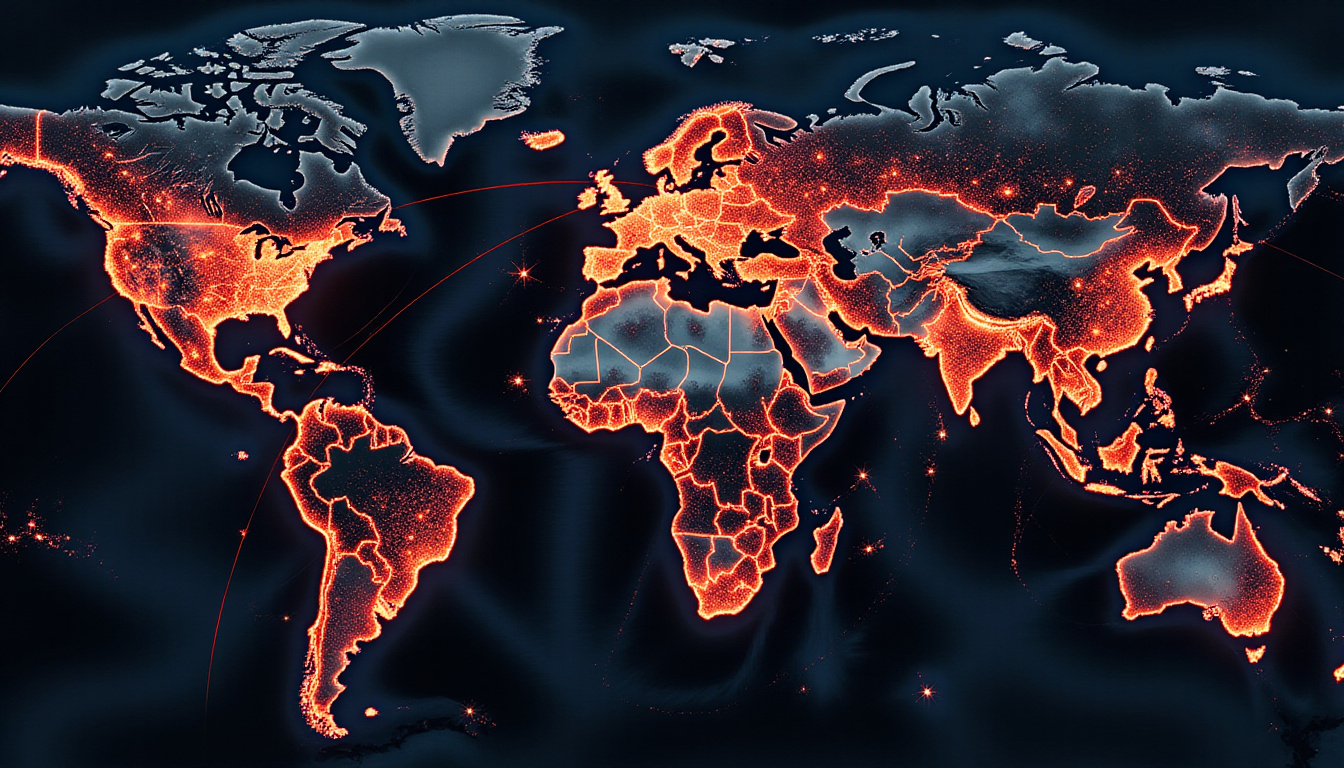
Global Shifts Through the Lens of Mundane Astrology
While political trends unfold nationally, mundane astrology also examines transnational patterns that reshape the global order.
The Shift of Long-Term Planetary Cycles
When outer planets enter new signs or align in rare configurations, larger-scale transitions typically follow. For instance:
- Uranus changing signs often coincides with new technological eras and altered patterns of rebellion and innovation.
- Neptune’s sign changes align with evolving spiritual trends, media landscapes, and ideological battles.
- Pluto’s shifts emphasize transformations in power, wealth distribution, and deep systemic overhauls.
By studying past periods when these placements occurred, astrologers draw connections between historical and current global shifts—such as similar tensions around empires, trade networks, or ideological blocs.
Regional Hotspots and Tectonic Stress Points
Mundane astrology can highlight regions under particular strain or opportunity by:
- Mapping eclipse paths over countries and continents
- Comparing transits to national charts within the same geopolitical region
- Observing how global ingresses look in different capitals
Patterns may show that certain areas face simultaneous pressures—economic, political, or environmental—making them likely flashpoints for change. Conversely, other regions might show a symbolic climate favorable for mediation, alliance-building, or innovation.
Collective Crises and Turning Points
Major global crises—pandemics, world wars, financial collapses—often emerge during periods of intense outer-planet activity. Mundane astrology identifies these as:
- Saturn–Pluto periods of severe contraction and power restructuring
- Uranus–Pluto squares or oppositions manifesting as rapid, often turbulent revolutions
- Jupiter amplifying whatever it touches, for better or worse
Astrologers do not claim causality in a scientific sense, but the historical correlation between these cosmic cycles and global turning points is well-documented within the tradition and has drawn interest even from culturally oriented historians (see, for example, discussions of historical cycles and world systems in research summarized by the International Astronomical Union and historical astronomy sources (source)).
Practical Uses of Mundane Astrology Today
For those working in or following politics, policy, and global affairs, mundane astrology can be used as:
-
A Timing Tool
To identify windows when initiatives are more or less likely to succeed, or when negotiations may be particularly fragile. -
A Pattern-Recognition Aid
To compare present cycles with past eras that shared similar configurations and draw historically informed insights. -
A Narrative Framework
To understand the symbolic “story” behind events: Are we in a phase of dissolution and endings, or one of pioneering experimentation? -
A Complement to Data
Not a substitute for statistics, polling, or economic models, but an added layer that highlights mood, themes, and turning points that numbers alone might miss.
For individuals—voters, activists, investors, or concerned citizens—mundane astrology offers a way to situate personal decisions within broader cycles, reducing the sense of randomness and fostering a more strategic outlook.
Limitations and Ethical Considerations
Mundane astrology, like any interpretive system, has boundaries and responsibilities.
- Non-determinism: It describes tendencies and themes, not fixed fates. Political outcomes still depend on human choices, institutions, and chance.
- Bias and interpretation: Astrologers bring their own cultural and ideological lenses. Cross-checking interpretations and acknowledging subjectivity is crucial.
- Avoiding fearmongering: Emphasizing crises without highlighting potential constructive responses can disempower people. Ethical practitioners balance warning with guidance.
- Respect for free will: Using mundane astrology to justify fatalism (“it’s hopeless because the stars say so”) undermines civic engagement and ethical responsibility.
Used thoughtfully, mundane astrology can encourage deeper reflection and more conscious participation in collective life instead of escapism or fatalism.
Simple Ways to Explore Mundane Astrology Yourself
You don’t need to be a professional astrologer to begin observing these patterns:
- Track key global news on days of solar and lunar eclipses. Notice recurring themes.
- Watch major ingresses of Saturn, Uranus, Neptune, and Pluto and read multiple astrologers’ forecasts for world events during those periods.
- Look up charts for your own country’s founding and see what transits are active during elections, crises, or major reforms.
- Compare historical periods that felt similar in mood and see whether they shared repeating planetary configurations.
Over time, you may start to recognize how the symbolic language of mundane astrology mirrors the collective stories playing out in headlines and history books.
FAQ: Mundane Astrology and World Events
Q1: How accurate is mundane astrology for predicting political events?
Mundane astrology is most accurate at describing cycles, themes, and windows of probability, not specific outcomes. It can reliably highlight periods of heightened tension, reform, or power struggle, but the exact shape of events depends on human decisions, institutional strength, and chance. Responsible practitioners frame their work as forecasting climates, not certainties.
Q2: What’s the difference between natal astrology and mundane astrological analysis?
Natal astrology focuses on an individual’s birth chart to explore personality, life path, and personal timing. Mundane astrological analysis applies similar principles to entities like nations, political systems, and global events. Instead of asking about career or relationships, it looks at governance, economies, social movements, and international relations.
Q3: Can mundane world astrology help with personal decisions like investing or activism?
Yes, mundane world astrology can provide context for personal choices by revealing broader trends. Investors may watch cycles involving Jupiter, Saturn, and Uranus to understand market mood, while activists may look at periods of strong Uranus or Pluto activity for windows when reform movements are more likely to gain traction. It shouldn’t replace solid research, but it can offer an additional timing and pattern-recognition tool.
Harness the Insight of Mundane Astrology in a Changing World
In a time of rapid upheaval—political polarization, technological disruption, climate pressures, and shifting alliances—mundane astrology offers a rare long-view perspective. It doesn’t promise instant certainty, but it does illuminate the rhythms and repeating motifs that shape our collective story.
If you’re ready to step beyond headline reactions and start seeing the deeper patterns behind political trends and global shifts, now is an ideal moment to dive into mundane astrology. Explore your nation’s chart, follow the next round of planetary cycles, and integrate this symbolic map into your understanding of world affairs—so you can navigate change with greater foresight, strategy, and calm.
Learn how astronomy, psychology, and spiritual traditions intersect by visiting SpiritualMindScience.com for deeper insights.