Natal astrology is the ancient art of reading the sky at the exact moment you were born. Your birth chart—also called a natal chart—is like a cosmic snapshot that astrologers believe reveals your innate strengths, challenges, and life themes. Whether you’re a skeptic who’s simply curious or a spiritual seeker looking for deeper meaning, understanding natal astrology can give you surprisingly practical insights into who you are and what you’re here to do.
In this guide, you’ll learn what a natal chart is, how it’s constructed, and how to interpret its symbols so you can start unlocking its hidden power yourself.
What Is Natal Astrology?
Natal astrology is a branch of astrology that focuses on the precise positions of the planets, the Sun, and the Moon at the time and place of your birth. From these positions, an astrologer creates a circular map—the natal chart—that shows:
- Where each planet was located by zodiac sign
- Which area of life each planet influences (the houses)
- How the planets interact with one another (the aspects)
Unlike daily horoscopes that only use your Sun sign, natal astrology is fully personalized. Two people born on the same date but at different times or in different locations will have different charts—and often, very different life stories.
How Your Birth Chart Is Calculated
You don’t need to be a mathematician to benefit from natal astrology, but it helps to know what goes into creating a chart. You’ll need:
- Date of birth – day, month, and year
- Exact time of birth – ideally from a birth certificate
- Place of birth – city and country (or coordinates)
Astrologers use this data, combined with astronomical tables called ephemerides or modern software, to calculate the exact positions of:
- The Sun, Moon, and planets
- The Ascendant (rising sign)
- The Midheaven (career/public life point)
- The 12 house cusps
If you want to see your own chart, you can generate it for free on reputable sites like astro.com (source) or through many astrology apps. Getting the time right is crucial: even a one-hour difference can change your rising sign and house placements.
The Big Three: Sun, Moon, and Rising Sign
When people talk about their “sign,” they usually mean their Sun sign. In natal astrology, that’s only one-third of the story. Your Big Three—Sun, Moon, and Ascendant (rising sign)—form the core of your personality blueprint.
Sun Sign: Core Self and Life Purpose
The Sun in your chart represents:
- Your core identity
- What energizes you
- Your creative life force and purpose
Example:
- Sun in Leo might indicate a bold, expressive person who thrives in the spotlight and needs creative self-expression.
- Sun in Virgo might describe someone analytical and service-oriented who finds fulfillment in being useful and improving systems.
Moon Sign: Emotional World and Needs
Your Moon sign symbolizes:
- Emotional responses
- Instincts and habits
- What you need to feel safe and nurtured
Example:
- Moon in Cancer tends toward strong family ties, emotional sensitivity, and a need for security.
- Moon in Aquarius may seek emotional freedom, intellectual connection, and non-traditional relationships.
Rising Sign: Your Mask and Approach to Life
The Ascendant or rising sign is the zodiac sign on the eastern horizon at your birth. It reflects:
- How others first perceive you
- Your style, appearance, and mannerisms
- Your default approach to new situations
Example:
- A Capricorn rising might appear serious, responsible, and reserved.
- A Gemini rising often comes across as curious, talkative, and quick-witted.
Understanding this triad is the foundation of reading any natal chart.
The 12 Houses: Where Life Unfolds
In natal astrology, the chart is divided into 12 houses, each representing a specific area of life. The signs show how energy expresses itself; the houses show where in life that expression happens.
Here’s a quick overview of the 12 houses:
-
1st House – Self & Identity
Personality, physical body, first impressions. -
2nd House – Money & Values
Finances, possessions, self-worth, material security. -
3rd House – Communication
Learning style, siblings, short trips, everyday thinking. -
4th House – Home & Roots
Family, early upbringing, private life, emotional foundation. -
5th House – Creativity & Romance
Pleasure, fun, hobbies, dating, children. -
6th House – Work & Health
Daily routines, service, health habits, coworkers. -
7th House – Partnerships
Committed relationships, marriage, business partners, open enemies. -
8th House – Transformation
Shared resources, intimacy, power dynamics, psychological depths. -
9th House – Beliefs & Expansion
Higher education, travel, spirituality, philosophy. -
10th House – Career & Reputation
Vocation, achievements, public image, authority. -
11th House – Friends & Future
Social networks, communities, long-term goals, hopes. -
12th House – The Unconscious
Spirituality, hidden patterns, solitude, endings, healing.
When a planet falls into a house, it “lights up” that life area. For example, Venus in your 5th house might indicate a love of art, romance, and pleasure, while Saturn in your 6th could highlight serious responsibilities at work or health lessons through discipline.
The Planets: What Energies You Carry
In natal astrology, planets are seen as archetypal energies within you. Each has a distinct role:
- Sun – Ego, vitality, purpose
- Moon – Emotions, instincts, needs
- Mercury – Thinking, communication, learning
- Venus – Love, relationships, values, attraction
- Mars – Drive, passion, assertiveness, anger
- Jupiter – Growth, luck, wisdom, expansion
- Saturn – Discipline, structure, limits, life lessons
- Uranus – Innovation, rebellion, sudden change
- Neptune – Imagination, spirituality, illusion
- Pluto – Power, transformation, deep psychological processes
Interpreting your chart means blending:
Planet (what) + Sign (how) + House (where).
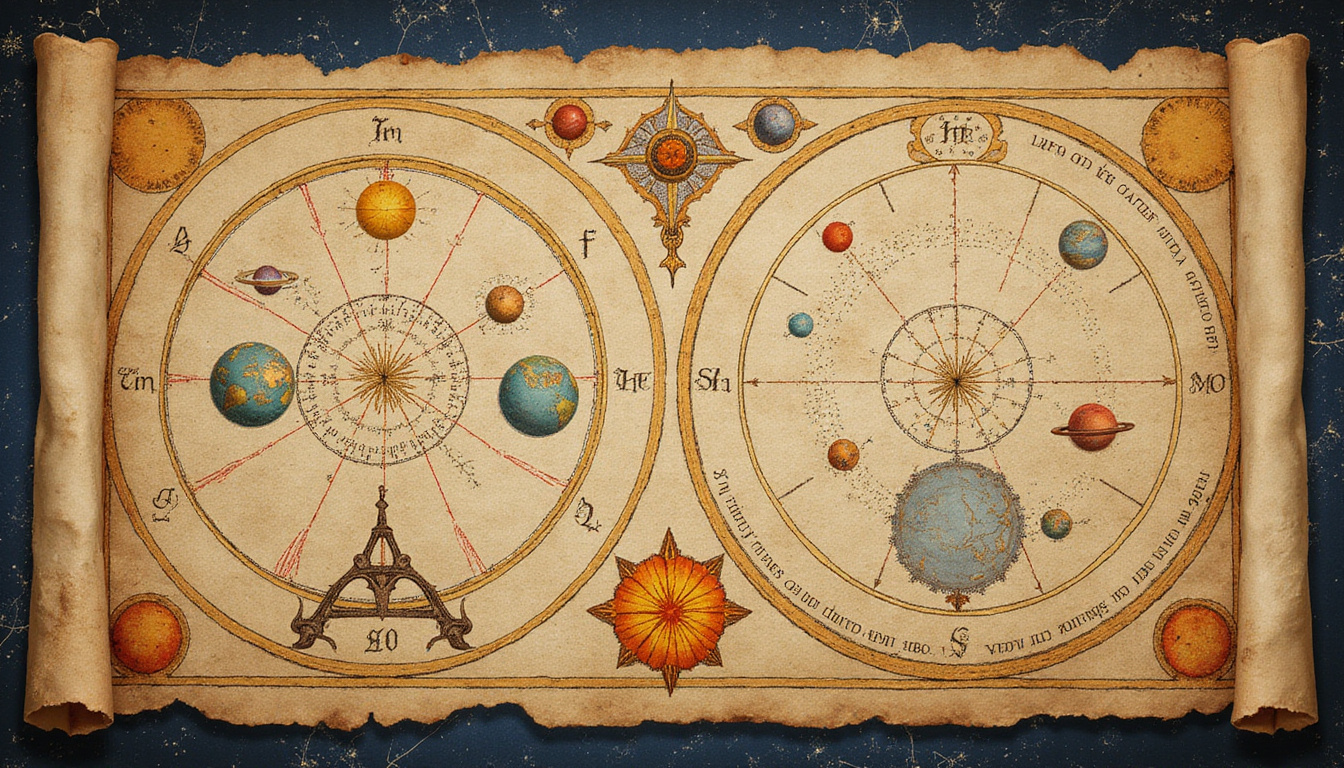
Example:
- Mars in Libra in the 7th house might describe someone who channels their assertiveness into partnerships and prefers cooperation over direct confrontation, but who may also experience conflict in relationships.
Aspects: The Conversations Between Planets
Aspects are the geometric angles between planets in your natal chart. In natal astrology, they show how different parts of your personality “talk” to one another—harmoniously or with tension.
Key aspects include:
- Conjunction (0°) – Planets blend energies; intense and powerful.
- Sextile (60°) – Easy, flowing opportunities; supportive.
- Square (90°) – Tension, challenge, friction that pushes growth.
- Trine (120°) – Natural talent, ease, gifts.
- Opposition (180°) – Polarities; balancing two competing needs.
For example, a Sun square Saturn might indicate self-doubt and pressure to succeed, leading to resilience over time. A Moon trine Venus suggests warmth, charm, and ease in forming affectionate bonds.
How Natal Astrology Helps You in Everyday Life
Even if you treat astrology symbolically rather than literally, a natal chart can be a powerful tool for self-reflection. Here’s how it can support you:
-
Self-Awareness
See patterns in your behavior, motivations, and emotional triggers. -
Career Direction
Identify natural strengths and preferences—communication, leadership, creativity, structure, analysis, etc. -
Relationship Insight
Understand your attachment style, love language, and partnership needs. -
Life Cycles and Timing
Planetary transits to your natal chart can highlight periods of growth, change, or consolidation. -
Healing and Personal Growth
Recognize core wounds (often indicated by Saturn, Chiron, or Pluto) and work intentionally to heal and transform them.
Natal astrology doesn’t “predict” your life in a rigid way. Instead, it describes potentials and tendencies, leaving plenty of room for free will. The chart is a map; how you walk the path is up to you.
Simple Steps to Start Reading Your Own Natal Chart
You don’t have to be a professional astrologer to begin unlocking your chart. Start with these steps:
-
Generate Your Chart
Use a reliable website or app. Enter your birth date, time, and location. -
Identify Your Big Three
Find your Sun, Moon, and rising sign. Read about each individually, then reflect on how they blend. -
Look at Planet Placements by House
Notice where the Sun, Moon, Venus, and Mars fall by house—these often stand out in everyday life (identity, emotions, love, and drive). -
Note Major Aspects
Focus on tight aspects (within 3–5 degrees). Pay attention to aspects involving the Sun, Moon, Saturn, Pluto, or the chart ruler (planet ruling your rising sign). -
Journal Your Impressions
Instead of taking interpretations as absolute truth, use them as prompts:- “Where do I see this in my life?”
- “What resonates, and what doesn’t?”
- “How could I work with this energy more consciously?”
Common Myths About Natal Astrology
Because natal astrology is widely popular, it’s also widely misunderstood. A few myths worth clearing up:
-
“It’s only about Sun signs.”
Your Sun sign is important but far from the whole story. The full chart is much richer. -
“It takes away free will.”
Traditional astrologers emphasize fate, but many modern practitioners see the chart as describing tendencies, not fixed outcomes. -
“People of X sign are all the same.”
Two people with the same Sun sign can have completely different Moon signs, rising signs, and planetary aspects. -
“It’s just vague generalizations.”
Generic horoscopes often are. A detailed natal chart reading, however, is highly specific—to the point that it can feel uncomfortably accurate.
Practical Ways to Work With Your Chart
To make natal astrology truly helpful, bring it into your daily life:
-
For self-care
Honor your Moon sign’s needs (e.g., Moon in Taurus might need physical comfort and stability; Moon in Sagittarius may crave space and adventure). -
For communication
Understand your Mercury sign to see your thinking style and how you best process information. -
For love and dating
Explore your Venus and Mars signs to illuminate what you value in relationships and how you express desire. -
For decision-making
Reflect on your Saturn and Jupiter placements when weighing risks, responsibilities, and growth opportunities.
Over time, you’ll see how natal astrology can serve as a personalized guide to making choices aligned with your nature instead of fighting against it.
FAQ About Natal Astrology and Birth Charts
Q1: What is a natal birth chart in astrology?
A natal birth chart is a map of the sky at the exact moment and place you were born. In natal astrology, it shows the positions of the Sun, Moon, planets, and key points, revealing patterns in your personality, life themes, and potential lessons.
Q2: Is natal chart interpretation accurate?
Interpretation in natal astrology is symbolic, not scientific prediction. Many people find that detailed chart readings describe their inner world and life patterns with surprising accuracy, but results depend heavily on the astrologer’s skill and your openness to self-reflection.
Q3: Can my natal chart change over time?
The basic natal chart in astrology is fixed; it never changes. However, as you grow and mature, you express its potentials differently. Techniques like transits, progressions, and returns show how your life unfolds over time in relation to your original birth chart.
Unlock Your Birth Chart’s Hidden Power
Your natal chart is not a cage—it’s a key. By learning the language of natal astrology, you gain a clearer view of your strengths, your vulnerabilities, and the deeper patterns that shape your choices. Instead of feeling at the mercy of random events or rigid labels, you can use this insight to live more intentionally, compassionately, and authentically.
If you’re ready to go deeper, generate your chart today and start exploring your Big Three, houses, and aspects. Then consider booking a session with a qualified astrologer or studying further on your own. The more fluently you speak the language of your chart, the more power you have to direct your life in alignment with who you truly are.
Want to understand the deeper meaning behind spiritual practices and beliefs? Visit SpiritualMindScience.com for science-informed spiritual education.