Your natal chart is much more than a zodiac sign or a fun horoscope. It’s a detailed cosmic snapshot of the sky at the exact moment you were born, and many people use it as a tool for understanding personality, relationships, career direction, and deeper life lessons. Whether you’re a skeptic who’s simply curious or a seasoned astrology lover, learning to read your natal chart can feel like being handed a personalized user manual for your life.
Below, you’ll learn how to decode the main parts of your chart, what they reveal about your personality and life path, and how to use that insight in a grounded, practical way.
What is a natal chart, really?
A natal chart (also called a birth chart) is a circular map showing where the Sun, Moon, and planets were located by zodiac sign and by house when you were born.
To generate one, you need three key pieces of information:
- Date of birth
- Exact time of birth
- Place of birth
Astrologers use this data to calculate not just your Sun sign, but your Moon, Rising sign (Ascendant), and the positions of every planet. That’s why two people with the same Sun sign can feel so different: their charts—like fingerprints—are unique.
If you want to experiment, you can pull a free chart from many astrology websites or apps and follow along as you read.
The big three: Sun, Moon, and Rising
Most people know their Sun sign, but in a natal chart, three factors create the backbone of your personality: the Sun, Moon, and Ascendant (Rising sign).
Sun: Core identity and life force
The Sun in your natal chart shows:
- Your core personality
- How you shine, create, and express yourself
- What energizes and motivates you
For example, a Sun in Aries might express courage, initiative, and competitiveness, while a Sun in Virgo tends toward analysis, service, and practical problem-solving. The house placement of the Sun shows where you’re meant to radiate—career, relationships, creativity, etc.
Moon: Emotional nature and inner needs
The Moon represents:
- Emotional reactions and instincts
- Your comfort zone and what makes you feel safe
- How you nurture and need to be nurtured
A Moon in Cancer often craves emotional security and family closeness, whereas a Moon in Aquarius may seek independence and intellectual connection. Where your Moon sits in the chart can reveal unconscious patterns that drive your habits and moods.
Rising sign: The mask and path forward
Your Rising sign (Ascendant) shows:
- How others tend to see you at first
- Your physical presence or style
- The “lens” through which you approach life
It’s sometimes called your life path “gateway” because it sets up the 12-house wheel of your natal chart. A Capricorn Rising might appear serious and goal-driven, while a Libra Rising often feels diplomatic and people-focused. Over time, you may grow into the higher qualities of your Rising sign, like a path you walk into adulthood.
The 12 houses: Where life unfolds
If the planets are “actors,” the 12 houses of your natal chart are the “stages” where your life events and themes play out. Each house rules a specific area of life:
- 1st House – Identity, self-image, first impressions
- 2nd House – Money, possessions, self-worth
- 3rd House – Communication, siblings, daily learning
- 4th House – Home, family, roots, emotional foundation
- 5th House – Creativity, romance, children, play
- 6th House – Work routines, health, daily habits, service
- 7th House – Partnerships, marriage, close one-to-one bonds
- 8th House – Shared resources, intimacy, transformation, taboos
- 9th House – Higher learning, travel, spirituality, beliefs
- 10th House – Career, public image, achievements
- 11th House – Friends, groups, long-term goals
- 12th House – Subconscious, solitude, hidden patterns, spirituality
Seeing which planets occupy which houses tells you where your energy, challenges, and opportunities will tend to concentrate.
Example:
- Venus in the 7th house often indicates strong focus on partnership and harmony in close relationships.
- Mars in the 10th house can signify ambition and drive around career and public status.
Planets in your natal chart and what they reveal
Every planet has a symbolic “job” in the chart. Understanding what each planet represents helps you decode your strengths, struggles, and motivations.
Personal planets: Your day-to-day personality
These move relatively quickly, so they’re highly individualized.
- Sun – Core self, vitality, purpose
- Moon – Emotions, instincts, internal world
- Mercury – Thinking, learning, communication style
- Venus – Love language, attraction, values, aesthetics
- Mars – Drive, physical energy, how you assert yourself
If you’re fiery and blunt in arguments, you may have Mars in a fire sign (Aries, Leo, Sagittarius). If you crave harmony and dislike conflict, Venus in Libra or Taurus might be influencing your approach to love and beauty.
Social planets: How you relate to the world
- Jupiter – Expansion, luck, faith, growth, abundance
- Saturn – Discipline, responsibility, boundaries, lessons
Jupiter shows where life tends to open doors; Saturn shows where you face tests and need to mature. Someone with Saturn in the 7th house, for example, may take partnerships very seriously or learn major life lessons through relationships.
Outer planets: Deep layers and generational themes
- Uranus – Innovation, rebellion, sudden change
- Neptune – Dreams, spirituality, illusions, ideals
- Pluto – Power, transformation, hidden forces
These planets move slowly, shaping collective trends. In your chart, they reveal deep desires for change, healing, and growth, especially where they touch personal planets or angles (Ascendant, Descendant, Midheaven, IC).
Aspects: The conversations between planets
Your natal chart isn’t just static positions; it’s a complex web of angular relationships, called aspects. These show how different parts of your psyche cooperate or clash.
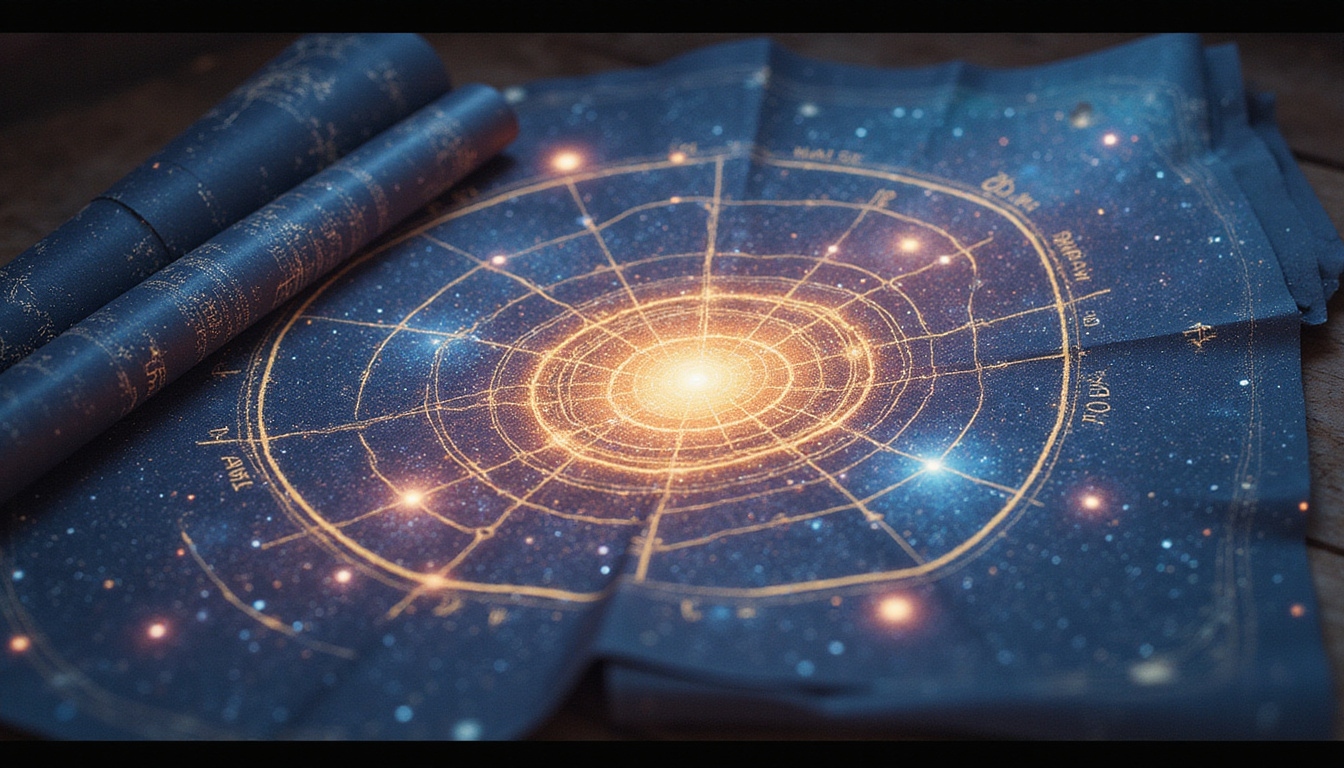
Common aspects include:
- Conjunction (0°) – Intense blending of energies
- Sextile (60°) – Easy, supportive opportunities
- Trine (120°) – Natural talents and flow
- Square (90°) – Tension, friction, growth through challenge
- Opposition (180°) – Polarities, projection, relationship themes
For example:
- A Sun–Saturn square may signal self-doubt and a fear of failure, but also the potential for immense resilience and achievement with effort.
- A Venus–Jupiter trine can indicate social charm, generosity, and ease in attracting love or resources.
When people talk about “natal chart secrets,” they’re often referring to patterns created by multiple aspects, which can illuminate complex personality traits and life patterns.
Life path clues: Purpose, career, and growth
If you’re looking to your natal chart for direction, certain points are especially revealing.
North Node and South Node: Soul growth axis
The lunar nodes aren’t physical bodies; they’re points where the Moon’s orbit intersects the ecliptic. Symbolically:
- South Node – Comfort zone, past patterns, familiar skills
- North Node – Growth edge, life lessons, evolutionary path
The sign and house of your North Node show qualities and life areas you’re meant to develop, even if they feel uncomfortable. The South Node describes what comes easily but can hold you back if overused.
Example:
- North Node in the 10th house: called to step into visibility, leadership, or public responsibility.
- North Node in Pisces: learning surrender, compassion, and intuition rather than over-controlling outcomes.
Midheaven (MC): Vocation and public role
The Midheaven, usually at the top of your chart, indicates:
- Your public image and reputation
- Career themes or the kind of work that suits you
- The legacy you may leave
A Midheaven in Libra might point toward diplomacy, law, design, or any field that requires mediation and aesthetics. A Midheaven in Scorpio might excel in psychology, research, crisis management, or transformation-oriented work.
Using your natal chart for self-awareness, not fatalism
Astrology, especially natal chart work, is often misunderstood as rigid destiny. In practice, many contemporary astrologers treat it more like a symbolic language of tendencies, not a fixed script.
Here’s how to use your natal chart constructively:
- Identify strengths you can lean into (e.g., a strong Mercury for writing or teaching).
- Spot repeating challenges (like tough Saturn aspects) and consciously work on those patterns.
- Understand relationship dynamics via your 7th house, Venus, and Mars placements.
- Clarify values and needs so you can make better career, love, and lifestyle choices.
Several psychological studies have explored why astrology feels relevant to people—often linking it to self-reflection and meaning-making rather than literal prediction (see the American Psychological Association’s overview on belief in astrology as a meaning system, for example: APA) (source).
A well-read natal chart can function like a sophisticated personality mirror, inviting you to own your gifts, acknowledge your blind spots, and choose more aligned actions.
A simple way to start reading your own chart
If you’ve just downloaded your natal chart and feel overwhelmed by the symbols, take it step by step. Start with:
- Locate your Sun, Moon, and Rising sign. Note their signs and houses.
- Check where Venus and Mars are. How do you love, and how do you assert yourself?
- Look at Saturn. In which sign and house do responsibility and lessons show up?
- Find your North Node. What qualities and life area are calling you to grow?
- Notice major aspects to your Sun, Moon, and Ascendant (conjunctions, squares, oppositions, trines).
Keep a journal of how each placement shows up in your daily life: work conflicts, relationship patterns, emotional triggers, moments of success. Over time, you’ll see why people say their natal chart “reads them” so accurately.
FAQ: Natal chart questions answered
What is a birth natal chart and why is it important?
A birth natal chart is the astrological map of the sky at your exact time and place of birth. It’s important because it gives a fuller picture of your personality and life themes than your Sun sign alone—showing emotional needs, communication style, love patterns, and growth areas.
Can a natal birth chart really show my life path?
Astrologers believe a natal birth chart indicates potentials, inclinations, and key life lessons rather than fixed outcomes. Points like the North Node, Midheaven, and Saturn placement can highlight the kinds of paths, challenges, and achievements you’re likely to find meaningful.
How accurate are detailed natal chart readings?
The accuracy of a detailed natal chart reading depends on precise birth data (time and place) and the skill of the interpreter. Many people find them uncannily descriptive of their personality and patterns, but it’s best used as a reflective tool rather than a rigid prediction system.
Step into your own natal chart and unlock your path
Your natal chart is a rich, symbolic map of who you are, how you relate, and where you’re invited to grow. It reveals the strengths you can build on, the emotional patterns that quietly shape your choices, and the life directions that are likely to feel most authentic.
If you’re ready to go deeper, pull up your natal chart and start exploring your Sun, Moon, Rising sign, and key houses. Then, consider booking a professional reading or diving into reputable astrology texts to unpack the more complex aspects and configurations.
Treat your chart as an invitation: to know yourself more honestly, to work consciously with your challenges, and to move toward a life that feels aligned with your inner wiring. The “secrets” were never really hidden—they’re written in your natal chart, waiting for you to read them.
Curious about why astrology has fascinated people for centuries? Explore evidence-based perspectives on spirituality, consciousness, and human psychology at SpiritualMindScience.com