On some nights, the sky suddenly feels alive with order: bright “stars” huddle together near the horizon, forming eye-catching patterns that shift night by night. These are planetary conjunctions—moments when two or more planets appear unusually close together in our sky. For casual stargazers and serious astronomers alike, conjunctions are among the most anticipated celestial events, blending beauty, science, and a sense of cosmic timing.
What Are Planetary Conjunctions?
In astronomy, a conjunction happens when two celestial bodies share the same right ascension (their east–west position in the sky) or ecliptic longitude as seen from Earth. Put more simply, planetary conjunctions occur when planets appear side by side or nearly so from our viewpoint, even though they remain millions of kilometers apart in space.
Key points about conjunctions:
- They’re a line-of-sight effect, not a physical meeting.
- Planets follow slightly different orbits and speeds, so their apparent spacing changes constantly.
- Conjunctions can involve two planets, a planet and the Moon, a planet and a bright star, or multiple planets at once.
A “great” or “grand” conjunction usually refers to a particularly rare or visually impressive one, such as alignments involving Jupiter and Saturn.
Why Skywatchers Love Planetary Conjunctions
Planetary conjunctions are a perfect mix of accessibility and wonder:
- They’re easy to spot: You don’t need a telescope—just a clear horizon and basic directions.
- They change quickly: The configuration can look noticeably different from one night to the next.
- They’re photogenic: Conjunctions are ideal for nightscape photography, with planets hovering above landscapes, buildings, or natural features.
- They’re rare enough to feel special: While minor conjunctions happen fairly often, especially memorable alignments are separated by years or decades.
For many observers, conjunctions also create a personal connection to time. You might remember “where you were” during a major event like the 2020 Jupiter–Saturn conjunction, or plan a trip for a future spectacle.
The Science Behind Planetary Conjunctions
To understand why planetary conjunctions happen, it helps to picture the solar system as a kind of cosmic racetrack.
- All major planets (except Mercury and Pluto’s odd tilt) orbit roughly in the same plane, called the ecliptic.
- From Earth, we see this plane projected as a line across the sky.
- Planets wander along this line at different speeds and distances.
When two planets share nearly the same direction in the sky from our perspective, they’re in conjunction. But several details shape what we see:
Angular Separation
Observers talk about how “close” planets get in degrees:
- Your fist at arm’s length spans about 10 degrees.
- A full Moon is about 0.5 degrees wide.
Some spectacular planetary conjunctions bring planets within 1 degree or less of each other—close enough to fit together in a low-power telescope field of view.
Brightness and Color
Not all planets are equally striking during conjunctions:
- Venus is by far the brightest, often dominating the scene.
- Jupiter is bright and large in telescopes.
- Saturn is dimmer but golden.
- Mars can shine reddish-orange, especially near opposition.
When these different colors and brightness levels cluster together, they create vivid contrasts that are easy to appreciate even from light-polluted cities.
Orbital Periods and Timing
Each planet’s orbital period determines how often it “laps” or is lapped by others:
- Jupiter–Saturn conjunctions (the “Great Conjunctions”) occur about every 20 years.
- Jupiter–Venus conjunctions are more frequent and visually dramatic, often only a degree or two apart.
- Multi-planet groupings are much rarer because several orbital schedules must align simultaneously.
This clockwork rhythm of orbits is why planetary conjunctions feel both predictable and magical: we can calculate them centuries in advance, yet they still arrive like a once-in-a-generation performance.
Famous Historical Planetary Conjunctions
Throughout history, particularly striking conjunctions have influenced culture, religion, and science.
The 2020 Great Conjunction: Jupiter and Saturn
On December 21, 2020, Jupiter and Saturn appeared just 0.1 degrees apart—so close that, under good conditions, they seemed like a single elongated “star” to the naked eye. It was:
- The closest visible Jupiter–Saturn conjunction since 1226.
- Perfectly timed near the December solstice.
- Widely photographed and observed worldwide.
This event renewed public interest in planetary conjunctions, demonstrating how modern communities still gather to witness rare sky shows.
Possible “Star of Bethlehem” Candidates
Some scholars have suggested that notable conjunctions around 7–2 BCE—especially close approaches between Jupiter and Saturn, or Jupiter and Venus—may have inspired the biblical “Star of Bethlehem” story (source: NASA – Historical Sky Events). While there’s no consensus, the idea highlights how planetary conjunctions have long been linked with omens, prophecies, and cultural narratives.
Conjunctions in Astrology and Folklore
Before modern astronomy, planetary conjunctions were often interpreted as signs:
- In astrology, conjunctions are considered powerful aspects indicating intensified planetary influence.
- In various traditions, unusual groupings of bright “wandering stars” were linked to political change, the birth or death of rulers, or shifts in fortune.
Even as we now understand the physics behind these alignments, the emotional and symbolic resonance remains strong.
Are “Planetary Alignments” the Same as Conjunctions?
The term “planetary alignments” is often used loosely in media headlines. It might describe:
- A true conjunction: two planets very close together in the sky.
- A looser grouping: several planets visible in the same region or along a line.
- A solar-system diagram alignment: where planets line up roughly on the same side of the Sun in 3D space.
From Earth’s perspective, most people mean “multiple bright planets visible at once” when they talk about a planetary alignment. These multi-planet views are essentially extended planetary conjunctions involving three or more bodies over several days or weeks.
Despite popular myths, such alignments:
- Do not trigger earthquakes, extreme tides, or apocalyptic events.
- Have negligible gravitational effects on Earth compared to the Moon and Sun.
- Are primarily visual and geometric phenomena, not causes of physical disruption.
How to See Planetary Conjunctions
You don’t need advanced equipment to enjoy planetary conjunctions. Here’s how to give yourself the best chance of seeing them.
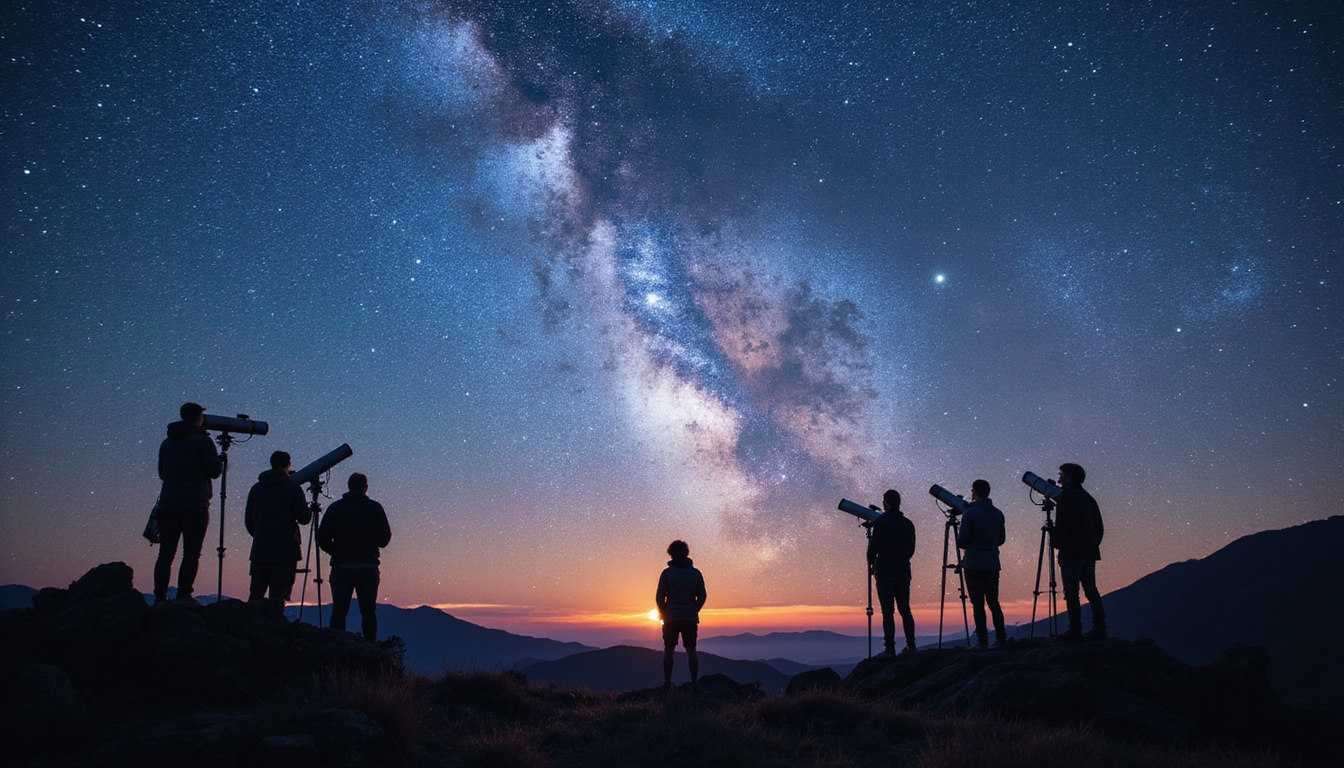
1. Stay Informed with Reliable Sources
Use apps and websites that track upcoming planetary conjunctions and other events:
- Smartphone astronomy apps (e.g., Stellarium, SkySafari, Sky Guide)
- Planetarium software for desktops
- Observing calendars from reputable organizations (e.g., local observatories, astronomy clubs, or space agencies)
These tools tell you:
- Which planets are involved
- The date and time of closest approach
- Where to look (direction and altitude above the horizon)
2. Choose the Right Location and Time
Most planetary conjunctions are visible:
- Shortly after sunset in the west, or
- Just before sunrise in the east
To improve your view:
- Find an open horizon with minimal obstructions (buildings, trees).
- Avoid bright streetlights if possible.
- Arrive 20–30 minutes early to get oriented as the sky darkens.
3. Use Simple Gear (Optional but Helpful)
While planetary conjunctions are naked-eye events, a few tools can enhance your experience:
- Binoculars (7×50 or 10×50): Great for seeing both planets in the same field; can reveal moons around Jupiter or Saturn’s oval shape.
- Small telescope: Lets you see planetary disks, rings of Saturn, or phases of Venus during close pairings.
- Tripod + camera: Even basic DSLR or mirrorless cameras can capture beautiful wide-field shots.
4. Plan for Multiple Nights
The moment of exact conjunction is just the midpoint. Plan to observe:
- A few days before: to see the planets approaching each other.
- The night of conjunction: for the closest pairing.
- A few days after: to watch them drift apart.
This progression helps you feel the dynamic nature of the solar system in motion.
Why Some Planetary Conjunctions Are Rarer Than Others
Not all conjunctions are created equal. Several factors determine their rarity and spectacle:
- Orbital periods: Slow-moving outer planets (like Saturn and beyond) take longer to “catch up” with each other in the sky.
- Inclinations of orbits: Slight tilts mean planets can pass “above” or “below” each other from our viewpoint, resulting in wider separations most of the time.
- Visibility conditions: Some very close conjunctions happen too near the Sun to be seen easily, or during daylight.
As a result, a visually stunning, easily observable close pass of bright planets is much less common than a mathematically defined conjunction on a star chart.
Photographing Planetary Conjunctions
If you’re interested in astrophotography, planetary conjunctions are an excellent starting point.
Basic steps:
- Use a tripod to keep the camera steady.
- Set a wide aperture (e.g., f/2.8–f/4) and moderate ISO (400–1600).
- Start with short exposures (1–5 seconds) to avoid star trailing if you’re using a normal or short telephoto lens.
- Include a foreground (trees, buildings, mountains, water) for a sense of scale and context.
- Take multiple frames with different settings and review them later.
Even a smartphone on a solid support can work surprisingly well if it offers a “night” or “astro” mode.
Planetary Conjunctions and the Human Experience
Beyond their scientific explanation, planetary conjunctions resonate deeply for several reasons:
- They’re shared moments: Friends, families, and communities can look up together, regardless of location or language.
- They mark time: Many people remember conjunctions like they remember comets or eclipses—as personal milestones.
- They inspire curiosity: A casual glance at two planets near each other can lead to questions about orbits, distances, and the scale of the solar system.
- They remind us of perspective: What seems like a close celestial embrace is actually an alignment across hundreds of millions of kilometers.
In an age dominated by screens, these events invite us to step outside, lift our gaze, and reconnect with the night sky.
FAQ About Planetary Conjunctions and Alignments
Q1: How often do planetary conjunctions happen?
Smaller planetary conjunctions—such as Venus with Jupiter or Mars—occur somewhere in the sky every year or so, though not always under ideal viewing conditions. Major events, like very close Jupiter–Saturn conjunctions visible in dark skies, happen on timescales of decades or longer.
Q2: Are planetary alignments dangerous for Earth?
No. Even when multiple planets are roughly lined up, the gravitational forces on Earth change only by tiny, insignificant amounts compared to the everyday influence of the Moon and Sun. Planetary alignments and conjunctions are visually impressive but physically harmless phenomena.
Q3: What’s the difference between a conjunction and a planetary alignment?
A planetary conjunction usually refers to two (or occasionally more) planets appearing very close together in our sky. A “planetary alignment” is a looser term that might describe several planets visible along a line or on the same side of the Sun. All conjunctions are alignments in a geometric sense, but not all alignments are close conjunctions.
When the next planetary conjunction appears on the calendar, treat it as an invitation. Mark the date, set a reminder, and plan a short observing session. Whether you stand on a city balcony or under a rural sky, you’ll be witnessing a precise dance of worlds unfolding in real time.
If you’d like to go deeper, look up upcoming conjunctions through a stargazing app or your local astronomy club, and consider joining an observing night. With just a bit of preparation, you can turn these fleeting alignments into unforgettable experiences—and perhaps spark a lifelong fascination with the sky.
Learn how astronomy, psychology, and spiritual traditions intersect by visiting SpiritualMindScience.com for deeper insights.