The solar wind is often described as a ghostly breeze from the Sun, but its impact on our technology and planet is anything but gentle. This constant stream of charged particles can disrupt satellites, destabilize power grids, change the upper atmosphere, and even paint our skies with auroras. Understanding what it is—and how it affects modern life—is becoming essential as we rely more on space-based and electrical infrastructure.
What is the solar wind?
The solar wind is a continuous flow of charged particles—mainly electrons and protons—blown off the Sun’s outer atmosphere (the corona) and out into the solar system. Because the Sun is so hot, some particles in its upper atmosphere move fast enough to escape the Sun’s gravity, forming a supersonic plasma flow that fills interplanetary space.
Key characteristics of the solar wind:
- Composition: mostly electrons and protons, with some heavier ions
- Speed: typically 300–800 km/s, but can exceed 2,000 km/s during major eruptions
- Temperature: hundreds of thousands to millions of degrees Kelvin
- Magnetic fields: carries the Sun’s magnetic field outward (the interplanetary magnetic field, IMF)
This flow is not uniform. It changes with:
- The 11-year solar cycle (periods of solar maximum and minimum)
- Solar features like coronal holes, sunspots, and active regions
- Explosive events such as solar flares and coronal mass ejections (CMEs)
These variations are what turn a “gentle” solar wind into a powerful space weather driver that can affect Earth.
How the solar wind interacts with Earth
Earth is not defenseless. Our planet has a magnetic field and an atmosphere that buffer much of the solar wind’s energy.
The magnetosphere: Earth’s magnetic shield
Earth’s magnetic field creates a protective bubble called the magnetosphere. When the solar wind reaches us:
- The flow is diverted around the magnetosphere, like water around a rock in a stream.
- Some particles are trapped in the Van Allen radiation belts.
- Under the right conditions, energy and particles are transferred into the magnetosphere and upper atmosphere.
The way the solar wind’s magnetic field (IMF) is oriented matters. A southward-pointing IMF is particularly effective at coupling with Earth’s northward magnetic field, allowing energy to pour into the magnetosphere.
Geomagnetic storms and substorms
When a fast solar wind stream or CME hits Earth, it can cause:
- Geomagnetic storms – large-scale disturbances in Earth’s magnetosphere, lasting hours to days.
- Substorms – shorter, more localized disturbances that energize particles and power auroras.
These events appear as fluctuations in Earth’s magnetic field, triggering a chain of effects that reach satellites, power networks, and navigation systems.
Effects of the solar wind on satellites and spacecraft
Space-based infrastructure is on the front line of solar wind impacts. Modern life depends heavily on satellites for communication, navigation, weather forecasts, and more.
1. Increased atmospheric drag
During strong solar wind events, Earth’s upper atmosphere heats and expands. This higher-density air reaches up into the altitudes where many satellites orbit (especially low Earth orbit, or LEO).
Consequences:
- Increased drag slows satellites, causing them to lose altitude faster.
- Satellites may require more frequent orbit corrections, using onboard fuel.
- If uncorrected, some satellites can re-enter the atmosphere prematurely.
In February 2022, a geomagnetic storm increased drag so much that dozens of newly launched Starlink satellites re-entered and burned up unexpectedly—an expensive reminder of how solar activity can affect orbits.
2. Surface charging and internal charging
The solar wind and associated energetic particles can charge satellite surfaces and internal components:
- Surface charging: Different materials on the satellite may accumulate different charges, leading to electrical discharges (“sparks”) across surfaces.
- Internal charging: High-energy electrons can penetrate the spacecraft structure, building up charge inside insulating materials.
Effects can include:
- Spurious signals in electronics
- Bit flips in memory (single-event upsets)
- Damage or degradation of sensitive components
- Temporary or permanent loss of control
Mitigation typically involves careful grounding, shielding, and designing electronics to tolerate single-event upsets.
3. Radiation damage to electronics and solar panels
Energetic particles from the solar wind, especially during storms and CMEs, can:
- Degrade solar panel efficiency over time
- Increase noise in imaging sensors (e.g., on Earth-observing satellites)
- Cause latch-up or burnout in microelectronics
Radiation-hardened components and redundant systems are common in critical satellites, but they increase cost and complexity.
4. Impacts on GNSS (GPS, Galileo, etc.) and communications
The solar wind alters the ionosphere (a charged region of Earth’s upper atmosphere), which radio signals must pass through.
This can cause:
- GPS / GNSS errors: Signal delays and scintillation (rapid fluctuations) can reduce positioning accuracy or cause brief loss of lock.
- Radio blackouts: Particularly at high latitudes and during strong events, HF (shortwave) communication can be severely disrupted.
- Satellite communications noise: Increased signal fading and interference for satellites using certain frequencies.
For aviation, maritime navigation, and precision agriculture, such disruptions can cause operational issues and economic losses.
How the solar wind affects power grids on Earth
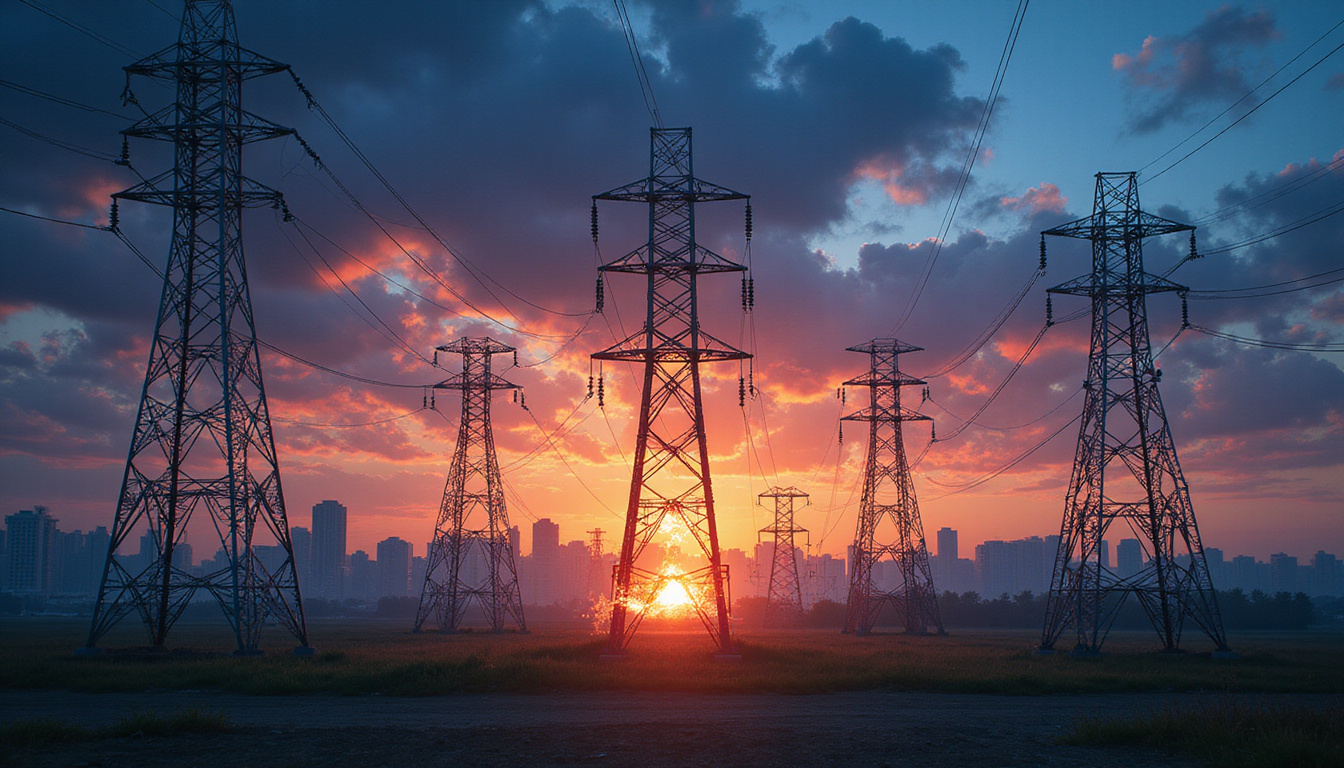
Power grids are surprisingly sensitive to space weather, even though they operate on the ground. The link is through geomagnetically induced currents (GICs).
Induced currents in long conductors
A changing magnetic field, such as during a geomagnetic storm, can induce electric currents in any long conductor. On Earth, that includes:
- High-voltage transmission lines
- Oil and gas pipelines
- Long communication cables
When geomagnetic disturbances are strong and widespread, GICs can:
- Flow through power lines and into transformers
- Drive transformers into saturation (where they no longer operate efficiently)
- Cause overheating, insulation breakdown, and even permanent damage
Historical examples of grid disruptions
Two major events highlight the risk:
-
Hydro-Québec blackout (1989):
A strong geomagnetic storm induced currents that led to protection systems tripping and transformers shutting down. The result: a province-wide blackout affecting millions for about nine hours. -
Carrington Event (1859):
The most powerful geomagnetic storm on record; telegraph systems sparked, caught fire, and operated even with batteries disconnected because of induced current. A storm of similar strength today could cause widespread, long-duration outages and transformer damage (source: NOAA / SWPC).
Modern power grids are more complex and more interconnected than in the 19th century, which increases both their vulnerability and the scale of potential impacts.
Grid protection and resilience
Grid operators now incorporate space weather information into operations. Typical measures include:
- Monitoring space weather alerts and geomagnetic indices
- Temporarily redistributing load or taking vulnerable components offline
- Enhancing transformer design to better withstand GICs
- Installing GIC monitoring equipment and implementing operational thresholds
These actions can significantly reduce the risk of cascading failures during strong solar wind–driven geomagnetic storms.
Subtle and surprising effects on Earth’s atmosphere and climate systems
While the immediate technological impacts get most attention, the solar wind also has slower, more subtle influences.
Changes in the ionosphere and radio propagation
The solar wind, along with ultraviolet and X-ray radiation from the Sun, shapes the ionosphere’s density and structure. This matters for:
- Long-distance HF radio propagation, which can improve or degrade depending on conditions
- Over-the-horizon radar systems relying on ionospheric reflection
- Scientific measurements of atmospheric and space conditions
Solar wind–driven storms can create patches, irregularities, and waves in the ionosphere, leading to signal scintillation for GNSS and satellite communications.
Possible links to climate (and their limits)
There’s ongoing research into how variations in the solar wind and solar activity might affect climate, through mechanisms such as:
- Modulation of cosmic rays, which may influence cloud formation
- Changes in upper atmospheric circulation and chemical composition
- Effects on the polar vortex and stratosphere
However, current scientific consensus is that while the solar wind and overall solar variability do influence Earth’s atmosphere, their contribution to present-day global climate change is small compared with human-driven greenhouse gas emissions. The solar wind is an important piece of Earth’s environment, but not the main driver of modern climate trends.
Monitoring and forecasting the solar wind
Because its impacts are so far-reaching, the solar wind is continuously monitored and modeled.
Key spacecraft and missions
Several missions sit upstream of Earth to measure the solar wind before it reaches us:
- ACE (Advanced Composition Explorer) and DSCOVR: Positioned at the L1 Lagrange point, about 1.5 million km upstream of Earth. They give 15–60 minutes’ warning of changing solar wind conditions.
- SOHO and Solar Orbiter: Observe the Sun’s corona and solar surface, helping identify coronal holes, sunspots, flares, and CMEs.
- Parker Solar Probe: Flying closer to the Sun than any previous spacecraft, measuring the solar wind near its origin to improve understanding and models.
Ground-based solar observatories and radio telescopes complement these missions, providing a fuller picture of evolving solar activity.
Space weather forecasting
Space weather centers such as NOAA’s Space Weather Prediction Center (SWPC) and the European SSA Space Weather Service Network:
- Issue alerts, watches, and warnings for solar flares, geomagnetic storms, and radiation storms
- Provide forecasts of solar wind speed, density, and IMF conditions
- Supply tailored services for power grid operators, satellite owners, airlines, and navigation users
While forecasts are improving, there is still significant uncertainty, especially for the exact strength and orientation of magnetic fields in CMEs. Continued research is crucial for more accurate predictions.
Why the solar wind matters more as technology advances
Our dependence on vulnerable systems keeps rising:
- Thousands of satellites for communications, Earth observation, and internet
- Global GNSS reliance for navigation, timing, and financial systems
- Continental-scale power grids operating near capacity
- Growing infrastructure in polar regions, which are more exposed to space weather
As a result, even moderate solar wind–driven events can have noticeable economic and operational impacts, and rare extreme events could be globally disruptive.
Building resilience involves:
- Designing hardened satellites and having backup capabilities
- Integrating space weather awareness into operations for airlines, maritime, and defense
- Strengthening grid infrastructure and international coordination
- Supporting research and monitoring missions to better understand and forecast the solar environment
Quick reference: key solar wind impacts
- Satellite orbits: enhanced drag → faster orbital decay and re-entry
- Satellite electronics: charging and radiation → glitches, damage, or loss
- GNSS and communications: ionospheric disturbances → signal errors and blackouts
- Power grids: geomagnetically induced currents → transformer stress and possible blackouts
- Atmosphere and ionosphere: changing density and structure → radio propagation changes and auroras
FAQ: common questions about the solar wind
Q1: How does the solar wind affect GPS accuracy?
Fluctuations in the solar wind change the ionosphere’s density and structure, causing GNSS signals to scintillate and slow down unpredictably. This can reduce GPS accuracy from a few meters to tens of meters, or even cause brief signal loss, especially at high latitudes and during geomagnetic storms.
Q2: Can the solar wind damage electronics on Earth?
The solar wind itself doesn’t directly hit ground-level electronics because Earth’s magnetosphere and atmosphere absorb it. However, during strong events it can induce geomagnetic storms that create currents in power lines. These can damage transformers and, indirectly, lead to power surges or outages that affect electronics connected to the grid.
Q3: What’s the difference between solar wind and a solar storm?
The solar wind is the continuous background flow of charged particles from the Sun. A solar storm usually refers to enhanced, often transient events—like CMEs and high-speed streams—that ride on top of this background flow. Solar storms significantly intensify the solar wind’s impact on Earth and are the main drivers of severe space weather.
The solar wind might be invisible, but its fingerprints are all over our modern technological world. From satellite navigation and global communications to the stability of power grids, this steady stream of solar particles can either quietly coexist with us or, under the right conditions, become a disruptive force.
If your work or organization depends on space-based systems, critical infrastructure, or high-reliability communications, now is the time to take space weather seriously. Invest in solar wind awareness, integrate space weather data into your operational planning, and push for resilient designs and contingency plans. The Sun will keep blowing its solar wind for billions of years—how well we prepare today will determine whether the next big storm is a minor inconvenience or a major crisis.
Learn how astronomy, psychology, and spiritual traditions intersect by visiting SpiritualMindScience.com for deeper insights.